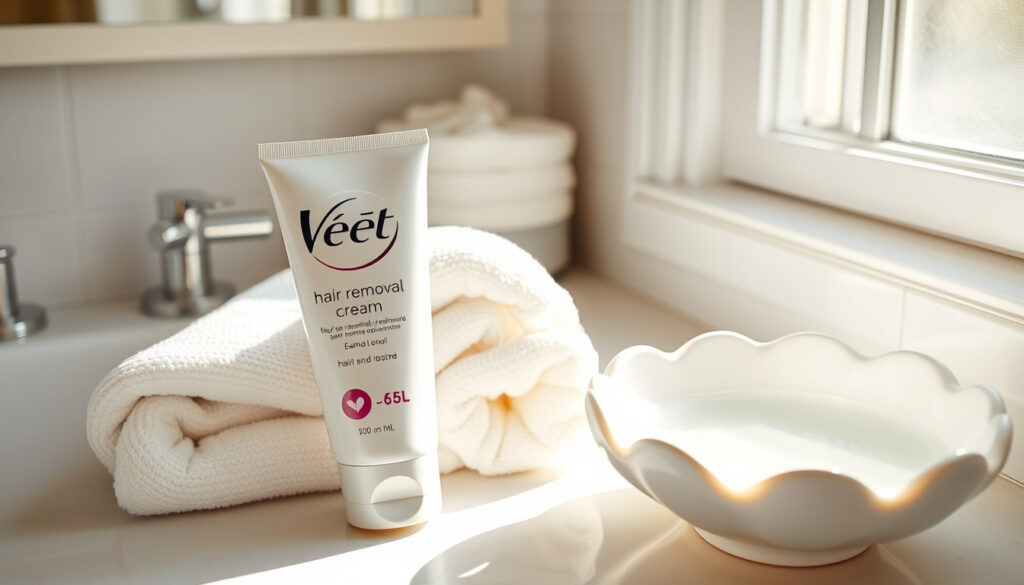
Veet Hair Removal Cream: Safe Bikini Use & Tips
You want smooth skin for longer than shaving offers, but the bikini area is notoriously finicky. Veet hair removal cream promises a painless solution without razor nicks, and we dug into the safety guidance, ingredient science, and real-world trade-offs to see if it delivers.
Smoothness duration: Up to 7 days ·
Application time: 3 to 10 minutes ·
Key ingredients: Aloe vera and vitamin E ·
Skin type: Sensitive skin ·
Comparable to shaving: Lasts up to twice as long
Quick snapshot
- Safe for external bikini line use with patch test (Veet US manufacturer)
- Apply only to dry skin, not wet (Boots pharmacy)
- Do not exceed 6-10 minutes depending on formula (Veet US manufacturer)
- Contains potassium thioglycolate as active ingredient (Veet Canada official guide)
- Whether Veet is safer than waxing for all skin types (WebMD dermatology resource)
- Long-term dermatological effects of repeated use (Boots pharmacy)
- Regrowth visible after 3-4 days, full smoothness up to 7 days (Boots pharmacy)
- Newer spray and shower formulations may reduce risk of user error (Veet US product line)
Five key specs, one pattern: Veet depilatory creams use a carefully timed chemical process to dissolve hair below the skin’s surface — and getting the timing wrong is the main source of risk.
| Specification | Value | Source |
|---|---|---|
| Active ingredient | Potassium thioglycolate | Veet US manufacturer |
| Application time | 3-10 minutes | Boots pharmacy |
| Price range (200ml) | €6.99 – €8.49 | Walmart retailer |
| Suitable for bikini area | Yes, with patch test | Veet US manufacturer |
| Smoothness duration | Up to 7 days | Boots pharmacy |
Can I use Veet on private hair?
Yes — but only on the external bikini line, not on mucous membranes. Veet US (the manufacturer) explicitly markets its Professional 2-Minute Cream for arms, underarms, legs, and the full bikini area. The same guidance applies across the Veet product line.
How to safely use Veet on bikini area
A Veet US (the manufacturer) patch test is non-negotiable: apply a small amount to the intended area, wait 24 hours, and check for redness or irritation before full use. WikiHow recommends trimming pubic hair to about ¼ inch before application for more even coverage.
- Never apply to broken, irritated, or sunburned skin (Veet US safety guidance)
- Do not wet the area before applying; start with dry skin (Boots instructions)
- Apply a thick, even layer — do not rub in (Boots pharmacy)
A user who leaves cream on beyond the maximum recommended time (6 minutes for professional formula, 10 minutes for sensitive formula) risks a chemical burn. Dermatologists from WebMD warn that depilatory creams contain alkali chemicals that can damage skin if overexposed.
Which Veet product is best for sensitive zones
For bikini area use, the Sensitive Skin formula with aloe vera and vitamin E is the safer choice. Boots (UK pharmacy) sells Veet BodyCurv Bikini and Underarm Cream specifically formulated for sensitive skin, enriched with aloe and vitamin E. The Walmart listing shows the same sensitive skin formula is suitable for legs, arms, underarms, and bikini line.
The implication: if you have sensitive skin, stick to the sensitive formula and follow the shorter end of the timing range.
Is Veet cream better than shaving?
For smoothness duration, Veet wins by a wide margin. Boots states Veet BodyCurv can provide smoothness for up to twice as long as shaving — typically 5-7 days versus shaving’s 1-3 days. But the comparison isn’t one-sided.
Hair regrowth timeline: Veet vs shaving
Four days of difference, one key trade-off: Veet dissolves hair below the skin line, so regrowth feels softer and less stubbly. WikiHow notes that cream removal leaves a smoother feel than shaving because it removes hair just below the surface rather than cutting it off at skin level.
| Factor | Veet cream | Shaving |
|---|---|---|
| Smoothness duration | 5-7 days | 1-3 days |
| Stubble feel | Soft regrowth | Bristly stubble |
| Risk of cuts | None (if used correctly) | High (nicking skin) |
| Risk of chemical burn | Present if over-timed | None |
| Application time | 3-10 minutes | 2-5 minutes |
| Mess | Yes (cream + spatula) | Minimal |
The pattern: Veet trades speed and zero chemical risk for longer smoothness and softer regrowth.
Skin irritation comparison
Both methods can irritate. Shaving scrapes the top layer of skin and causes micro-cuts; studies cited by WebMD (medical dermatology) show razor burn and folliculitis are common side effects. Veet’s chemical action bypasses cuts but introduces a burn risk if users ignore timing instructions. Amazon product listings warn not to exceed 10 minutes total even for stubborn hair.
A user who values longer smoothness with less stubble should choose Veet. A user who prioritizes speed and zero chemical risk should stick with shaving. There’s no universal winner — only a preference for which risk you’re willing to take.
What are the disadvantages of Veet hair removal?
Three downsides emerge from consumer reports and medical guidance: chemical burn potential, strong odor, and uneven results on coarse hair.
Chemical burn risk
The active ingredient potassium thioglycolate breaks down hair proteins — but it can also break down skin if left too long. Veet US (the manufacturer) states clearly: do not exceed 6 minutes for the professional formula. Amazon product guidance echoes this, saying cream left on longer than 10 minutes can cause skin injury.
Odor and mess
The sulfur-based active ingredients produce a distinctive rotten-egg smell during application. Boots lists this as a known characteristic. Users also need a spatula for removal and must rinse thoroughly, which adds cleanup time compared to shaving.
Not suitable for all hair types
Results vary. Amazon customer reviews note that coarse or thick hair may not dissolve completely, requiring a longer application time (within safe limits) or multiple treatments. WikiHow advises trimming hair before application for better results.
What this means: the same chemistry that makes Veet effective also makes it risky. Users with sensitive skin or coarse hair face the steepest trade-offs.
What is Veet cream used for females?
Veet’s core product line targets body hair removal on legs, arms, underarms, and bikini line. Veet US (the manufacturer) lists these zones on every package. The Sensitive Skin formula with aloe vera and vitamin E is specifically marketed for women’s sensitive areas.
Common use areas: legs, arms, underarms, bikini line
Four zones, one purpose: removing hair without cuts. Walmart and Amazon both list leg and arm hair removal as primary uses. The bikini line is included but with extra safety warnings.
Formulations for women’s sensitive skin
Veet creates separate formulations. The BodyCurv line by Boots (UK pharmacy) targets bikini and underarm use with added moisturizers. Veet Canada (the manufacturer) offers a Full Bikini Hair Removal Kit for thicker hair.
The pattern: women who want painless, cut-free hair removal on multiple body zones are the target audience, but sensitive-skin formulas are essential for bikini-area use.
How to use Veet hair removal cream: step-by-step
Seven steps, one critical rule: follow the clock. Here’s the process backed by Veet Canada (the manufacturer) and Boots (UK pharmacy).
Preparation: do you wet the area?
No. Boots is explicit: apply to dry skin. WikiHow recommends trimming hair to about ¼ inch first for better coverage. The day before, use a gentle cleanser or exfoliant — per Veet Canada’s pubic hair removal guide.
- Patch test 24 hours before full application (Veet US manufacturer)
- Do not wet the area before applying cream (Boots pharmacy)
- Apply a thick, even layer — do not rub in (Boots pharmacy)
Application and timing
Set a timer. Veet US (the manufacturer) says 2-6 minutes for the professional formula. Boots allows up to 10 minutes for their sensitive formula. Test a small area at the minimum time first.
Removal and aftercare
Use the provided spatula to remove cream, then rinse thoroughly with water (no soap for the first rinse). Veet Canada recommends waiting 24 hours before applying moisturizer or deodorant to the treated area.
“Depilatory creams can cause chemical burns if left on too long. Always follow the timing instructions exactly.”
WebMD dermatology resource
“Before each use, perform a patch test 24 hours before application to check for skin sensitivity.”
Veet US product instructions
A user who follows every step — patch test, dry skin, timer, rinse — gets the safest experience. The biggest risk factor is user impatience: leaving cream on “just a few more minutes” causes the majority of adverse reactions.
Clarity section: what we know and what’s uncertain
Confirmed facts
- Veet is safe for external bikini line hair removal (Veet US manufacturer)
- Do not use on broken skin or mucous membranes (Veet US manufacturer)
- Aloe and vitamin E help soothe skin during removal (Boots pharmacy)
- Patch test 24 hours before first use (Veet US manufacturer)
- Apply to dry skin only (Boots pharmacy)
- Maximum application time varies by formula (6-10 minutes) (Veet US manufacturer)
What’s unclear
- Whether Veet is safer than waxing for all skin types — no head-to-head clinical trial available (WebMD dermatology resource)
- Long-term dermatological effects of repeated Veet use over years — no published longitudinal studies (Boots pharmacy)
getthegloss.com, rediantglowhub.com, youtube.com, reddit.com, youtube.com
If you’re considering Veet for your bikini line, a comprehensive guide on Veet hair removal cream for pubic hair explains the safety precautions and application steps.
Frequently asked questions
Can Veet be used on face?
No. Veet creams are formulated for body hair and should not be used on the face. The skin on the face is thinner and more prone to chemical burns. Veet US manufacturer warns against facial use.
How long does a tube of Veet last?
A 200ml tube typically lasts 4-6 full-body applications (legs, arms, underarms, bikini line), depending on how thickly you apply it. Walmart retailer lists the 13.5 fl oz size as the standard.
Does Veet cause hair to grow back thicker?
No. Depilatory creams dissolve hair at the surface level — they don’t affect the follicle. Regrowth feels softer because the tip is blunted, but it’s not thicker. WebMD dermatology resource states chemical depilatories do not alter hair thickness or growth rate.
Can men use Veet hair removal cream?
Yes. Veet makes men-specific products (e.g., Veet for Men), but the standard formula works on male body hair. Men often require longer application time due to coarser hair. Amazon customer reviews confirm men use the product on chest and legs.
What should I do if Veet burns my skin?
Rinse immediately with cool water for 10-15 minutes. Do not scrub. Apply a gentle moisturizer or aloe vera gel. If blistering or severe pain occurs, seek medical attention. WebMD dermatology resource advises calling a doctor if chemical burn symptoms develop.
Is Veet safe during pregnancy?
There is no conclusive evidence that topical depilatory creams harm pregnancy, but many doctors recommend avoiding chemical hair removers during the first trimester due to skin sensitivity changes. Boots pharmacy advises consulting a healthcare provider before use during pregnancy.
For a user in the UK or US shopping for bikini-line hair removal, the choice is clear: follow Veet’s timing instructions to the second, or stick with shaving and accept the stubble. The user who masters the timer and the patch test gets up to a week of smoothness that shaving can’t match.
More related posts
 A-League Women Standings 2025-26: Table, Results & Fixtures
 One NZ Trade-In: Upgrade Before the 3G Shutdown
 Independent Earner Tax Credit 2026: How to Claim & Amount
 Porsche 911 Turbo S – 2026 Price, Specs and Performance
 New Zealand Work Visa 2026: Requirements, Cost & In-Demand Jobs
 Samoa vs Tonga 2025 NZ Time – Kick-off Schedules for Kiwis
 Girona vs Real Madrid: Head-to-Head Record & 2026 Draw
 Catch of the Day NZ Closure: Why Wesfarmers Shut It Down