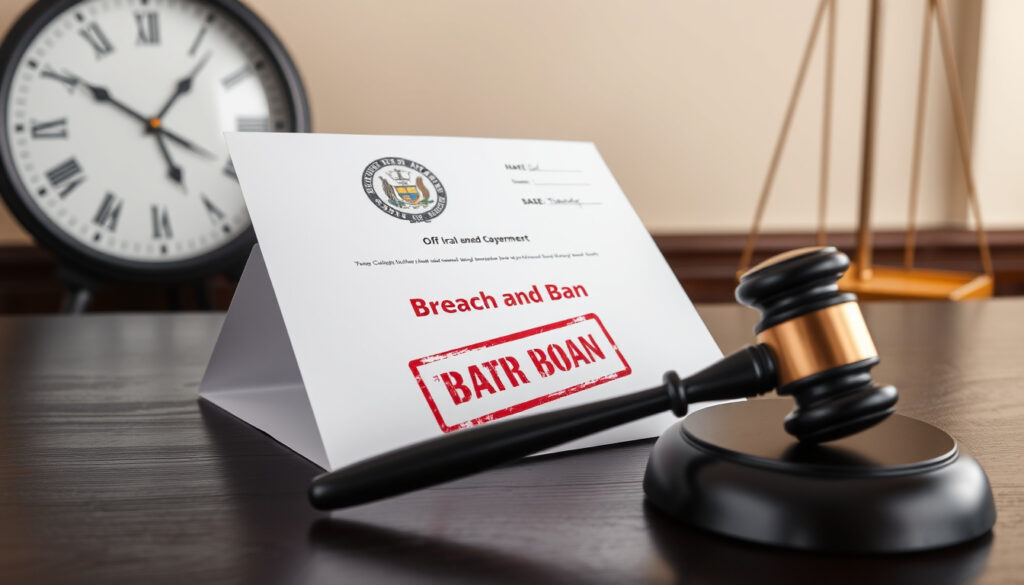
IRD Copyright Settlement NBR: Breach, Ban, and What Happens Next
Few things rankle a business publisher quite like having its paywalled articles handed out like office memos – and when the Inland Revenue Department admitted sharing NBR articles with 600+ staff, the publisher banned the tax agency and rejected a $12,500 settlement offer. Here’s a timeline of the breach, the failed negotiations, and what it means for copyright enforcement in New Zealand.
Breached paywalled articles shared among IRD staff: 600+ ·
IRD settlement offer to NBR: NZ$12,500 ·
NBR ban effective date: 12 December 2025
Quick snapshot
- IRD shared paywalled NBR articles with 600+ staff via internal email (National Business Review)
- NBR banned IRD from all subscriptions (National Business Review)
- IRD offered $12,500 settlement; NBR rejected and let it expire (Wikipedia (open encyclopedia))
- Whether IRD will face legal action beyond the ban (Wikipedia (open encyclopedia) notes NBR confirmed it would pursue District Court action)
- Exact internal processes that led to the breach (Wikipedia (open encyclopedia))
- If other New Zealand government agencies have similar copyright exposure (Wikipedia (open encyclopedia))
- Breach: 2024-03-28 to 2025-11-17 (22 articles shared) (National Business Review)
- Settlement expiration: 11 December 2025 (National Business Review)
- Ban announced: 12 December 2025 (National Business Review)
- NBR has banned IRD indefinitely; no further settlement talks planned (National Business Review)
- Possible District Court action to recover full group subscription costs (Wikipedia (open encyclopedia))
- Other NZ agencies may review internal copyright compliance (National Business Review)
Seven key facts, one pattern: the IRD’s unauthorized sharing of paywalled content triggered a swift and aggressive enforcement response from NBR, setting a precedent for copyright compliance in New Zealand.
| Label | Value |
|---|---|
| Breach type | Copyright infringement via sharing paywalled articles |
| Affected organization | Inland Revenue Department (IRD) |
| Copyright holder | National Business Review (NBR) |
| Number of staff involved | 600+ |
| Settlement amount offered | NZ$12,500 |
| Settlement expiration | 11 December 2025 |
| NBR ban effective date | 12 December 2025 |
What was the IRD copyright breach?
The breach involved IRD staff sharing National Business Review (NZ business news publisher) paywalled articles through internal email lists. According to NBR, the IRD admitted sharing 22 different articles between 28 March 2024 and 17 November 2025. Seven of those articles were distributed to 600 staff members as stand-alone Microsoft Word documents.
How were the paywalled articles shared?
- The articles were sent as Word documents attached to internal emails, bypassing the paywall entirely (National Business Review)
- IRD had a group subscription for 220 staff until March 2024, then switched to a single subscription for a media-team member (Wikipedia (open encyclopedia))
- IRD interpreted “having access to NBR content” as having login details, not as permission to redistribute (LinkedIn (professional network))
When was the breach discovered?
- NBR detected the breach in early December 2025, after which it contacted IRD (National Business Review)
- The breach period spanned 20 months, ending in November 2025
One paid subscription became a distribution pipeline for 600 staff — a classic case of license misuse that NBR saw as a loss of at least $36,000 in group subscription revenue.
The implication: a single employee’s login can expose an organization to significant liability when shared internally without proper licensing.
How did NBR respond to the breach?
NBR’s response was immediate and uncompromising. CEO Todd Scott banned the IRD from taking any future subscriptions, saying the ban was permanent. NBR also offered a settlement, which it allowed to expire on 11 December 2025 when IRD refused to increase its offer.
Why did NBR ban IRD from taking subscriptions?
- NBR stated the breach demonstrated a disregard for copyright that made ongoing business relationships untenable (National Business Review (NZ business news publisher))
- CEO Todd Scott reportedly said the ban was permanent and would not be reversed
What was the NBR settlement offer?
- NBR offered a settlement calculated to cover the cost of a group subscription for 600 staff, which NBR valued at $36,000 plus GST (National Business Review)
- The settlement expired on 11 December 2025 after IRD refused to pay more than $12,500
NBR’s hardline stance — banning a government agency permanently — signals that paywall enforcement in New Zealand is no longer a gentle warning but a legal and commercial weapon.
The pattern: NBR has a track record of pursuing settlements aggressively, with other businesses reportedly paying quickly to avoid escalation.
What was the settlement amount and terms?
The IRD offered NZ$12,500 to settle the breach, arguing that not all 600 staff had accessed the articles. NBR rejected the offer, insisting on the full value of a group subscription that would have covered 600 staff for four months — approximately $36,000 plus GST.
Did IRD accept the settlement?
- No. IRD admitted the breach and apologised, but would not budge on the $12,500 offer (National Business Review)
- NBR co-editor Hamish McNichol estimated the full group subscription value at $36,000 plus GST (Wikipedia (open encyclopedia))
What happened after the settlement expired?
- NBR made the ban public on 12 December 2025, and stated no further settlement negotiations would take place
- Wikipedia notes that NBR confirmed it would pursue legal action in the District Court to recover the costs of a full group subscription (Wikipedia (open encyclopedia))
The trade-off: IRD saved about $23,500 in the short term but lost access to NBR’s premium business intelligence indefinitely — a long-term cost that may far outweigh the settlement.
What are the implications for NBR paywall and copyright enforcement?
NBR’s enforcement strategy is a case study for any organization that relies on paywalled content. The publisher actively monitors internal distribution and pursues claims against businesses that share articles beyond their licensed users.
How does NBR enforce its paywall legally?
- NBR uses license agreements that require proper subscription counts for the number of users who access content (National Business Review)
- The publisher has a pattern of contacting infringing organizations directly and offering settlements before escalating to legal action
What can other organizations learn from this case?
- Internal sharing of paywalled articles — even within a government department — is a breach of copyright and can lead to subscription bans and legal claims
- A single subscription does not cover organizational-wide distribution; group licenses are required
- NBR’s zero-tolerance approach means that even admitting the breach does not guarantee a negotiated settlement
For NZ businesses, the IRD case is a stark reminder that copyright enforcement is not just about individual users — it’s about how organizations manage access internally. One forwarded email can trigger a chain of liability.
What this means: any organization in New Zealand that shares paywalled content across a team needs to audit its subscriptions and internal sharing policies immediately.
What is the current status of the IRD-NBR dispute?
As of early 2026, the dispute remains unresolved. NBR has banned IRD from all subscriptions indefinitely, and no further settlement negotiations are planned. IRD has publicly apologised and admitted the breach, but has not commented on potential legal action.
Is there any further legal action expected?
- According to Wikipedia (open encyclopedia), NBR confirmed it would pursue District Court action to recover the full group subscription value
- No court filing has been publicly reported as of the time of this article
How has IRD responded publicly?
- IRD acknowledged it should not have shared the articles and apologised (National Business Review)
- IRD argued that only one staff member held the NBR subscription and that not all 600 recipients actively accessed the articles
The implication: IRD’s defence — that sharing didn’t equal reading — is unlikely to hold up in court, where copyright law focuses on distribution, not consumption.
Confirmed facts vs. What’s unclear
Confirmed facts
- IRD shared paywalled NBR articles with 600+ staff (National Business Review)
- NBR banned IRD from subscriptions (National Business Review)
- IRD offered $12,500 settlement; NBR rejected (National Business Review)
- IRD apologised and admitted breach (National Business Review)
What’s unclear
- Whether District Court action will proceed
- Exact internal processes that led to the breach
- If other NZ government agencies face similar risks
Timeline
- 28 March 2024 – 17 November 2025: IRD staff share 22 NBR paywalled articles via internal email, 7 of them to 600+ staff (National Business Review)
- Early December 2025: NBR discovers breach and contacts IRD (National Business Review)
- 11 December 2025: NBR settlement offer expires after IRD refuses to increase offer (National Business Review)
- 12 December 2025: NBR publicly bans IRD from all subscriptions; CEO Scott states ban is permanent (National Business Review)
- 8 January 2026: Stuff reports IRD apology and $12,500 offer details (via NBR statements) (National Business Review)
“We have banned the IRD from taking any future subscriptions. This is a permanent decision.”
— Todd Scott, CEO, National Business Review (National Business Review)
“The IRD acknowledged it should not have shared the articles and apologised for the breach.”
— IRD spokesperson (National Business Review)
“All the businesses we have sought settlements from have moved quickly to pay.”
— NBR statement (National Business Review)
For New Zealand businesses and government agencies, the IRD–NBR dispute is a clear warning: copyright enforcement for paywalled content is no longer a background risk. The consequence is a new era of rigorous enforcement.
Related reading: Lotto’s $20M Jackpot: Mistakes, Tax & Superdraw · BNZ Home Loan Rate Cuts: Rates, Predictions & Fixing
linkedin.com, reddit.com, reuters.com, apnews.com, taxtechnical.ird.govt.nz, youtube.com, irishtimes.com, ipiqblog.com, content.govdelivery.com
Frequently Asked Questions
How did IRD breach NBR copyright?
IRD staff shared paywalled NBR articles via internal email lists, distributing them as Word documents to 600+ staff without a group subscription.
What is NBR’s policy on copyright infringement?
NBR actively monitors internal distribution and pursues claims against organizations that share articles beyond licensed users, often offering settlements before escalating to legal action.
Why did NBR reject the IRD settlement?
NBR rejected the $12,500 offer because it represented only a fraction of the $36,000+ group subscription cost for 600 staff, and the publisher insisted on the full value.
What are the penalties for copyright breach under New Zealand law?
Penalties can include damages, legal costs, and court orders. The Copyright Act 1994 allows for both civil and criminal remedies, though NBR is pursuing civil action.
How can businesses avoid copyright infringement of NBR content?
Businesses should purchase sufficient group subscriptions for all staff who need access, implement internal policies against sharing login credentials, and audit email distribution.
Is NBR the only paywalled publisher actively enforcing copyright in NZ?
Other paywalled publishers in New Zealand also enforce copyright, but NBR’s high-profile case against a government agency sets a precedent for aggressive enforcement.
Can IRD appeal the ban or take legal action?
IRD has not indicated any legal challenge to the ban. The ban is a commercial decision by NBR, and IRD could potentially seek a court order if it believes the ban is unreasonable, but no such action has been filed.
More related posts
 New Zealand Work Visa 2026: Requirements, Cost & In-Demand Jobs
 Is Couscous Gluten Free? Facts, Alternatives & Celiac Safety
 All You Can Eat Rotorua: Best Buffets, Prices & Cultural Dining
 Spanish Classes Online NZ: Compare Costs & Providers
 All Blacks vs Springboks 2026: Watch, Head-to-Head & News
 Stu Wilson’s First Wife: Family, Career & Life of the All Black
 Herald Morning Quiz Today: How to Play
 Ant-Man and the Wasp: Box Office, Reviews, and Key Facts