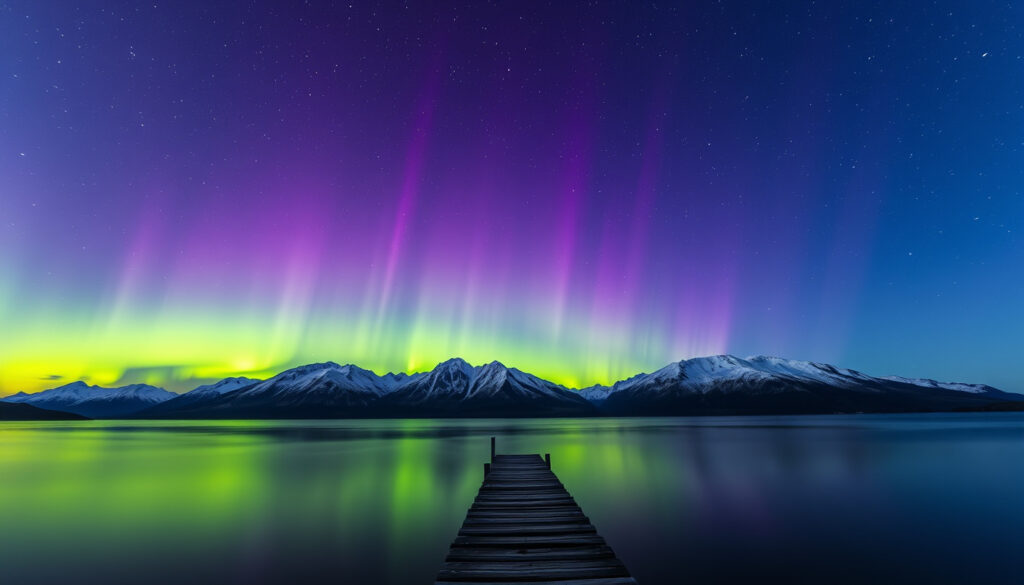
Southern Lights New Zealand: Viewing Guide & 2026 Forecast
Few natural light shows feel as personal as the aurora australis. For anyone willing to trade a warm bed for a cold New Zealand night, the Southern Lights can turn the sky into a moving canvas — but catching them takes more than luck, requiring the right season, spot, and real-time tools.
Best viewing season: March to September (autumn/winter) ·
Optimal viewing hours: 10 PM to 2 AM (local time) ·
Solar cycle peak: 2025–2026 (Solar Cycle 25 maximum) ·
Key alert service: University of Otago Aurora Alert
Quick snapshot
- Best viewing season runs March to September (100% Pure New Zealand)
- Peak hours between 10 PM and 2 AM (NZ Pocket Guide)
- Solar maximum expected 2025–2026 (Skyline Blog)
- Exact visibility on a specific date depends on weather and geomagnetic storms (Rach Stewart Photography)
- Forecasts beyond 30–60 minutes remain unreliable (Aurora Watch NZ)
- Whether a particular location will have clear skies tonight is unpredictable (Rach Stewart Photography)
- Solar Cycle 25 peak expected 2025–2026 — increased aurora activity (Skyline Blog)
- March and September offer highest probability due to equinox effect (Aotearoa Archive)
- Autumn 2025 viewing season begins March 2025 (Skyline Blog)
- Monitor real-time Kp-index via Aurora Watch NZ or University of Otago Aurora Alert
- Plan trips to dark-sky locations like Lake Tekapo or Stewart Island (Aurora Watch NZ)
- Join Lonely Planet-recommended Facebook groups for community updates
Six key facts about the Southern Lights in New Zealand, one pattern: the window for reliable viewing is narrower than most travellers expect, and success depends on aligning season, time of night, and solar activity.
| Fact | Value |
|---|---|
| Official name | Aurora Australis |
| Best season | March to September (100% Pure New Zealand) |
| Peak hours | 10 PM – 2 AM (NZ Pocket Guide) |
| Solar cycle peak | 2025–2026 (Skyline Blog) |
| Key alert service | auroraalert.otago.ac.nz (University of Otago) |
| Typical Kp-index needed | Kp 4 or higher for low latitudes like NZ (Aurora Watch NZ) |
When can we see Southern Lights in New Zealand?
What month is best to see Aurora Australis?
- The best viewing season runs from March to September, when New Zealand’s nights are longest and darkest. The 100% Pure New Zealand tourism site (official national tourism authority) states that autumn and winter offer the prime window because the sun sets early and skies stay dark longer.
- March and September carry an extra advantage: the equinox effect. The Aotearoa Archive (community aurora resource) notes that geomagnetic activity is statistically higher around the equinoxes, making these months the strongest within the season.
- Winter months (June–August) deliver the most reliable darkness, but cold fronts also bring cloud cover. The Rach Stewart Photography guide (aurora photography specialist) emphasises that clear nights matter just as much as season.
What is the best time of night to see the Southern Lights?
- Peak viewing hours fall between 10 PM and 2 AM local time. NZ Pocket Guide (travel resource) advises being ready around midnight, when geomagnetic activity often intensifies.
- The Qantas Travel Insider (travel guide) recommends checking the Kp-index — a Kp5 or above is a strong signal that an aurora sighting may be worth attempting.
- Aurora activity can flare up unpredictably, so staying out from 10 PM onward increases the chance of catching a peak.
The best months for aurora (March–September) are also New Zealand’s cloudiest. Patience and flexible plans matter more than any single date.
The implication: the season gives you the odds, but the night itself decides. The smart viewer picks a broad window — autumn through early spring — and then watches the short-term forecast like a hawk.
Which part of New Zealand to see Southern Lights?
Can you see the Aurora Australis in Queenstown?
- Yes, but with caveats. Queenstown sits at 45°S, far enough south for aurora activity, but its streetlights and resort glow create light pollution. Lonely Planet (travel authority) recommends seeking a clear, unobstructed horizon away from town lights.
- Popular Queenstown-area spots include the Kelvin Peninsula, Moke Lake, and the Crown Range Road — each a short drive from the town centre but significantly darker.
Can you see the Southern Lights at Lake Tekapo?
- Lake Tekapo is one of New Zealand’s premier aurora locations. It sits within the Aoraki Mackenzie International Dark Sky Reserve, one of the largest dark-sky reserves in the world. The 100% Pure New Zealand (official tourism site) highlights the region’s strict light-control ordinances that preserve night-sky quality.
- Other top locations include Stewart Island (Rakiura), the Catlins coast, and Dunedin’s southern beaches — all far from major urban light domes. Lonely Planet notes that the further south you go, the better your chances.
- The University of Otago Aurora Alert (research-based alert service) provides free real-time alerts specifically for the Dunedin region, with visibility maps and Kp-index readings.
Lake Tekapo and Stewart Island offer the darkest skies. Queenstown is convenient but requires driving out of town. Dunedin has the best alert infrastructure.
Why this matters: location choice is the single biggest factor you control. A dark-sky reserve like Tekapo can turn a Kp4 night into a vivid show, while the same aurora strength is invisible from a city balcony.
Will the Southern Lights be visible in New Zealand in 2026?
What is the forecast for the southern lights in New Zealand in 2026?
- 2026 falls near the expected maximum of Solar Cycle 25, which means the Sun will be at its most active in over a decade. The Skyline Blog (Queenstown attraction guide) notes that increased solar activity raises the frequency and intensity of aurora displays worldwide.
- For New Zealand specifically, a stronger solar cycle means more nights with a Kp-index high enough to push the aurora visibility zone northward. The Qantas Travel Insider (travel guide) suggests that Kp5 or above is a reliable threshold for a worthwhile sighting.
- That said, aurora forecasting remains short-range. The Aurora Watch NZ (real-time monitoring service) explains that accurate predictions only extend 30–60 minutes ahead, based on solar wind data from NASA’s DSCOVR satellite.
- New Zealand’s MBIE Solar Tsunamis Research Project contributes to space-weather monitoring, providing alerts tied to geomagnetic disturbances that can trigger aurora.
The pattern: 2026 offers the best statistical odds in a decade, but “best odds” doesn’t mean “guaranteed show.” The solar cycle gives you a season; the real-time data gives you the night.
Can you see the Southern Lights in New Zealand today?
Can you see the Southern Lights in New Zealand tonight?
- Visibility tonight depends on three factors: the current Kp-index, cloud cover, and whether it’s dark enough. The Aurora Watch NZ (real-time monitoring service) provides a live Kp-index reading and a 3-hour forecast tailored to New Zealand latitudes.
- The Aurora Watch NZ app (real-time alert application) sends push notifications when geomagnetic activity crosses the Kp4 threshold, which is the minimum for aurora visibility at New Zealand’s latitude.
- For the Dunedin area, the University of Otago Aurora Alert (research-based alert service) offers free email or SMS alerts when aurora activity is predicted.
- Community-run Facebook groups, such as Aurora Australis (NZ), provide real-time sighting reports — Lonely Planet recommends them as a supplement to official forecasts.
A Kp4 is the floor for New Zealand aurora, but Kp5 or higher is where the show gets dramatic. Anything below Kp4 is unlikely to be visible to the naked eye at most NZ latitudes.
The catch: you can have a perfect Kp6 forecast and still see nothing if the sky is overcast. Always cross-check the aurora forecast with a local cloud-cover map before heading out.
How often do the Southern Lights occur?
- The Southern Lights occur when charged particles from the Sun collide with Earth’s magnetic field, exciting oxygen and nitrogen atoms in the upper atmosphere. The frequency of these events tracks the 11-year solar cycle.
- During solar maximum, visible aurora events can occur multiple times per week at high latitudes. At New Zealand’s mid-latitude position (roughly 35°S–47°S), the frequency is lower — but during active periods, the 100% Pure New Zealand (official tourism site) notes that sightings become a regular winter possibility.
- Not every solar event produces a visible aurora. The Rach Stewart Photography guide (aurora photography specialist) stresses that clear, dark skies and a Kp4+ reading are the minimum conditions for a worthwhile sighting.
- During the current Solar Cycle 25 peak, observers in southern New Zealand can expect to see aurora activity several times a month during the March–September window, assuming favourable weather.
What this means: frequency is high during the 2025–2026 peak, but the real bottleneck is cloud cover. A viewer who commits to multiple nights across the season dramatically improves their odds.
How to plan your Southern Lights viewing: a step-by-step guide
- Step 1: Choose your season and location
- Book your trip between March and September, with March and September offering the strongest statistical probability due to the equinox effect (Aotearoa Archive).
- Pick a dark-sky location: Lake Tekapo (Dark Sky Reserve), Stewart Island, or the Catlins coast. If you’re set on Queenstown, plan to drive at least 15 minutes out of town to escape light pollution.
- Step 2: Set up real-time alerts
- Subscribe to the University of Otago Aurora Alert for Dunedin-region notifications.
- Download the Aurora Watch NZ app for push alerts and 3-hour Kp-index forecasts.
- Join the Aurora Australis (NZ) Facebook group for real-time community sighting reports.
- Step 3: Check the conditions each evening
- Check the Kp-index — aim for Kp4 or higher (Aurora Watch NZ).
- Check cloud cover on a local weather radar or a clear-sky chart.
- Wait for full darkness (at least 10 PM) and head to your chosen spot.
- Step 4: Bring the right gear
- Warm clothing, a headlamp with a red-light mode (to preserve night vision), and a thermos of something hot.
- For photography: a tripod, a camera with manual controls, ISO 1600–3200, and a wide-angle lens with a fast aperture (Rach Stewart Photography).
- Step 5: Be patient and persistent
- Aurora can flare and fade within minutes. Plan to stay out for at least two hours, and commit to multiple nights across your trip for the best odds.
The pattern: persistence and preparation are the key differentiators.
Timeline: Southern Lights activity in New Zealand
- 2025–2026 — Expected maximum of Solar Cycle 25, bringing increased aurora activity across southern New Zealand (Skyline Blog).
- March 2025 — Start of autumn viewing season; equinox window offers elevated probability (Aotearoa Archive).
- March 2026 — Expected peak of equinox-driven aurora activity within the solar maximum period.
- September 2026 — Spring equinox window, historically the other strong peak within the season.
The pattern: the 2025–2026 solar maximum represents a generational opportunity for New Zealand aurora viewing. The next cycle peak won’t arrive until the mid-2030s.
What’s confirmed and what’s still unclear
Confirmed facts
- Best viewing season: March to September (100% Pure New Zealand)
- Peak hours: 10 PM – 2 AM (NZ Pocket Guide)
- Lake Tekapo is a dark sky reserve with excellent viewing conditions
- auroraalert.otago.ac.nz provides free real-time alerts for the Dunedin region
- Kp4 or higher is typically needed for visibility at New Zealand latitudes (Aurora Watch NZ)
What’s unclear
- Exact visibility for a specific date — weather and geomagnetic storms are unpredictable
- Forecast accuracy beyond 30–60 minutes ahead (Aurora Watch NZ)
- Whether a particular location will have clear skies on a given night
- Exact strength of 2026 aurora activity beyond the solar cycle trend
- Aurora activity can flare and fade unpredictably within minutes, making exact timing impossible
The takeaway: plan for the season but be flexible night-to-night.
What experts say about viewing the Southern Lights in New Zealand
“The best time to see the southern lights or Aurora Australis in Aotearoa New Zealand is from March to September, when the dark night skies are longer.”
“This is a free service offering alerts of when the aurora might be visible from southern New Zealand, especially Dunedin.”
“The further south you go in New Zealand, the better your chances of seeing aurora.”
“Kp5 or above is a decent indication an aurora sighting may be worth attempting.”
The consensus across these sources is clear: the formula for success is a winter-season trip to a dark-south location, paired with real-time alert tools and enough flexibility to chase clear skies. For the traveller planning a 2026 trip to New Zealand, the window has never been better — but the old rules of patience and preparation still apply. For anyone who books a single night in Queenstown in December and expects a guaranteed show, the disappointment will be swift. For the viewer who commits to the season, the tools, and the cold nights, the Southern Lights will deliver.
auroraforecast.me, theurbanlist.com, kkday.com, traveloka.com
Frequently asked questions
What equipment do I need to see the Southern Lights?
No special equipment is needed for naked-eye viewing — just warm clothes, a dark location, and patience. For photography, a tripod-mounted camera with manual controls, ISO 1600–3200, and a wide-angle lens with a fast aperture (f/2.8 or wider) is recommended (Rach Stewart Photography).
Is it possible to see the Southern Lights from a city?
It is very difficult from central city locations due to light pollution. Lonely Planet (travel authority) recommends seeking a clear, unobstructed horizon away from urban lights. Even in Queenstown, driving 15–20 minutes out of town dramatically improves visibility.
What is the Kp-index and what value is needed for visibility?
The Kp-index measures geomagnetic activity on a scale of 0 to 9. For New Zealand’s latitude, a Kp of 4 or higher is typically needed for visible aurora, and Kp5 or above is considered a strong indicator (Aurora Watch NZ; Qantas Travel Insider).
Are there guided tours for Southern Lights viewing?
Yes, several operators in Lake Tekapo, Queenstown, and Dunedin offer aurora-focused tours. These typically include transport to dark-sky locations, expert guidance, and photography assistance. Check local tourism listings for current offerings.
Can I see the Southern Lights during summer?
Summer (December–February) is the least favourable season because New Zealand’s nights are short and twilight lingers until late. The 100% Pure New Zealand (official tourism site) states that the best time is from March to September, when nights are longest.
How do I read an aurora forecast for New Zealand?
Check the Kp-index on Aurora Watch NZ or the University of Otago Aurora Alert. A Kp4+ reading combined with a clear-sky forecast and no moon (or a thin crescent moon) is the ideal combination. The 3-hour forecast window is the most reliable for planning.
What is the difference between aurora borealis and aurora australis?
The aurora borealis (Northern Lights) occurs in the Arctic region, while the aurora australis (Southern Lights) occurs in the Antarctic region. They are caused by the same solar-physics process — charged particles interacting with Earth’s magnetic field — but the australis is visible from the southern hemisphere, including New Zealand, Tasmania, and Patagonia.
The bottom line: the more nights you commit, the higher your odds.
More related posts
 Everton vs Manchester United Timeline: Head-to-Head Record
 Albany Mall Opening Hours: Westfield Albany Info
 Consulate General of India Auckland: Contact, Services & PCC
 Honey Soy Chicken Marinade: 5 Best Recipes Compared
 Hawkes Bay Marathon 2025: Start Times, Route, Registration
 Tears of the Sun: Plot, Cast, True Story & Filming Locations
 Stop Shoes from Blistering: Top Expert Tips
 Atlético Madrid vs Real Madrid Lineups: Latest XI & Guide