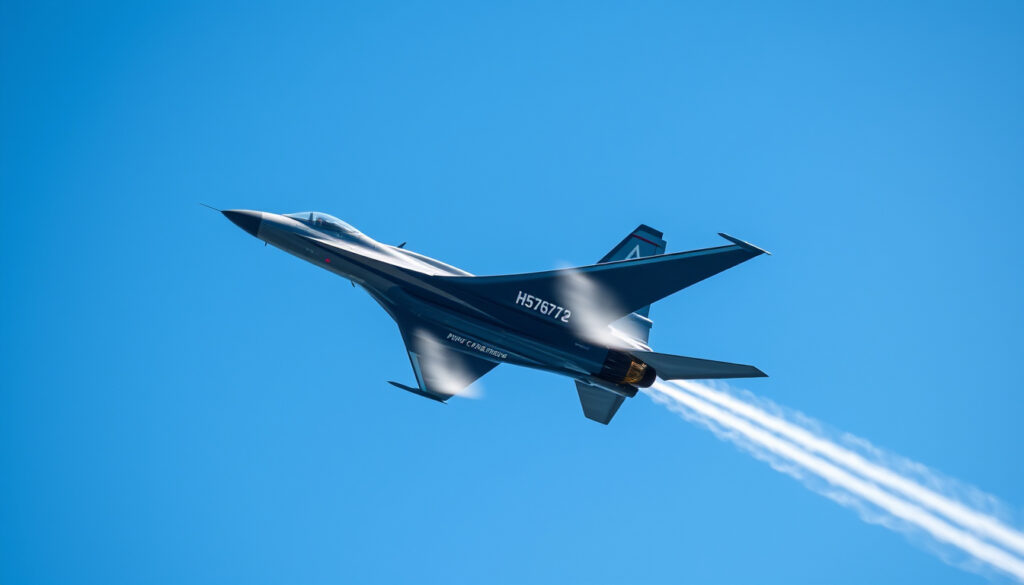
Fastest Plane in the World: Speed Records by Aircraft Category
Ask three aviation experts to name the fastest plane in the world and you’ll get different answers, because speed records are split into strict categories. The difference comes down to propulsion and purpose: a rocket-powered research plane, an air-breathing spy jet, a retired supersonic airliner, and an unmanned scramjet each hold a different crown. By the end, you’ll know exactly which aircraft owns which title — and why a 1960s NASA rocket plane still outruns every fighter jet ever built.
Fastest manned aircraft (all time): X-15: Mach 6.7 (4,520 mph / 7,274 km/h) · Fastest air-breathing manned aircraft: SR-71 Blackbird: Mach 3.3 (2,193 mph / 3,529 km/h) · Fastest commercial passenger plane: Concorde: Mach 2.04 (1,354 mph / 2,179 km/h) · Fastest speed ever by an aircraft: NASA X-43A: Mach 9.6 (approx. 7,000 mph / 11,265 km/h) · Fastest fighter jet in service: MiG-25 Foxbat: Mach 3.2 (2,400+ mph / 3,862 km/h)
Quick snapshot
- The X-15 reached Mach 6.7 (4,520 mph), the fastest speed ever flown by a piloted, winged aircraft (NASA Aeronautics).
- The SR-71 Blackbird holds the manned air-breathing record at about Mach 3.3 (Wikipedia’s SR-71 records).
- Concorde cruised at Mach 2.04, faster than most fighter jets (Britannica’s Concorde entry).
- The unmanned X-43A hit Mach 9.6 in 2004 (Guinness World Records).
- The SR-71’s true maximum speed may exceed the published figure; some performance details were kept classified.
- Elon Musk’s G650ER cruise speed shifts with flight conditions; reported figures range from Mach 0.85 to 0.925.
- Future hypersonic aircraft like the SR-72 remain in development, with unconfirmed performance claims.
- 1947: Chuck Yeager breaks the sound barrier in the Bell X-1, hitting Mach 1.06 (Britannica’s Bell X-1 entry).
- 1967: The X-15 hits Mach 6.7, a piloted record that still stands (NASA’s X-15 reference).
- 2004: The X-43A reaches Mach 9.6 — the fastest aircraft speed ever recorded. (Britannica’s Bell X-1 entry)
- The next absolute record will likely come from an unmanned hypersonic test vehicle, not a passenger jet.
- Supersonic business jets are in development, but none has entered service.
- Until then, the X-15 and SR-71 records stand.
Six records, one pattern: the highest speed in every category was set years ago, and only an unmanned scramjet has pushed the overall mark meaningfully higher.
| Record | Aircraft | Speed | Verified by |
|---|---|---|---|
| Fastest speed ever achieved by an aircraft | NASA X-43A (unmanned scramjet) | Mach 9.6 (~7,000 mph) | Guinness World Records |
| Fastest manned aircraft | North American X-15 (rocket) | Mach 6.7 (4,520 mph) | NASA Aeronautics |
| Fastest air-breathing manned aircraft | Lockheed SR-71 Blackbird | Mach 3.3 (~2,193 mph) | Wikipedia’s SR-71 records |
| Fastest passenger plane (retired) | Concorde | Mach 2.04 | Britannica’s Concorde entry |
| Fastest current fighter jet | MiG-25 Foxbat | Mach 3.2 | Britannica’s MiG-25 entry |
| Fastest private jet | Gulfstream G650ER | Mach 0.925 (~610 mph) | Gulfstream (manufacturer’s specification page) |
What is the fastest plane ever flown?
The fastest plane ever flown is the NASA X-43A, an unmanned scramjet that reached Mach 9.6 — roughly 7,000 mph — in 2004.
Aircraft speed records are split into classes — landplanes, seaplanes, propulsion types, straight courses, closed circuits — rather than one universal leaderboard (Wikipedia’s aircraft-record classifications). Rocket power and air-breathing engines create separate contests, so “fastest plane” depends on the category you enter.
The X-15 and SR-71: manned records
- The rocket-powered North American X-15 reached 4,520 mph (Mach 6.7), the fastest speed ever recorded by a piloted, winged aircraft.
- NASA describes the X-15’s speed and altitude records as unofficial world records because the program was a research-flight effort, not a certified record category.
- The Lockheed SR-71 Blackbird is widely cited as the fastest operational, manned, air-breathing aircraft, with a recorded speed of about 2,193.2 mph — approximately Mach 3.3.
The X-15 hit its record on October 3, 1967, with U.S. Air Force pilot Pete Knight flying the X-15A-2. The SR-71 set its mark on July 28, 1976, with records showing 1,905.81 knots. Both are astonishing speeds, but they belong to different propulsion families: one rocket, one air-breather.
The distinction matters when reading any “fastest plane” headline. A rocket plane does not need to pull oxygen from the atmosphere, which removes a major drag and engine limit. An air-breathing jet does, which is why the SR-71’s Mach 3.3 stands as the ceiling for its class.
Hypersonic experimental aircraft like the X-43A
- The unmanned NASA X-43A, powered by a scramjet, reached Mach 9.6 (about 7,000 mph) on its 2004 record flight.
- It remains the fastest aircraft ever flown in any category.
The X-43A was not a plane you could board. It was dropped from a carrier aircraft, boosted by a rocket to supersonic speed, and then lit its scramjet for a short hypersonic sprint before crashing into the Pacific as planned. Its record is genuine, but it sits in a class of its own: unmanned, experimental, and disposable.
The implication: the gap between “fastest” and “fastest with a pilot on board” is roughly 2,500 mph — and it has been for two decades.
Was Concorde faster than a fighter jet?
In a straight comparison, yes: Concorde’s cruising speed beat most fighters in service during its 27 years of flying, and it remains faster than every subsonic fighter flying today.
Concorde paid a severe fuel penalty to hold Mach 2.04 for hours. The MiG-25 was faster on paper but could only sustain Mach 3.2 in short bursts — sustained supersonic cruise and short supersonic dashes are different engineering problems.
Concorde vs F-16 vs MiG-25: speed comparison
- Concorde cruised at Mach 2.04 — about 1,354 mph.
- The F-16 Fighting Falcon has a top speed of about Mach 2.0.
- The MiG-25 Foxbat reached Mach 3.2, making it the fastest fighter ever flown, but the speed was not sustainable.
So a Concorde at cruise was marginally faster than an F-16 at full afterburner, and comfortably faster than the F-16 in any realistic combat configuration. The Foxbat would leave both behind in a straight-line dash, but its engines could not hold the pace without severe strain.
Why Concorde was faster than most fighter jets
- Concorde was optimized for sustained supersonic cruise: delta wings, afterburning turbojets, and a slender fuselage built for Mach 2.
- Most fighters are optimized for agility, weapons carriage, and subsonic endurance; supersonic dash is a secondary mode.
- Since Concorde’s retirement in 2003, no passenger aircraft has cruised supersonically.
The result: the fastest thing most air travelers have ever flown was retired before many of today’s pilots started flying. Its speed was a triumph of aerodynamics, and its retirement was a lesson in economics.
The pattern: speed records for operational aircraft tend to be held by machines with a single dedicated job — intercept, reconnaissance, or supersonic transport — never by multirole compromises.
Can any plane fly 1000 mph?
Yes — “1,000 mph” is a modest milestone by military standards, and it is impossible for the subsonic airliners that carry most travelers.
Subsonic vs supersonic: thresholds above 1000 mph
- Mach 1 at sea level is about 767 mph, so 1,000 mph is roughly Mach 1.3.
- Concorde cruised at 1,350 mph, well above the 1,000-mph mark.
- Today’s jetliners cruise below Mach 1, which puts them far under 1,000 mph.
Reaching 1,000 mph is not the hard part. Sustaining it is. A fighter can punch past Mach 1.3 for a few minutes; a supersonic transport has to live there for hours, which demands heavier airframes, heat-resistant materials, and far more fuel.
Which military and commercial planes exceed Mach 1.3
- The F-16 exceeds Mach 1.3 at full throttle, with a top speed near Mach 2.0.
- The MiG-25 passes Mach 1.3 easily and reaches Mach 3.2 in bursts.
- The SR-71 operates at Mach 3.3, far above the threshold.
- Among passenger-category aircraft, the fastest are private jets like the Gulfstream G650ER at Mach 0.925 — still below the 1,000-mph mark.
Supersonic business jets are in development, but none has entered service. Until they do, every plane that can hold 1,000+ mph is military — and every plane you can buy a ticket on is slower.
For an airline passenger, 1,000 mph is close to irrelevant: the fastest commercial option today — the Gulfstream G650ER at Mach 0.925 — is far closer to a 1960s jetliner than to the SR-71.
The filter is not horsepower but certification: speed above Mach 1 brings sonic-boom, noise, and thermal challenges that today’s aviation system is not set up to handle. For perspective, the first recognized airspeed record, set by Alberto Santos-Dumont’s 14-bis in 1906, was about 25.65 mph; by 1909, Glenn Curtiss had pushed it to 44.367 mph. A thousand miles per hour is roughly 40 times that first official mark — a reminder of how quickly the speed race accelerated once engines got serious.
How fast is Elon Musk’s jet?
Elon Musk reportedly flies a Gulfstream G650ER, a long-range business jet that sits near the top of the private-jet speed chart.
Elon Musk’s Gulfstream G650ER specifications
- Maximum speed: Mach 0.925 — about 610 mph.
- Typical cruise: Mach 0.85.
- It is one of the fastest production private jets available today.
To put that in context, the G650ER is roughly three times slower than the X-15 at its peak, and about a third slower than Concorde. “Fastest private jet” is a real title — it just occupies a low rung on the absolute speed ladder.
Comparison with other private jets
- Most large business jets cruise at Mach 0.85–0.90; the G650ER’s Mach 0.925 top end leads the class.
- No production private jet is supersonic; several supersonic business-jet programs are in development but unproven.
Reported flight data suggests Musk’s fleet also includes a Dassault Falcon 900B, an older and slower model than the G650ER. That detail comes from flight-tracking and news reports rather than official specifications, so it belongs in the “reported” column.
The upshot: Musk’s Gulfstream is the fastest jet most people are likely to be near, and it is still slower than a 1960s fighter in a dash.
How fast has a human gone in Mach?
The fastest any human has ever flown a winged aircraft is Mach 6.7, a record set in 1967 and never approached since.
Pilot records in the X-15 program
- U.S. Air Force pilot Pete Knight flew the X-15A-2 to 4,520 mph (Mach 6.7) on October 3, 1967.
- NASA pilot Joseph Walker took the X-15 to 354,200 feet on August 22, 1963, the program’s altitude record.
- William H. Dana flew the final X-15 mission on October 24, 1968.
The X-15 fleet completed 199 flights over nearly a decade, and it remains the only winged aircraft to carry a pilot past Mach 6.
Astronaut re-entry speeds
- Astronauts returning from orbit pass through speeds many times higher than Mach 6.7 — but inside capsules, not aircraft.
- Those re-entry speeds are not counted in aircraft speed records, which is why the X-15’s pilot mark still stands.
The record is part rocket science, part program timing: the X-15 was dropped from a B-52, lit its rocket engine, and climbed so steeply that most of its acceleration happened above 100,000 feet, where the air is too thin for air-breathing engines.
No piloted program since has tried to beat Mach 6.7. The missions that needed that speed ended, and the vehicles that replaced the X-15 — space shuttles and capsules — achieved higher speeds by leaving the atmosphere entirely.
The human speed record is also a museum piece: set in 1967 by a test pilot in a rocket plane, declared unofficial by NASA, and untouched for more than half a century.
The implication: if you want to see the next manned speed record, no active program exists to set it — the fastest humans are flying capsules, not planes.
Seven aircraft, one pattern: top speed rises as missions get more specialized, and falls as soon as passenger comfort, economics, or multirole flexibility enters the design.
| Aircraft | Category | Top speed | Record status |
|---|---|---|---|
| NASA X-43A | Unmanned scramjet test vehicle | Mach 9.6 (~7,000 mph) | Fastest aircraft ever flown |
| North American X-15 | Rocket-powered research aircraft | Mach 6.7 (4,520 mph) | Fastest piloted winged aircraft |
| Lockheed SR-71 Blackbird | Manned air-breathing reconnaissance | Mach 3.3 (~2,193 mph) | Fastest operational air-breather |
| MiG-25 Foxbat | Interceptor / fighter | Mach 3.2 | Fastest fighter ever flown |
| Concorde | Supersonic passenger airliner | Mach 2.04 (~1,354 mph) | Fastest passenger plane (retired 2003) |
| F-16 Fighting Falcon | Multirole fighter | Mach 2.0 | Representative modern fighter top speed |
| Gulfstream G650ER | Business jet | Mach 0.925 (~610 mph) | Fastest class of private jet |
Ten numbers from the X-15 and SR-71 record books, one takeaway: the fastest flights were short, expensive, and flown by test pilots and reconnaissance crews — never by passengers.
| Spec / record | Value | Reference |
|---|---|---|
| X-15 top speed | 4,520 mph (Mach 6.7) | NASA Aeronautics |
| X-15 speed-record flight | 1967-10-03, pilot Pete Knight, X-15A-2 | NASA’s X-15 reference |
| X-15 altitude record | 354,200 ft, 1963-08-22, pilot Joseph Walker | NASA Aeronautics |
| X-15 first glide flight | 1959-06-08, pilot Scott Crossfield | NASA’s X-15 reference |
| X-15 final flight | 1968-10-24, pilot William H. Dana | NASA’s X-15 reference |
| X-15 total flights | 199 flights over nearly a decade | NASA’s X-15 reference |
| X-15 records status | Unofficial world records (research program) | NASA Aeronautics |
| SR-71 record speed | ~2,193.2 mph (3,529.6 km/h), about Mach 3.3 | Wikipedia’s SR-71 records |
| SR-71 record flight | 1976-07-28, aircraft 61-7958 | Wikipedia’s SR-71 records |
| SR-71 New York–London (1974) | 3,461.53 miles at 1,806.964 mph average, 1h54m56.4s | Wikipedia’s SR-71 records |
Speed records through history
The fastest planes each mark a moment when a government program decided speed was worth the cost. The sequence tells that story in seven steps.
- — Chuck Yeager breaks the sound barrier in the Bell X-1 at Mach 1.06.
- — Pete Knight flies the X-15A-2 to Mach 6.7, the fastest piloted flight on record.
- — An SR-71 crosses New York to London, covering 3,461.53 miles at an average 1,806.964 mph.
- — An SR-71 (serial 61-7958) sets the manned air-breathing speed record at about Mach 3.3.
- — Concorde enters commercial service, cruising at Mach 2.04.
- — Concorde is retired, ending supersonic passenger service.
- — NASA’s X-43A scramjet reaches Mach 9.6, the fastest speed ever recorded by an aircraft.
The takeaway: the two most extreme records — Mach 6.7 and Mach 9.6 — were set by research vehicles, not operational fleets. The operational records (SR-71, Concorde) have stood for over four decades because nobody has built a successor.
Confirmed facts vs. open questions
Some numbers in the speed debate are settled; others depend on classified data, flight conditions, or programs that haven’t flown.
Confirmed facts
- SR-71 top speed: 2,193 mph (Mach 3.3).
- X-15 reached Mach 6.7 (4,520 mph).
- Concorde cruise speed: Mach 2.04.
- X-43A reached Mach 9.6.
What’s unclear
- The SR-71’s true maximum may be higher than the published figure; some performance data remains classified.
- Elon Musk’s jet speed varies by flight conditions; reported cruise ranges from Mach 0.85 to 0.925, and fleet details come from flight trackers, not official specs.
- Future hypersonic aircraft like the SR-72 are in development with unconfirmed capability claims.
- Record definitions shift by class — the international body that maintains them is the FAI — so a single “fastest plane” number depends on which record category the source chooses (FAI (air-record governing body)).
- The X-15’s records are classified by NASA as unofficial world records, so official record organizations do not list them in the same tables.
The balance here is honest: the headline numbers are rock solid and sourced, while the soft spots are the ones involving classified military performance and unverified celebrity aircraft.
What the record-setters say
The X-15’s speed and altitude records are unofficial world records, because the program was a research-flight program rather than a conventional certified aviation record category.
The X-15 speed record was set on October 3, 1967, by U.S. Air Force pilot Pete Knight in the X-15A-2.
NASA — X-15 reference page
The SR-71 remains the benchmark for operational air-breathing speed; no aircraft of its class has approached its 1976 record since.
Smithsonian curator of aeronautics, in Wikipedia’s SR-71 records
The X-43A’s Mach 9.6 flight in 2004 stands as the fastest speed ever recorded by an aircraft.
Guinness World Records
The consensus: raw speed awards go to research vehicles, while operational crowns remain locked to single-purpose military and supersonic transport designs from decades past.
Half a century after the X-15’s record flight, the shape of the speed ladder has barely moved: the fastest piloted plane is a 1967 rocket research vehicle, the fastest operational air-breather is a 1976 spy plane, and the overall record belongs to a 2004 unmanned scramjet. For airlines betting on a supersonic revival, the warning is concrete — raw speed was never the obstacle; noise, fuel burn, and ticket economics brought Concorde down. For travelers, the practical ceiling today is a private jet like the Gulfstream G650ER, which is quick, but also the clearest proof that the fastest planes in the world are the ones you will never board.
Frequently asked questions
What is the fastest military jet currently in service?
The MiG-25 Foxbat holds the fighter speed record at Mach 3.2, though it reaches that speed only in short bursts. The fastest widely used Western fighters, such as the F-16, top out around Mach 2.0.
How fast does the Concorde fly compared to today’s planes?
Concorde cruised at Mach 2.04, about 1,354 mph. Today’s jetliners cruise far below Mach 1, and the fastest private jet in production, the Gulfstream G650ER, reaches Mach 0.925.
Is the SR-71 Blackbird still the fastest manned air-breathing aircraft?
Yes. Its July 28, 1976 record of about 2,193 mph (Mach 3.3) still stands for a manned, air-breathing, operational aircraft. The X-15 flew faster, but it was rocket-powered.
What is the fastest plane ever built, including unmanned?
The NASA X-43A, an unmanned scramjet, reached Mach 9.6 — about 7,000 mph — in 2004. The fastest piloted aircraft is the X-15 at Mach 6.7.
How fast can a human fly in a jet without exceeding safety limits?
The fastest a human has ever flown a winged aircraft is Mach 6.7, set by Pete Knight in the X-15A-2 on October 3, 1967. That remains the practical limit for a piloted airplane.
What is the fastest passenger plane currently flying?
Since Concorde’s retirement in 2003, no supersonic airliner is in service. The fastest passenger-category aircraft flying today are private jets like the Gulfstream G650ER at Mach 0.925.
Can any private jet exceed the speed of sound?
No production private jet is supersonic. Supersonic business-jet programs are in development, but none has entered service. The fastest current model, the Gulfstream G650ER, is subsonic at Mach 0.925.
More related posts
 Mother’s Day 2025 NZ: Date, History & Employment Guide
 Lotto’s $20M Jackpot: Mistakes, Tax & Superdraw
 What Generation Am I? Find Your Generation by Birth Year (2026)
 Free Press Death Notices: How to Find Obituaries Online
 NZ to UK Pound Exchange Rate: Live & Forecast 2026
 Most Awarded Pie in Aotearoa: 2025 Winners & History
 Cast of Grosse Pointe Garden Society: Actors & Characters
 Small Business for Sale Auckland: Costs, Taxes & Legal Guide