San Miguel de Allende Guide: Safety, Best Time & Travel Tips
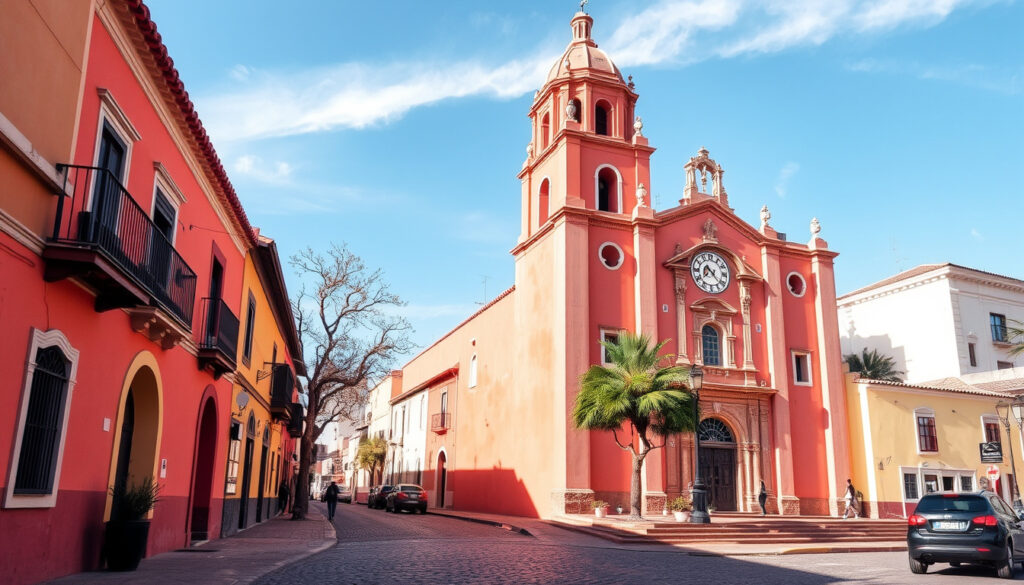
There is a particular kind of magic that happens when a city looks exactly the way you hoped Mexico would feel. Cobblestone streets catch the afternoon light, pink church spires rise above rooftops painted in terracotta and ocher, and every doorway seems to hide a courtyard with jasmine and a pottery studio. That city is San Miguel de Allende, a colonial gem in Guanajuato state that has been quietly collecting accolades and devoted visitors for years — most recently topping traveler rankings at the close of 2025. Whether you’re weighing it as a retirement destination or planning a week of exploration, here’s what you need to know before you go.
State: Guanajuato ·
Distance from Mexico City: 170 miles ·
Distance from Guanajuato: 60 miles ·
Founded: 16th century ·
Known for: Colonial architecture
Quick snapshot
- One of Mexico’s safest cities for visitors in the historic center (She Roams About)
- Population 140,000 with 10% foreigners (International Living)
- Spring/fall temps: 85F highs, 55F lows (Traverse Blog)
- Exact 2024-2025 crime statistics from official Mexican sources
- Quantitative expat numbers beyond 10% estimate
- Specific US State Department advisory level for San Miguel
- Guanajuato violence increase: 2023-early 2024 (Mind Body Globe)
- Top global destination ranking: end of 2025 (Vallarta Daily)
- Continued tourism growth expected given award momentum
- City center safe for walking, nightlife shifts to rideshares
| Fact | Detail |
|---|---|
| Country | Mexico |
| State | Guanajuato |
| Elevation | High in cool hills |
| Key Figure | Ignacio Allende |
| Population | 140,000 |
| Foreign Residents | 10% |
What is so special about San Miguel de Allende?
Walk through the historic center on any given afternoon and you will understand the pull. The city was founded in the 16th century and named after native son Ignacio Allende, a hero of Mexico’s independence movement. What survives today is a remarkably preserved colonial streetscape: narrow lanes paved with cobblestones, façades painted in warmadobe tones, and a trio of picturesque churches — most famously the pink neo-Gothic spires of Parroquia de San Miguel Arcángel — that have drawn artists and architecture lovers for generations.
That artistic legacy has not faded. Galleries fill restored colonial buildings, workshops offer ceramics and textiles, and cultural events punctuate the calendar year-round. According to Fora Travel, the city feels like Spain transplanted to central Mexico — walkable, sun-drenched, and oriented around public life in a way that rewards visitors who linger.
History and colonial architecture
- Founded 1542, officially established 1549
- Named after Ignacio Allende, independence figure
- Cobblestone streets preserved in historic center
- Parroquia de San Miguel Arcángel as iconic landmark
Art and culture scene
- Active gallery district with local and international artists
- Art schools and workshops throughout centro
- Festival calendar including jazz, literary, and cultural events
- Arts and crafts markets selling local pottery and textiles
The implication: San Miguel de Allende rewards slow exploration. Those who rush through the center on a day trip will miss the courtyard studios, rooftop views, and evening passeos that define the city’s character.
What city do you fly into for San Miguel de Allende?
San Miguel de Allende sits landlocked in central Mexico, roughly 170 miles northwest of Mexico City and 60 miles northeast of the city of Guanajuato. There is no airport in San Miguel itself, so visitors need to plan for a ground transfer at the end of their flight.
Nearest airports
- Querétaro Intercontinental Airport (QRO) — closest option, approximately 1.5 hours by car; served by domestic carriers and some US connections
- Del Bajío International Airport (BJX) — near León, about 2 hours away; broader international flight options including US hubs
- Mexico City Benito Juárez International (MEX) — largest option, 3-4 hours by road; most flight choices, then bus or arranged transfer
Transfer options
- Pre-arranged private car — recommended for first visits; drivers meet flights
- Shared shuttle services — available through hotels and tour operators
- Bus from Mexico City —ADO offers routes that take 3-4 hours to nearby Querétaro
The pattern: most visitors fly into either Querétaro or León/Bajío and arrange a driver in advance, particularly if arriving late. Those coming from Mexico City can also drive or bus, turning the journey into part of the experience.
Ground transfer logistics are the most common friction point for first-time visitors. Book your airport pickup before arrival, or stay one night near the airport and travel to San Miguel refreshed the next morning.
Is it safe to walk around San Miguel de Allende at night?
The short answer from residents and seasoned visitors is yes — with common-sense habits that apply in any city. San Miguel consistently ranks as one of Mexico’s safest destinations for tourists, and the historic center in particular draws praise for its visible police presence, active public spaces, and community stake in keeping visitors comfortable. According to International Living, expats — including single women living alone — report feeling secure with basic precautions like avoiding flashy valuables.
The primary concerns that do arise are petty crimes: pickpocketing, occasional car break-ins, and instances of shortchanging at markets. Violent crime against tourists in the centro remains rare by any measure. Locals note that walking with a front-pocket wallet at night and steering clear of street taxis after dark are habits worth adopting. Use rideshares or registered taxis instead — costs are minimal and peace of mind is considerable.
Safety overview
- Historic center highly walkable, no off-limits areas during daytime
- Visible police presence in tourist zones
- Economy built on tourism and expat community, keeping safety a priority
- Older expats, families, and tourists dominate the population
Nightlife precautions
- Avoid hailing street taxis after dark — use Uber or app-based services
- Keep valuables secure and out of sight
- Stay within the well-lit centro and Jardín area
- Rideshare costs are low; the modest expense is worth it for assurance
The implication: San Miguel’s centro is not a place where tourists need to feel guarded, but the usual urban awareness — secure wallets, trusted transportation at night — remains sensible. Hotel staff and expat residents confirm that concerns about the city itself are largely unfounded; the outskirts that locals sometimes advise avoiding are not where visitors typically venture.
What’s the Best Way to Get Around San Miguel de Allende?
Walking is the default. The historic center is compact, and the cobblestone streets — while occasionally uneven — are precisely what make the city charming. Most visitors find that everything worth seeing sits within a 15-minute walk of the Jardín, the main square that anchors public life. This walkability is one of the most frequently cited advantages of San Miguel, according to She Roams About.
Walking
- Centro is best explored on foot — narrow streets and no through-traffic
- Comfortable, broken-in shoes recommended; cobblestones are uneven
- Early mornings and late afternoons are most pleasant for strolls
- Sidewalk conditions vary; watch for steps and gutters
Taxis and rideshares
- Uber operates in San Miguel and is generally reliable
- Registered taxi stands near Jardín for short hops
- Use app-based services for late-night travel
- Airport and out-of-town transfers require advance booking
The catch: visitors who rent cars will find the centro impractical for parking and navigation. Those who skip the car entirely and rely on walking plus rideshares tend to have a much smoother experience. If you plan to explore nearby towns like Guanajuato or Dolores Hidalgo, a rental becomes more useful — but for the city itself, two feet are enough.
What is the best time of year to go to San Miguel de Allende?
Spring and fall are the consensus picks. The city sits at elevation in the cool hills of central Mexico, which means it never bakes the way coastal destinations do. During spring, daytime temperatures sit in the 70s to low 80s Fahrenheit, nights are cool, and rain is scarce. Fall brings similar patterns with highs around 85°F and lows near 55°F. According to Traverse Blog, this temperate climate is one of the city’s underrated advantages — you can walk comfortably year-round without the exhaustion of heat.
Weather patterns
- Spring (March-May): Dry season, 70s-80s F days, light jacket for early mornings
- Fall (September-November): 85F highs, 55F lows, occasional late rain
- Winter (December-February): Cooler nights, warm days, very dry — good for outdoor sightseeing
- Summer (June-August): Wetter season, afternoon showers, green landscapes but less comfortable for walking
Peak season events
- February — Independence Day celebrations and cooler, dry weather
- October-November — cultural festivals, gallery events, pleasant temperatures
- December — holiday decorations, expat community gatherings, mild weather
The implication: timing your visit around spring or fall means comfortable walking weather every day and access to the city’s full calendar of cultural events. Those who come in summer will encounter green hills and fewer crowds but should plan around afternoon rain showers.
Fireworks and church bells are woven into daily life in San Miguel — expect pre-dawn explosions during festivals and regular bells echoing through the centro. Travelers sensitive to noise should pack earplugs for sleeping, especially in apartments without double glazing.
Upsides
- One of Mexico’s safest cities for tourists in historic center
- Compact, walkable centro with no off-limits areas
- Large expat and tourism economy prioritizes visitor comfort
- Visible police presence in tourist zones
- Mild climate year-round, ideal for walking exploration
- Rich colonial architecture and active arts scene
Downsides
- Petty theft (pickpocketing, car break-ins) requires vigilance
- Street taxis discouraged at night — rideshares needed
- Fireworks and church bells can disrupt sleep
- No airport — requires ground transfer from Mexico City, Querétaro, or León
- Summer brings afternoon rain and higher humidity
- Outskirts carry different risk profile than centro
San Miguel rewards slow travelers who settle into its rhythm. Those expecting a quick weekend of sightseeing will see the cobblestones and churches. Those who spend a week, walk the lanes in early morning, browse the galleries, and linger at the Jardín in the evening discover why so many expats never leave.
Getting There: Step-by-Step
Most visitors follow a similar path to San Miguel. Here is the practical sequence:
- Book your flight to Mexico City (MEX), Querétaro (QRO), or León/Bajío (BJX). Domestic and some international routes serve these three hubs. Mexico City offers the most flight options; Querétaro is the closest airport to San Miguel.
- Arrange airport pickup in advance. Whether through your hotel, a private driver service, or a shuttle, have a trusted ride waiting — particularly if you arrive in the evening. Taxi lines exist but advance booking eliminates friction.
- Drive or transfer to San Miguel. The journey takes 1.5 hours from Querétaro, 2 hours from León/Bajío, and 3-4 hours from Mexico City. Road conditions on major highways are good; the final stretch into town narrows to colonial streets.
- Settle into centro. The historic center is walkable and safe for daytime exploration. If your hotel has parking, confirm availability — car storage in centro is limited.
- Walk everywhere. Resist the urge to drive within the city. Cobblestones and narrow lanes make walking the natural mode; use rideshares for anything beyond a 10-minute hop.
The implication: visiting San Miguel is not complicated, but it does reward a bit of preparation. The visitors who arrive with a driver arranged and a hotel booked in centro have a smooth entry. Those who wing it on transportation tend to spend their first evening in transit frustration.
“San Miguel de Allende is, without a doubt, safer than most cities in the US.”
— Local resident, via Abroad with Ash
“All in all, San Miguel de Allende is a safe location for expats of all ages, including plenty of single women who live alone.”
“It is a very safe town with a large expat population and is one of Mexico’s safest cities.”
— Merissa D. Bradford, travel advisor via Fora Travel
Related reading: Things to Do in Hamilton: Top Attractions & Guides · Oamaru Blue Penguin Colony Reviews – What Visitors Really Think
abroadwithash.com, economia.gob.mx, destinationsanmiguel.com
Frequently asked questions
Is it expensive to live in San Miguel de Allende?
San Miguel sits in the mid-range for Mexican expat destinations. Housing costs in centro have risen in recent years due to demand from foreign buyers, but remain lower than Puerto Vallarta or Mexico City. Daily expenses — food, transportation, entertainment — are notably affordable. According to International Living, many retirees live comfortably on $2,000-$3,000 per month, though lifestyle choices and housing standards vary widely.
How long should I stay in San Miguel de Allende?
Traveler forums and expat reports suggest 8-9 nights as a comfortable minimum — enough to see the centro, take a day trip to nearby towns, and settle into the paseos (evening strolls) that define local life. Weekend trips are feasible but risk feeling rushed; those who stay a week tend to describe the experience as transformative in the way only genuinely walkable, human-scale cities can be.
What food is San Miguel de Allende known for?
The city blends traditional Guanajuatense cuisine with an international twist given its expat population. Street markets offer gorditas, enchiladas, and carnitas alongside artisan bread and specialty coffee. The nearby town of Dolores Hidalgo is famous for nieves (ice cream) and traditional sweets. In centro, fine dining and casual taquerías coexist comfortably — expect to pay $5-15 for a substantial meal at most mid-range restaurants.
Is it expensive in San Miguel de Allende?
Compared to US and European cities, San Miguel is budget-friendly. A mid-range hotel runs $80-150 per night, meals range from $3 street food to $30 dinners with wine, and attractions like galleries and historic walks are free or low-cost. The city’s tourism economy means prices in centro are higher than outer neighborhoods, but still accessible by international standards.
What is the dress code for San Miguel de Allende?
Casual dominates. Visitors wear shorts, sundresses, and comfortable walking shoes by day. Evenings in centro trend smart-casual — women often wear dresses or nice pants; men move beyond shorts to trousers or jeans. Church visits (especially the Parroquia) benefit from modest coverage: no shorts or bare shoulders inside. The overall vibe is relaxed bohemian, not resort-formal.
More related posts
 How to Draw Lips: Step-by-Step Guide for Beginners (with Pencil)
 Was essen nach dem Training? The Best Post-Workout Nutrition
 Black Snow Season 2 – Renewal, Premiere, Cast and Plot
 Auckland to Vancouver Flight Time: 13 Hours Non-Stop
 NZ Darts Masters 2025: Results, winner, tickets & FAQs
 Why Does Trump Want Greenland? National Security & Rare Earths (2026)
 Liquor Shop Near Me in Ireland: Off Licence Guide & Rules
 Most Awarded Pie in Aotearoa: 2025 Winners & History