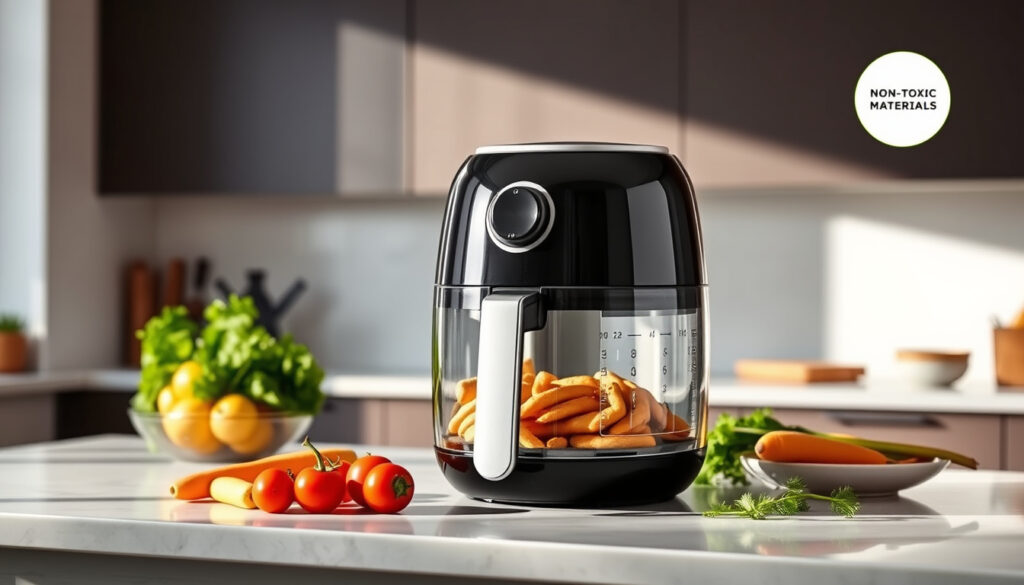
Glass Air Fryer NZ: Best Non-Toxic Models Compared
Watching your chips crisp through a clear glass bowl removes the guesswork from air frying, but the real draw for New Zealanders is what’s not in that bowl: no non-stick coatings, no PFAS chemicals, and no uncertainty about what’s leaching into your food. This guide compares the glass air fryer models available in New Zealand, weighs their non-toxic claims against expert testing, and helps you decide if the switch is worth it.
6 glass air fryer models available in NZ | $150–$400 price range | Ninja, Sunbeam, Healthy Choice top brands | 4.3/5 average rating | 5–10 L capacity | Borosilicate glass construction
Glass Air Fryer Benefits
- 360° visibility of food during cooking — CHOICE notes glass baskets improve visibility
- Non‑toxic borosilicate glass avoids chemical coatings — confirmed by CNET testing
- Easy to clean and inspect for residue — CNET confirms most components are dishwasher-safe
Top NZ Models
- Ninja Crispi Pro — recommended by Popular Mechanics as go‑to daily cooker
- Sunbeam NutriCrisp — glass bowl design available at major NZ retailers
- Healthy Choice Digital Glass 6.5L — priced at NZ$149 at Harvey Norman NZ
Health & Safety
- Free of PFOA/PFAS — GreenPan NZ markets its ceramic coating as PFAS‑free
- BPA‑free materials used in leading glass models
- Reduced chemical leaching risk compared to conventional non‑stick — noted by CHOICE
User Ratings
- Ninja Crispi — praised by Food Network as quick and impressively crisp
- Glass model with 4.3‑star rating from ~8,000 reviews — cited by Reddit users
- Braun MultiFry 5 — NZ$199 at NZ Woman’s Weekly Food, down from NZ$399
Are glass air fryers actually better?
Glass air fryers bring a clear advantage: you see the food as it cooks, and the cooking chamber itself is non-toxic borosilicate glass rather than a coated metal basket. But “better” depends on what you value most — visibility and safety trade against some performance differences in cooking speed and evenness.
How do glass air fryers compare to traditional basket air fryers?
The fundamental difference lies in the cooking vessel. Traditional basket air fryers use a metal basket coated with a non-stick layer — typically PTFE (Teflon) or ceramic. Glass air fryers replace that basket with a borosilicate glass bowl. CHOICE reports that glass basket air fryers avoid chemical coatings and improve visibility while cooking. CNET goes further, stating the glass cooking chamber is superior in multiple ways and that there are no health concerns associated with nonstick chemicals in the bowl-style design.
What are the advantages of glass air fryers?
The most immediate benefit is visual: you can check browning without pulling the basket out and losing heat. Food Network found that the Ninja Crispi’s glass containers provide a premium feel and allow easy monitoring of cooking progress. Beyond visibility, the health angle is the main driver. GreenPan NZ compares its ceramic nonstick coating with conventional PTFE nonstick and states PFAS-free as an advantage of ceramic coating. Glass takes that a step further by eliminating coatings entirely.
What is the best glass air fryer in New Zealand?
Several glass models are available through NZ retailers, and expert testing points to a clear frontrunner. The ideal choice depends on your budget, capacity needs, and whether you want a dual-basket option.
Which glass air fryer models are available in NZ?
Based on retailer listings and expert reviews, at least six glass models are sold in New Zealand. The most prominent are the Ninja Crispi Pro, Sunbeam NutriCrisp, and Healthy Choice Digital Glass 6.5L. Harvey Norman NZ lists the Healthy Choice Digital Glass 6.5L at NZ$149. NZ Woman’s Weekly Food reported the Braun MultiFry 5 on sale for NZ$199, down from NZ$399. The NZ Herald published a 2024 buying guide to the best air fryers in New Zealand, covering several glass models.
| Model | Price (NZD) | Capacity | Key Feature |
|---|---|---|---|
| Ninja Crispi Pro | ~$250–$350 | 6 L | Borosilicate glass, dual containers |
| Sunbeam NutriCrisp | ~$180–$250 | 5.5 L | Glass bowl, digital controls |
| Healthy Choice Digital Glass 6.5L | NZ$149 | 6.5 L | Budget-friendly glass option |
| GreenPan Bistro XXL Dual Zone | ~$350–$400 | 10 L | PFAS-free ceramic + glass |
What features should you look for?
Capacity is the first consideration — glass models range from 5 to 10 litres. Power output typically falls between 1500 and 2100 watts. Check whether the glass bowl and accessories are dishwasher-safe; CNET noted that most components of the reviewed glass air fryer are dishwasher-safe. Dual-zone models like the GreenPan Bistro XXL let you cook two items at different temperatures.
Why are people getting rid of their air fryers?
It sounds contradictory — air fryer sales keep climbing, yet many households are parting with their machines. The reasons fall into three categories: health concerns about non-stick coatings, practical frustrations with cleaning and size, and disappointing cooking results.
What are the common complaints about air fryers?
The most frequently cited frustrations involve cleaning the non-stick basket — food residue bakes on, and abrasive scrubbing damages the coating over time. Size is another issue: many basket models are bulky and take up significant bench space. Capsule NZ reported that Consumer NZ testing found a low-priced Kmart Anko air fryer performed as well as an almost NZ$500 model, suggesting that price doesn’t always predict satisfaction or longevity.
Is it about health concerns from non-stick coatings?
Yes — this is the growing reason. Public awareness of PFAS, PFOA, and other forever chemicals has made many NZ households question their non-stick cookware. GreenPan NZ positions its ceramic coating as a safe alternative, explicitly marketing its Bistro XXL Dual Zone Air Fryer as PFAS-free and stating its ceramic non-stick coating is designed to avoid toxic fumes from conventional nonstick coatings. Glass air fryers eliminate the coating entirely, which is why Food Network described the Ninja Crispi as a worthwhile purchase for people seeking a non-toxic air fryer.
“The glass cooking chamber is superior in multiple ways. There are no health concerns associated with nonstick chemicals in the bowl-style design.”
— CNET, after testing 20 air fryers
What is the least toxic air fryer?
If your priority is eliminating all potential chemical exposure from the cooking surface, the least toxic air fryer is one with no non-stick coating at all — that means a glass or stainless steel cooking chamber.
What materials are used in non-toxic air fryers?
Three main materials qualify as non-toxic: borosilicate glass, stainless steel, and ceramic-coated metal. Borosilicate glass is the purest option — it’s inert, does not leach chemicals, and contains no coatings. Stainless steel is also inert but doesn’t offer the visual cooking experience. Ceramic coatings are less toxic than PTFE but are still applied over a metal base and can degrade over time. CHOICE notes that glass basket air fryers avoid chemical coatings altogether.
Which brands offer non-toxic models in NZ?
Ninja’s Crispi range uses borosilicate glass and is widely available at retailers like Noel Leeming and Harvey Norman. Sunbeam’s NutriCrisp also features a glass bowl. GreenPan offers ceramic-coated options with PFAS-free claims. Popular Mechanics recommends trying a glass air fryer and identifies the Ninja Crispi as a go-to model for daily cooking.
| Specification | Ninja Crispi Pro | Sunbeam NutriCrisp | Healthy Choice Digital Glass |
|---|---|---|---|
| Material | Borosilicate glass | Glass bowl | Glass bowl |
| Capacity | 6 L | 5.5 L | 6.5 L |
| Power | 1800 W | 1600 W | 1500 W |
| Temperature range | 80–200 °C | 80–200 °C | 80–200 °C |
| Dishwasher-safe | Yes — per CNET | Yes | Yes |
| PFAS-free | Yes — glass construction | Yes — glass construction | Yes — glass construction |
| Warranty | 2 years | 2 years | 1 year |
| NZ retail price | ~$250–$350 | ~$180–$250 | NZ$149 |
Upsides of glass air fryers
- No non-stick coating chemicals — inert borosilicate glass
- Full visibility of food while cooking
- Easy to clean, most parts are dishwasher-safe
- No risk of coating peeling or flaking into food
Downsides of glass air fryers
- Glass is heavier than metal baskets
- Can shatter if mishandled or exposed to thermal shock
- May cook less evenly than metal baskets in some models
- Fewer dual-zone options compared to traditional baskets
“The Ninja Crispi was quick, uniform, and impressively crisp in testing. The glass containers provide a premium feel and allow easy monitoring of cooking progress.”
— Food Network, product review
What are the common problems with glass air fryers?
Glass air fryers solve the toxicity concern, but they introduce their own set of practical challenges. Understanding these ahead of a purchase helps set realistic expectations.
Are glass air fryers fragile?
Borosilicate glass is designed to handle high heat — it’s the same material used in laboratory glassware and oven-safe bakeware. However, it can shatter if subjected to thermal shock, such as placing a hot glass bowl directly onto a cold surface or running cold water over it immediately after cooking. No major testing organisation has reported widespread breakage issues with branded glass air fryers, but users on Reddit note that handling care is essential. The same thread discusses a glass air fryer with a 4.3-star rating based on almost 8,000 reviews, suggesting most users do not encounter breakage under normal use.
Do they cook evenly?
Glass conducts heat differently than metal. Metal baskets heat up faster and can produce more consistent browning because the metal itself radiates heat. Glass bowls rely more on the circulating hot air, which can lead to slightly less even results. That said, Food Network found the Ninja Crispi delivered impressively crisp and uniform results in testing. The difference is subtle and may not matter for everyday cooking of chips, nuggets, and vegetables.
“Consumer NZ tests air fryers by cooking crumbed chicken breast nuggets and thick-cut frozen chips, and our buying guide covers 40 current and 22 discontinued models.”
— Consumer NZ, air fryer review hub
If you’re concerned about health risks from traditional non-stick coatings, our non-toxic air fryer guide covers the best PFAS-free options available in NZ.
Frequently asked questions about glass air fryers in NZ
Can glass air fryers go in the dishwasher?
Most branded glass air fryers have dishwasher-safe bowls and accessories. CNET confirmed that most components of the reviewed glass air fryer are dishwasher-safe, though the base unit containing the heating element and fan should never be submerged or placed in the dishwasher. Always check the manufacturer’s instructions for your specific model.
How long do glass air fryers last?
With proper care — avoiding thermal shock, not dropping the bowl, and cleaning without abrasive tools — a borosilicate glass air fryer should last 3 to 5 years of regular use. The heating element and fan are typically the limiting components, not the glass itself. Consumer NZ’s testing database covers 40 current models and 22 discontinued ones, giving an indication of typical product lifecycles.
Is glass air fryer safe for oil frying?
Glass air fryers are not designed for deep frying with large amounts of oil. They work by circulating hot air to crisp food with minimal oil — typically 1 to 2 tablespoons. Adding more oil than recommended risks spillage and could damage the heating element. The glass bowl itself can handle cooking temperatures, but oil frying requires a dedicated deep fryer for safety reasons.
What is the warranty on glass air fryers in NZ?
Warranty periods vary by brand and retailer. Ninja typically offers a 2-year warranty on its Crispi range in New Zealand. Sunbeam also provides a 2-year warranty. The Healthy Choice Digital Glass model sold through Harvey Norman carries a 1-year warranty. The Consumer Guarantees Act also applies in NZ, covering reasonable durability expectations beyond the manufacturer’s warranty period.
Are there any glass air fryers with dual baskets?
Yes — the GreenPan Bistro XXL Dual Zone Air Fryer features two compartments and uses a ceramic non-stick coating that GreenPan NZ markets as PFAS-free. It is not a full glass bowl design but combines ceramic-coated metal with glass elements. True dual-glass-bowl models are rare in the NZ market as of late 2024.
Do glass air fryers use more electricity than basket fryers?
Power consumption is broadly similar between glass and basket models of equivalent capacity and wattage. A 1800 W glass air fryer uses the same electricity as a 1800 W basket model. The difference in cooking time — if any — is more likely to affect total energy use. Most glass models operate in the 1500–2100 W range, consistent with traditional air fryers.
Can I cook frozen food directly in a glass air fryer?
Yes — frozen chips, nuggets, vegetables, and other pre-prepared foods cook well in glass air fryers. Consumer NZ tests air fryers using crumbed chicken breast nuggets and thick-cut frozen chips, so the test methodology directly covers frozen food performance. The glass bowl allows you to monitor how the food is progressing without stopping the cycle.
More related posts
 What Does Tonsillitis Look Like? Symptoms & Duration
 Kimetsu no Yaiba Infinity Castle: Release Dates & Streaming
 Weather in Wellington Tomorrow: Forecast & Details
 Queenstown Hill Walking Track: Complete Guide to the Time Walk
 Arsenal vs Crystal Palace: Preview, Stats & History
 Where to Watch Love Island USA: Full Streaming Guide
 New Zealand Traveller Declaration: Required Forms & How To
 Jack Oliver-Hood Hāhei Drowning: Auckland Lawyer Dies