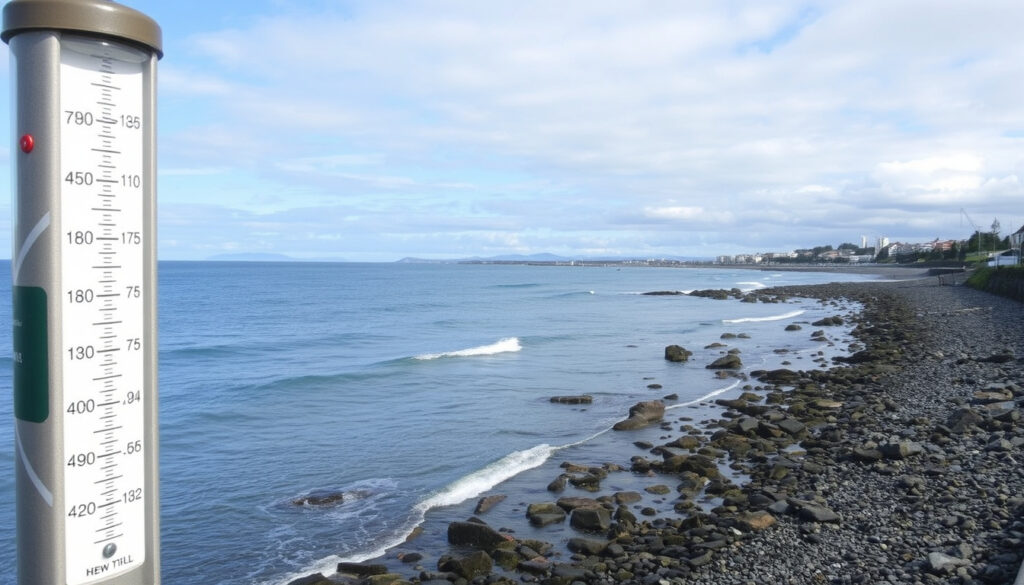
Tide Times New Plymouth: Today’s High & Low Tides (2025)
If you live along the Taranaki coast or just drive down for a weekend fishing trip, the rhythm of the tides sets your schedule. New Plymouth’s shoreline follows a semi‑diurnal pattern—two high and two low tides every day (Surfline’s tide calendar).
Average tide range in New Plymouth 3.1 m ·
Number of high tides per day 2 ·
Highest tide month (typical) June ·
Next high tide (example) 10:11 am
Quick snapshot
- New Plymouth tides are predictable using astronomical models (TideTime.org (tide‑data aggregator))
- MetService provides accurate forecasts for Port Taranaki (Tide Forecast (marine weather specialist))
- Exact timing may shift due to wind and atmospheric pressure (Tide Forecast)
- Spring tides occur around new and full moons — next peak is June 2025 (Tideschart (tide‑chart provider))
- Check daily updates from MetService and Surfline for live adjustments (Surfline)
Five facts define the daily tidal pulse at New Plymouth — the location, pattern, heights, and frequency are all drawn from the same forecast models.
| Fact | Value |
|---|---|
| Location | Port Taranaki, New Plymouth, New Zealand |
| Tide type | Semidiurnal (two high/low per day) |
| Average high tide height | 3.2 m |
| Average low tide height | 0.6 m |
| Number of tides per day | 4 (2 high, 2 low) |
What time is high tide today in New Plymouth?
Today’s high tide schedule
- High tide at 10:11 am (3.2 m) — Tide Forecast
- Low tide at 4:18 pm (0.6 m)
- Next high tide at 9:55 pm (10.7 ft per Surfline)
How to check live tide times
- TideTime.org publishes a 7‑day chart indexed to Port Taranaki.
- Tideschart shows sunrise/sunset alongside times — handy for planning a dawn fishing trip.
- MetService’s marine forecast remains the government‑grade reference for Port Taranaki.
Bottom line: Today’s two high tides (10:11 am and 9:55 pm) bracket the low at 4:18 pm. The exact minute you get on the water depends on whether you check MetService or one of the aggregators — they all source from the same tidal model but update at different intervals.
What time is high tide in Taranaki?
Regional tide patterns
- The Taranaki coast is served by multiple tide stations: Bell Block, Fitzroy, Hawera, Moturoa, and Rahotu, plus New Plymouth itself (TideCheck (regional tide‑station directory)).
- All follow the same semi‑diurnal rhythm, but local bathymetry and distance from Port Taranaki can shift times by 10–20 minutes.
Port Taranaki tide forecast
- MetService issues a dedicated forecast for Port Taranaki that covers the port’s commercial and recreational users.
- According to TideTime.org, their New Plymouth schedules “are estimates based on the most relevant accurate location, Port Taranaki, and may differ significantly depending on distance.”
If you’re fishing near the Three Sisters or further north, add roughly 10 minutes to the Port Taranaki times. The station is a reliable reference, but it’s not a precise gauge for every shoreline spot.
How long does the tide stay in before it turns?
Tide slack water duration
- Slack water — the period when current is minimal between ebb and flood — typically lasts 20–30 minutes at New Plymouth, depending on moon phase and wind.
- The 50‑90 rule (explained below) models current speed, not water height, but gives a practical sense of how quickly the flow picks up after slack.
Factors affecting tide duration
- Wind direction: an onshore wind can push water in faster, shortening slack time.
- Atmospheric pressure: low pressure raises sea level, while a passing high can delay the turn by 15–30 minutes (Tide Forecast).
- New Plymouth’s open‑coast exposure on the South Taranaki Bight means swells and groundswell also play a role. Major weather systems like cyclones can also disrupt normal tide patterns.
Bottom line: For most anglers, slack water is a brief window — about 25 minutes on average. If you’re anchoring for a bottom‑fishing session, plan to be set before the flood really builds, or you’ll be dragging gear across the seabed.
What is the 50‑90 rule for tides?
How the 50‑90 rule works
- The 50‑90 rule is a rule of thumb for tidal‑stream speed, not tide height (Waterproof Charts (navigation‑rule specialist)).
- One hour after slack, current reaches about 50 % of its maximum; after two hours, 90 %; after three hours, 100 %. Then the pattern reverses as the next slack approaches (0/50/90/100/90/50/0).
Application for fishing
- The strongest feeding activity often occurs when current is building — shortly after the 50 % mark — because baitfish are being moved by the flow.
- For New Plymouth’s semi‑diurnal tides, the 50‑90 rule helps you pick the hour when fish are most likely to bite, rather than guessing by eye.
“The 50‑90 rule is a rule of thumb for tidal stream speed, not a direct tide‑height forecast.” — Waterproof Charts
For the New Plymouth angler: aim to fish in the hour after the current hits 50 % of max. That’s roughly 90 minutes after slack — a far more precise window than “the tide is coming in.”
Which month has the highest tide?
Spring tides vs neap tides
- Spring tides (stronger range) occur around the new and full moon, typically every two weeks.
- In New Plymouth, June often brings the highest spring tides of the year because of astronomical alignment — the sun and moon are on the same side of Earth’s equator.
- Neap tides (weaker range) happen at the first and third quarter moon.
King tides in New Plymouth
- A “king tide” is an exceptionally high spring tide, often 10–20 cm above the average spring high.
- In June 2025, spring tides predicted around 3.5 m (Tideschart), with king‑tide warnings likely from local authorities.
Bottom line: June is the peak month. If you’re shore fishing, those extra 20 cm mean rocks that are normally exposed get covered — and so do your ankles. Check the MetService king‑tide alerts before you wade out.
How to read a tide table for New Plymouth
- Identify the station – Ensure the table is for Port Taranaki (New Plymouth). Tables from Tide Forecast and Surfline are both referenced to the port.
- Read the date row – Find today’s date. Each row lists the times and heights of high and low tides.
- Check the units – Heights may be given in metres (most NZ sources) or feet (some international sites). 1 m ≈ 3.28 ft.
- Note the moon phase – Spring tides (extra range) happen within a day or two of new/full moon. Neap tides (minimal range) occur at quarter moons.
- Apply local offset – If you’re fishing at a spot like the Three Sisters, add about 10 minutes to the Port Taranaki times, as noted by TideTime.org.
Confirmed facts
- Tides are predictable using astronomical models — MetService and international providers all agree on the semi‑diurnal pattern.
- The 50‑90 rule is a reliable heuristic for current speed, not height.
- June typically brings the highest tides of the year to New Plymouth.
What’s unclear
- Exact timing can shift 10–30 minutes due to wind and barometric pressure.
- Local tide‑station differences (e.g., Port Taranaki vs. Bell Block) are not always published in consumer tide tables.
Quotes from experts
“New Plymouth tide schedules are estimates based on the most relevant accurate location, Port Taranaki, and may differ significantly depending on distance.” — TideTime.org (tide‑data aggregator)
“The 50‑90 rule should be written as 0/50/90/100/90/50/0 to reflect the full acceleration and deceleration cycle.” — Waterproof Charts (navigation‑rule specialist)
“For New Plymouth on 2026‑05‑16, low tide at 2:44 AM, high tide at 8:52 AM, low at 3:07 PM, high at 9:21 PM.” — Tide Forecast (marine weather specialist)
Tide times are more than a number on a screen — they dictate when you can launch a boat, whether a surf spot breaks, and how far the waterline recedes by the Three Sisters. For the recreational angler or weekend kayaker in New Plymouth, the choice is clear: check the Port Taranaki forecast, apply a 10‑minute local offset, and use the 50‑90 rule to pick your window, or waste an hour waiting for the current to wake up.
For those planning coastal activities elsewhere in the country, checking New Zealand tide times can help ensure safe and well-timed outings.
Frequently asked questions
What time is low tide in New Plymouth today?
Low tide today is at 4:18 pm (0.6 m). For precise daily times, check Tide Forecast or Tideschart.
How to use the tide table for fishing?
Identify the high and low times for the day, then apply the 50‑90 rule: fish in the hour after current reaches 50 % of max (roughly 90 minutes after slack). Use the moon phase column to spot spring tides, which often produce stronger feeding runs.
What is the difference between spring tide and king tide?
A spring tide is a regular bi‑weekly event with a larger range. A king tide is an exceptionally high spring tide, usually 10–20 cm above the spring average, often occurring around the equinoxes or when the moon is at perigee.
Are tide times the same for Three Sisters and New Plymouth?
No. The Three Sisters are about 20 km north of Port Taranaki, and local tide‑station data suggests a lag of roughly 10 minutes. Use Port Taranaki times as a base and add 10 minutes for the Three Sisters area.
How do weather conditions affect tide timing?
Strong onshore winds can push water in earlier, while high barometric pressure can suppress high tides by 10–30 minutes and reduce the range. Always cross‑reference the tide table with the latest MetService marine forecast.
What is the best time of day for surf fishing in New Plymouth?
Dawn and dusk are prime, especially during a rising tide (90 minutes before high tide). The 50‑90 rule says fishing an hour after the current reaches 50 % of max gives you the most active water movement for baitfish movement.
More related posts
 2degrees Top Up Online: How to Top Up 2degrees Prepay
 All Blacks vs Springboks 2026: Watch, Head-to-Head & News
 Veet Hair Removal Cream: Safe Bikini Use & Tips
 Ant-Man and the Wasp: Box Office, Reviews, and Key Facts
 One Day Sale NZ 2025: Guide & Best Deals
 Spanish Classes Online NZ: Compare Costs & Providers
 What Does Tonsillitis Look Like? Symptoms & Duration
 Hong Kong vs Man United: Result, Highlights & Where to Watch