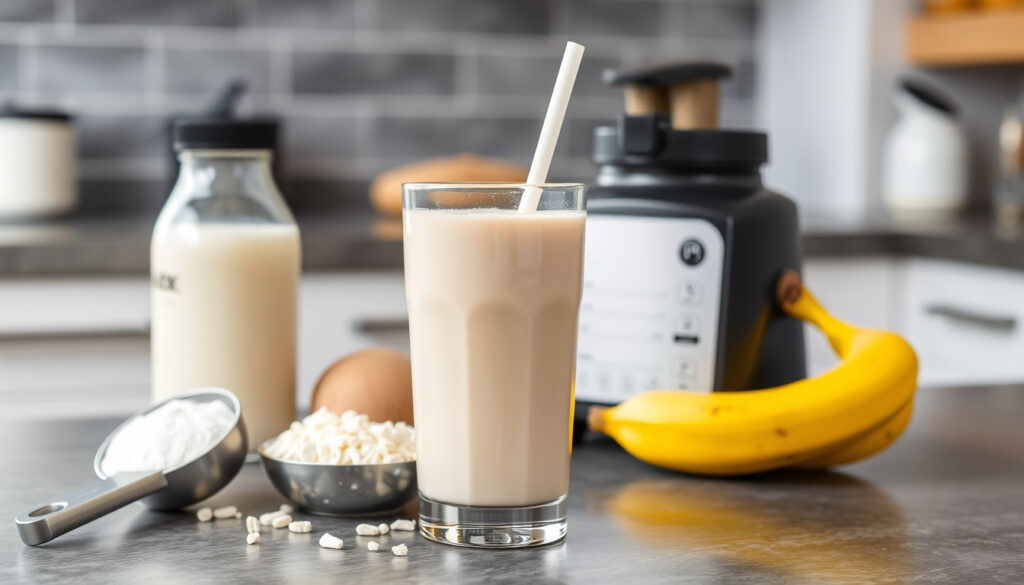
What Is a Protein Shake? Definition, Benefits & Safety
Anyone who has glanced at a gym bag or scrolled past a workout video has wondered what actually goes into that chalky chocolate drink. It is usually protein powder mixed with water, milk, or another liquid — a simple formula that fuels everything from post-workout recovery to a rushed weekday breakfast, but the real story is on the label: added sugar, hidden ingredients, and a few safety warnings that rarely make it onto the tub, and by the end you will know what a protein shake can and cannot do — and who should think twice before drinking one.
US adults consuming protein supplements: 25% regularly consume (CRN 2023) ·
Global protein supplement market (2023): $21.5 billion (Grand View Research) ·
Protein RDA per kg of body weight: 0.8 grams ·
Estimated protein in a standard shake: 20–30 grams
Quick snapshot
- Protein powder can help you meet daily protein requirements (Cleveland Clinic’s health library)
- Shakes are widely used to speed recovery, build muscle, or support weight loss (Intermountain Health’s nutrition blog)
- Whey is a recognized supplement category in official databases (NIH’s whey protein paper)
- Long-term effects of daily shakes in healthy adults are not extensively studied (Harvard Health Publishing)
- Optimal timing of shakes for weight loss remains debated among experts (Harvard Health Publishing)
- Trace heavy metals and pesticides in some powders — and their health impact at low levels — are still not fully understood (Harvard Health Publishing)
- Global protein supplement market reached $21.5 billion in 2023 (Grand View Research) (WebMD’s consumer guide)
- Protein needs rise with age, making shakes a practical option for older adults (WebMD’s consumer guide)
- One clinical study found a protein supplement well tolerated over 90 days of daily use (PubMed Central study)
- Read the label for added sugar and artificial ingredients before buying (Intermountain Health) (PubMed Central review)
- If you have kidney disease, talk to a doctor before starting high-protein shakes (PubMed Central review)
- Prefer a plant-based or lactose-free powder if whey causes bloating or cramps (PubMed Central review)
Eight rows, one pattern: the same ingredient list that makes protein shakes useful is also what drives most of their side effects. The serving-size figures come from WebMD’s consumer guide; the calorie range reflects standard product labels.
| Attribute | Typical value |
|---|---|
| Definition | Beverage made by mixing protein powder with water, milk, or a milk alternative. |
| Common protein sources | Whey, casein, soy, pea, egg white, hemp |
| Typical protein per serving | 10–30 grams |
| Calories per serving (with water) | 100–200 calories |
| Primary use | Post-workout recovery, meal replacement, or dietary supplementation |
| Key benefits | Muscle repair, muscle-mass maintenance, weight-loss support |
| Reported concerns | Added sugar, artificial ingredients, trace contaminants in some products |
| Who should be cautious | People with kidney disease, lactose intolerance, or milk/soy allergies; pregnant or nursing women (with medical advice) |
What is a protein shake?
Definition and basic ingredients
- Base: protein powder plus a liquid — water, milk, or a milk alternative (Healthengine’s health library)
- Result: a high-protein beverage that can double as a quick snack or a meal supplement
- Protein content: most shakes land between 10 and 30 grams per serving (WebMD’s consumer guide)
That sounds simple, and it is. The powder is the interesting part: concentrated protein extracted from milk, eggs, soy, peas, or hemp, then dried into a scoopable form. Mix it with liquid and you have a portable cup of protein that requires zero cooking.
Protein powder types
- Animal-based: whey and casein from milk, plus egg-white protein (whey is the most studied type — NIH’s whey protein paper)
- Plant-based: soy, pea, and hemp — also a recognized category in NIH’s supplement database
- Formats: large tubs, single-serve sachets, and ready-to-drink bottles
Whey dominates the market because it is a complete protein, meaning it contains all nine essential amino acids. Soy and pea also qualify, which is why plant-based blends have become a mainstream alternative for people who avoid dairy. The implication: a protein shake is a delivery vehicle — the real question is which powder you pour in, and what else comes with it.
What is the point of a protein shake?
Muscle recovery and growth
- Protein shakes may help repair muscles and support muscle growth after a workout (WebMD’s consumer guide)
- Amino acids from the powder give muscles the raw material for rebuilding
- That is why the post-workout shake is the most common use case
Exercise tears muscle fibers down; protein rebuilds them. A shake after training delivers amino acids quickly, and for athletes the convenience is the point — no cooking required after a hard session. Experts argue less about the perfect window and more about hitting a daily protein target in the first place.
Meal replacement convenience
- Protein powder is a quick, convenient way to add protein when a full meal is not practical (Cleveland Clinic’s health library)
- Shakes are portable, shelf-stable, and ready in under a minute
- Common situations: travel, long workdays, post-workout schedules, low appetite
The word “replacement” deserves caution. Swapping the occasional skipped breakfast for a shake is reasonable; turning every meal into a shake is a different diet entirely, because most shakes lack the fiber, vitamins, and plant compounds of whole food.
Supplementing daily protein intake
- The RDA baseline is 0.8 grams of protein per kilogram of body weight per day — and active people and older adults often need more
- Cleveland Clinic dietitians suggest aiming for at least 20 grams of protein per meal (Cleveland Clinic’s health library)
- One 20–30 gram shake can cover that per-meal threshold in a single glass
For most people, hitting daily protein is harder than it sounds — a toast-and-coffee breakfast delivers very little. A shake plugged into that gap is exactly what the supplement was designed for. What this means: for most people, the point of a protein shake is not biology, it is logistics — enough protein, conveniently, when food is not an option.
Is a protein shake the same as a smoothie?
Key differences in ingredients and intent
- Smoothies start with whole foods — fruit, vegetables, yogurt, milk, often ice
- Protein shakes start with protein powder as the base (Healthengine’s health library)
- A smoothie is a meal or a snack; a shake is a protein delivery system with flavor
The difference shows up in the glass. Smoothies run higher in calories and natural sugar depending on the fruit and add-ons; shakes are more predictable because the powder is the same scoop every time. Both can be healthy — they just answer different questions.
When a smoothie becomes a protein shake
- Add a scoop of protein powder to a fruit smoothie and the line blurs
- Most people call it a protein shake when the powder is doing the nutritional heavy lifting
- The label is about intent as much as ingredients
That blur matters in practice. A fruit-and-oat smoothie is a solid breakfast; the same smoothie with a scoop of whey becomes a higher-calorie recovery drink. Knowing which one you actually need is the difference between fueling a workout and feeding a habit.
If you want a filling breakfast, a blender full of fruit wins. If you need a controlled protein dose after training or between meetings, the shake is the sharper tool.
The pattern: a shake is defined by what dominates it — protein or everything else.
Are protein shakes healthy for you?
General health effects
- Most healthy adults tolerate moderate shake use without problems
- A 90-day clinical study reported the tested protein supplement was safe and well tolerated (PubMed Central)
- Used appropriately, shakes can be part of a balanced diet (Vitality Magazine)
The honest answer is: it depends on the product and the person. A shake made with water, a clean powder, and no added sugar is a different food from a commercial shake loaded with sweetener — even though both are sold as protein shakes.
Nutrient profile and additives
- Some commercial shakes are high in added sugar and calories (Intermountain Health’s nutrition blog)
- Harvard Health warns that some powders contain heavy metals, pesticides, or other contaminants not listed on the label (Harvard Health Publishing)
- Dairy-based powders can trigger allergic reactions; whey can cause gas, bloating, or cramps in lactose-intolerant people; large servings may bring constipation or nausea (WebMD’s consumer guide)
The label is the only defense. Sugar hides under dozens of names, “natural flavors” can cover a cocktail of additives, and a suspiciously long ingredient list is a reason to put the tub back. If the powder needs artificial sweeteners to be palatable, the protein is not the problem — the product is.
Risks of excessive intake
- High protein intake can increase the kidneys’ filtration workload and urinary calcium excretion (PubMed Central review)
- For people with existing kidney disease, that makes high-protein shakes a medical decision, not a nutrition choice
- Excess protein is not stored — it is metabolized and excreted, which is exactly where the extra strain comes from
None of this means protein shakes are dangerous for a healthy person. It means “more is better” has a limit, and for some bodies the limit is far lower than the marketing suggests.
The same convenience that makes protein shakes easy to add makes them easy to overuse. A scoop is a supplement; a tub-a-day habit is a diet — and the side-effect list starts where moderation ends.
Why this matters: the healthiest shake is the one you choose on purpose, for the protein — not for the halo that comes with the word “protein” on the package.
Is a protein shake good for weight loss?
Protein shakes as meal replacements for calorie control
- Protein increases fullness and reduces snacking — the main reason shakes appear in weight-loss plans (WebMD’s consumer guide)
- Shakes are widely marketed and used to support weight loss (Intermountain Health’s nutrition blog)
- The consistent pattern: shakes help when they replace calories, not when they add to them
A modest shake can replace a much larger meal, and the protein keeps hunger away for hours. That is the whole mechanism — no metabolic magic, just satiety and subtraction. The same shake poured on top of an unchanged diet becomes extra calories, and extra calories are the opposite of a deficit.
Timing for weight loss benefits
- Some people use shakes as breakfast or lunch replacements; others drink them post-workout
- Experts still debate the optimal timing — the deficit matters more than the clock
- The satiety effect works before a meal too, not just instead of one
If a shake replaces a snack or a heavy meal, the scale will move. If you drink it and eat the same meals anyway, it will not. The research points the same direction: protein supports weight loss inside a calorie deficit, not despite it.
A shake is a portion-control tool, not a fat burner. Use it to subtract calories from your day, and it works; add it on top of your regular diet, and the scale moves the wrong way.
The catch: a shake is only as good as the calories around it. Swap a heavy meal for one and it is a strategy; pour one over an already full diet and it is just another snack.
Who should not take protein shakes? and What are the side effects?
People with kidney disease
- High protein intake increases kidney workload and urinary calcium excretion (PubMed Central review)
- For those with existing kidney disease, high-protein shakes require a doctor’s approval
Those with lactose intolerance or allergies
- Whey can cause gas, bloating, cramps, or nausea in lactose-intolerant individuals
- Dairy and soy bases are common allergens; plant-based or lactose-free powders are alternatives
Pregnant or nursing women
- Medical advice is recommended before starting high-protein shakes during pregnancy or breastfeeding
Potential digestive side effects
- Large servings may cause constipation, nausea, or bloating, especially with whey
- Choosing a plant-based powder or adding fiber can help
Pros and cons of protein shakes
The claims below are the ones already sourced in this guide: WebMD, Cleveland Clinic, Intermountain Health, Harvard Health Publishing, and PubMed Central.
Upsides
- Quick, convenient protein when a full meal is not practical (Cleveland Clinic)
- Supports muscle repair and growth after training (WebMD)
- Helps older adults preserve muscle mass (WebMD)
- Can support weight loss through fullness and fewer snacks (WebMD)
- Available in lactose-free and plant-based versions
Downsides
- Many commercial shakes are high in added sugar and calories (Intermountain Health)
- Whey can cause gas, bloating, cramps, or nausea in sensitive people (WebMD)
- Dairy and soy bases are common allergens (WebMD)
- Some powders contain trace heavy metals or pesticides (Harvard Health)
- High protein intake may strain kidneys in people with existing disease (PubMed Central)
The trade-off is structural: convenience in one hand, ingredient risk in the other. Neither cancels the other — you are choosing which one you can live with.
What’s confirmed, what’s unclear
Research confidence here is mixed. Short-term effects are well documented; long-term questions remain open, and the overall evidence base is thinner than the supplement aisle suggests.
What the evidence supports
- Shakes deliver high-quality protein that supports muscle repair (WebMD)
- Whey and plant proteins are both recognized supplement categories (NIH’s plant protein paper)
- Moderate use was well tolerated over 90 days in a peer-reviewed study (PubMed Central)
What remains open
- Long-term effects of daily shakes in healthy adults are not extensively studied
- Optimal timing of shakes — before, after, or between meals — is still debated
- The health impact of trace heavy metals and pesticides in some powders is unresolved (Harvard Health)
- Individual responses to different protein sources vary enough that no single “best” type exists (NIH)
The split is consistent: we know what shakes do in weeks, not what they do across decades — and that gap is exactly where the caution belongs.
What the experts say
Three voices frame the range of the debate — definition, recovery, and caution.
“A protein shake is a high-protein beverage made by mixing a specially formulated protein powder with a liquid such as water, milk, or fruit juice — a useful option when a full meal is not realistic.”
“After training, muscles need amino acids to start rebuilding, and a shake delivers them quickly — which is why it became a fixture of post-workout routines.”
MyProtein nutrition team
“The hidden danger in protein powders is not the protein itself — it is what else might be in the tub, and contaminants do not have to appear on the label.”
Harvard Health Publishing
Notice the agreement beneath the different tones: shakes are convenient, effective for protein delivery, and never as simple as the package suggests.
Protein shakes are best understood as a tool with a job description: convenient protein, delivered fast. For healthy adults who struggle to hit daily protein targets, they are among the most practical fixes in the grocery aisle. For people with kidney disease, dairy or soy allergies, or a history of digestive trouble, the same tool needs a doctor’s sign-off. And for the average gym-goer or the parent replacing a skipped breakfast, the decision comes down to the label: choose a shake with recognizable ingredients and minimal added sugar — or accept that you are buying a dessert in a protein costume.
Readers interested in a thorough explanation can find a complete guide to protein shakes covering benefits and safety.
Frequently asked questions
Short answers to the questions people ask most often.
Can you drink protein shakes on an empty stomach?
Yes. A standard shake is just protein and liquid, so it will not harm an empty stomach. If you are prone to digestive discomfort, a plant-based or lactose-free powder is gentler, and a shake high in added sugar is the part worth avoiding.
Do you need protein shakes if you are not a bodybuilder?
No. Whole foods such as eggs, dairy, meat, beans, and tofu cover most people’s protein needs. Shakes are a tool for convenience — after a workout, while traveling, or when appetite is low.
Are protein shakes gluten-free?
Most plain protein powders are naturally gluten-free. Flavored blends may include wheat-derived thickeners or be made in shared facilities, so look for a certified gluten-free label if gluten is a concern.
How many protein shakes a day is safe?
For a healthy adult, one to two shakes a day fits comfortably within protein recommendations. Going well beyond that, on top of a high-protein diet, is where digestive side effects such as bloating, constipation, and nausea start.
Can teenagers drink protein shakes?
Most teenagers get enough protein from food, so shakes are usually unnecessary. For a teen athlete who wants one after practice, a single serving is fine, but a pediatrician should guide any daily supplement habit.
Do protein shakes expire?
Yes. Protein powder degrades over time, and moisture can introduce mold or bacteria. Check the best-before date, keep the tub sealed, and store it in a dry place.
Can protein shakes cause constipation?
They can, especially whey-based shakes or when a shake replaces a meal that would otherwise include fiber. Choosing a plant-based powder or adding fruit and fiber usually helps.
More related posts
 Magic Round 2026 Dates: Schedule, Tickets & More
 OKC Thunder vs Denver Nuggets Timeline: Head-to-Head Results
 Transfer Money from NZ to UK: Best Rates & Fast Methods
 Flights to Gold Coast: Costs, Times & Airlines
 Power Dividend 2025 Payout Date: Full Schedule
 Suspicious Item Nelson Evacuation: Waimea Road Incident
 100 Pounds in kg: Calculator, Formula & Common Conversions
 Pak n Save Logo: History, Colors, and Download (PNG, SVG)