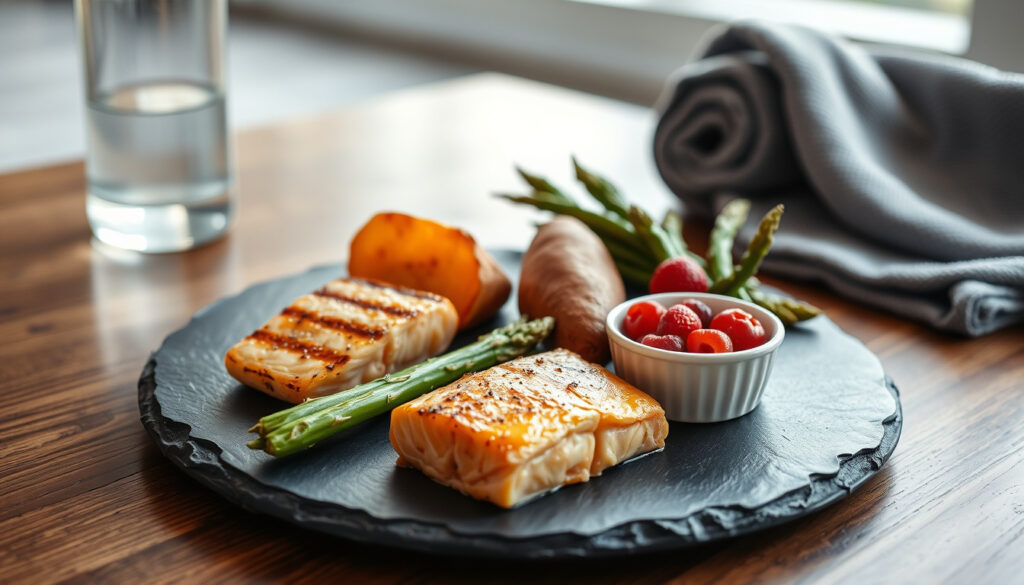
Was essen nach dem Training? The Best Post-Workout Nutrition
You’ve just peeled yourself off the gym floor, and your body is screaming for fuel. What you eat in the next hour can determine whether that hard work turns into muscle gain or just another tired afternoon.
Optimal post-workout window: 30–60 minutes · Recommended protein after training: 20–40 grams · Carb-to-protein ratio for muscle repair: 3:1 to 4:1 · Hydration goal: Replenish 150% of fluid loss within 2 hours
Quick snapshot
- Consuming protein and carbs post-workout improves muscle protein synthesis (Current Sports Medicine Reports, ACSM affiliate)
- Bananas provide quick-digesting carbs and potassium (Healthline, reviewed by dietitians)
- Optimal absolute carbohydrate dose for all individuals varies widely (ACSM Position Stand)
- Effectiveness of the 30/30/30 method is not supported by robust clinical trials (Healthline) (ACSM Position Stand)
- Evening meals should be lighter to support sleep quality (Signos)
- Eat protein + carbs within 30–60 minutes for best recovery (Current Sports Medicine Reports)
- If less than 8 hours between workouts, refuel immediately after the first bout (Current Sports Medicine Reports)
- Apply these timing principles to evening workouts with lighter, protein-focused meals (General & Medical, UK clinic)
- Combine fruit with a protein source for complete recovery (Healthline) (General & Medical, UK clinic)
Six key facts, one pattern: the “when” is just as critical as the “what” for post-workout recovery.
| Factor | Recommendation |
|---|---|
| Ideal post-workout window | 30–60 minutes after training |
| Protein needed post-workout | 20–40 grams, depending on body weight |
| Carbohydrate recommendation | 0.5–0.7 g per pound of body weight within 2 hours |
| Fluid loss replacement | Drink 16–24 oz (approx. 500–700 ml) per pound lost during exercise |
What should I eat after exercise?
The role of protein and carbohydrates
After you train, your muscles are primed to absorb nutrients. The American College of Sports Medicine (ACSM) affiliate journal reports that consuming about 0.25 g/kg of high-quality protein plus at least 0.75 g/kg carbohydrate supports both muscle protein synthesis and glycogen resynthesis. That translates to roughly 20–30 grams of protein for a 150-lb person — about the amount in a scoop of whey or a chicken breast.
Consuming about 0.25 g/kg of high-quality protein plus at least 0.75 g/kg carbohydrate supports both muscle protein synthesis and glycogen resynthesis.
How much and when to eat
For vigorous endurance activity longer than 90 minutes, the ACSM’s Health & Fitness Journal recommends refueling within 30 minutes with a carb-to-protein ratio of 2:1 for short, low- to medium-intensity workouts and 3:1 for long, high-intensity sessions (ACSM Health & Fitness Journal). The International Society of Sports Nutrition advises high-quality protein within the first 2 hours after a workout when muscle gain is the goal (Healthline).
Protein co-ingestion with carbohydrate improves net protein balance after exercise.
For anyone with a late workout, the 30–60 minute window is still valid — but the meal must be lighter. Heavy fats and large portions close to bedtime can disrupt sleep, which is itself a recovery tool. Signos nutritionists advise emphasizing protein and complex carbs while keeping total calories moderate.
The implication: timing is two-part — eat soon, but also eat right for your schedule.
Is a banana good after a workout?
Nutrition profile of the banana
Bananas are a classic post-exercise fruit for good reason. Healthline highlights that bananas provide quick-digesting carbohydrates (about 27 g per medium fruit) and potassium, an electrolyte lost in sweat. They are effective for replenishing glycogen after a session, especially when combined with a protein source.
Banana vs. other fruits
While bananas score high on the glycemic index — meaning rapid carb delivery — berries and oranges offer additional antioxidants that may reduce exercise-induced oxidative stress. The Healthline editorial board recommends pairing any fruit with Greek yogurt or milk for a complete recovery snack. One medium banana plus a cup of milk delivers roughly 15 g of protein and 40 g of carbs — a solid 1:3 ratio for moderate training.
Why this matters: fruit alone leaves you short on protein, but a banana as a carb base is hard to beat for convenience and speed.
What to eat after an evening workout
Light, protein-rich options for nighttime
Evening training demands a different strategy. General & Medical, a UK-based healthcare provider, recommends lean proteins (grilled chicken, tofu, cottage cheese) with moderate carbohydrates and minimal fats to support recovery without burdening digestion before bed. Casein protein — found in cottage cheese and Greek yogurt — digests slowly, providing a sustained amino acid release that supports overnight muscle repair.
Timing before sleep
Signos advises finishing your post-workout meal at least 60–90 minutes before hitting the pillow. A heavy, high-fat dinner can delay gastric emptying and impair sleep quality, offsetting the gains from training. The goal: enough fuel for repair without a full stomach.
For athletes focused on fat loss, an evening meal that prioritizes protein (30–40 g) and keeps net carbs below 30 g may support both recovery and overnight fat oxidation. But stricter calorie cuts risk under-recovery — the Current Sports Medicine Reports review emphasizes that frequent carbohydrate feedings over 8–24 hours sustain maximal daily muscle protein synthesis.
The catch: evening weight-loss approaches must balance caloric deficit with the body’s recovery needs — skimping on carbs entirely can backfire.
What is the 30/30/30 rule?
The three components: 30g protein, 30 minutes movement, 30% fat
Popularized by author Timothy Ferriss in The 4-Hour Body, the 30/30/30 method involves consuming 30 grams of protein within 30 minutes of waking, followed by 30 minutes of steady-state cardio. While it has gained traction as a fat-loss and metabolic health protocol, it is not a standard sports nutrition guideline. Healthline notes that the evidence for its effectiveness relies largely on anecdotal reports rather than controlled trials.
Application for weight loss and muscle gain
The rule’s protein focus at breakfast aligns with general recommendations to spread protein intake across meals — but its rigid structure may not suit evening trainers. For someone lifting in the evening, applying a “30g protein within 30 minutes post-workout” is more practical and better supported by research from the ACSM (ACSM).
The pattern: the 30/30/30 method works best as a motivational tool, not a science-backed replacement for evidence-based post-workout nutrition.
What fruit should you eat after exercise?
Fruits with high glycemic index
In addition to bananas, fruits like dates and melons deliver rapid carbohydrates. Healthline recommends pairing any fruit with a protein source. For those who train at night, a small fruit portion combined with cottage cheese delivers casein protein for sustained overnight repair.
Antioxidant-rich options
Berries, cherries, and oranges provide polyphenols that may reduce exercise-induced inflammation. The ACSM Health & Fitness Journal suggests a carb-to-protein ratio of 3:1 for moderate exercise, easily achieved by pairing fruit with Greek yogurt.
The implication: fruit is the easiest carb source post-workout — but always pair it with protein to maximize recovery.
Clarity check: what we know vs. what’s still open
Confirmed facts
- Consuming protein and carbs post-workout improves muscle protein synthesis (Current Sports Medicine Reports).
- Bananas are a good source of carbs and potassium post-exercise (Healthline).
What’s unclear
- Optimal absolute carbohydrate dose for all individuals post-workout varies widely (ACSM Position Stand).
- Effectiveness of the 30/30/30 method is not supported by robust clinical trials (Healthline).
- Evening meals should be lighter to support sleep quality (Signos).
Ignoring the post-workout window means leaving gains and recovery on the table.
rebrandx.acsm.org, leanffmi.com, youtube.com, journals.lww.com, multibriefs.com, us.myprotein.com
For a deeper dive into optimal recovery meals, the post-workout nutrition guide provides evidence-based recommendations on protein, carbs, and timing.
Frequently asked questions
Can I eat a full meal immediately after training?
Yes, if it’s balanced with protein and carbs and you have 1–2 hours before bed. If training late, opt for a smaller portion to avoid disrupting sleep.
What should I drink after a workout for best recovery?
Water to rehydrate, plus milk or a protein shake for protein and carbs. Avoid sugary sodas and alcohol.
Is it okay to train on an empty stomach?
It can be for low-intensity sessions, but for strength or high-intensity work, a pre-workout snack improves performance and reduces muscle breakdown.
How long after eating can I work out?
Allow 1–3 hours for a full meal, or 30–60 minutes for a light snack, to avoid cramping and sluggishness.
Do I need a protein shake after every workout?
Not if you eat enough whole-food protein within the recovery window. Shakes are convenient but not mandatory.
Can I lose weight by eating less after evening training?
Severely restricting post-workout calories can hinder recovery and muscle maintenance. A controlled, protein-rich meal supports fat loss while preserving lean mass.
Related reading