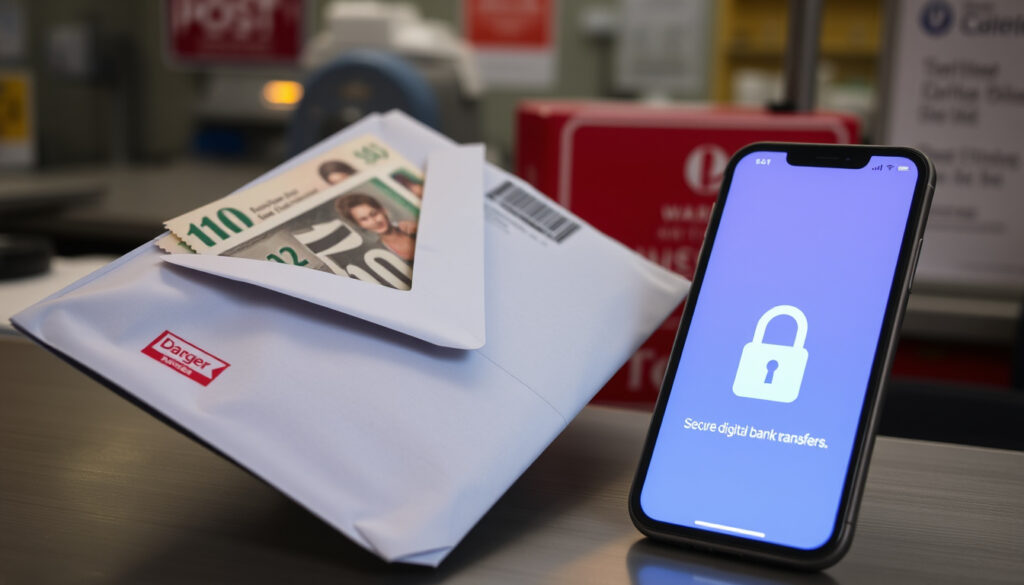
Sending Money to Australia by Post – Legal Risks and Safe Alternatives
Sending money to Australia by post might seem like a straightforward solution, but the reality involves significant legal restrictions, customs requirements, and practical risks that make it a poor choice for most senders. Both Australian and international postal services impose strict prohibitions on mailing cash, while the U.S. Postal Service has recently discontinued its international money order program entirely. Understanding these rules is essential before attempting any form of postal money transfer to Australia.
For those looking to support family members or transfer funds across the Pacific, electronic alternatives offer faster delivery, better security, and full compliance with applicable regulations. This guide examines what the law permits, what postal services actually allow, and which modern alternatives provide the safest path forward.
Whether you are considering mailing a money order or exploring other methods, the information below will help you avoid costly mistakes and ensure your transfer reaches its destination legally and reliably.
Is It Legal and Safe to Send Cash by Post to Australia?
Both the United States Postal Service and Australia Post explicitly prohibit sending physical cash through international mail services. This restriction covers coins, banknotes, currency notes, and paper money in Priority Mail Express shipments and other international postal products. The prohibition exists primarily due to the high risk of theft during transit and the potential for misuse in money laundering operations.
Australia Post does offer domestic money orders within Australia, which provide certain privacy benefits and safety features. These instruments require only the nominated recipient to collect funds, eliminating the need to disclose bank account details. However, these services operate strictly within Australian borders and cannot be used for international transfers.
- Physical cash is prohibited in all international postal shipments to Australia
- The U.S. Postal Service discontinued international money order services on October 1, 2025
- Australian customs requires declaration of A$10,000 or more in cash or foreign currency
- Bearer negotiable instruments including money orders require declaration above A$10,000
- Electronic transfers through banks or licensed services require no cash declaration
- Structuring transfers to avoid reporting thresholds is illegal and carries criminal penalties
- Transfer services may impose their own limits based on account history and verification
| Factor | Postal Cash | Money Orders | Bank Transfer |
|---|---|---|---|
| Legality for international | Prohibited | Limited availability | Fully legal |
| Customs declaration required | Yes, above A$10,000 | Yes, above A$10,000 | Not required |
| Risk of loss/theft | High | Moderate | Low |
| Tracking capability | Limited | Limited | Full tracking |
| Speed | Days to weeks | Days to weeks | Hours to days |
As of October 1, 2025, the U.S. Postal Service no longer sells or cashes international money orders. This eliminates a historically common method for sending funds to Australia and makes electronic transfers the primary compliant option for U.S. senders.
How to Send a Money Order to Australia by Post
International money orders present a complicated picture for those considering postal transfers to Australia. While domestic money orders remain available through Australia Post for transfers within the country, the international pathway has become increasingly restricted. The discontinuation of USPS international money order services removes one of the few remaining postal options for cross-border transfers from the United States.
Understanding Australia Post Domestic Money Orders
Australia Post money orders offer several features that make them attractive for domestic use. Recipients must present identification to collect funds, which provides a layer of security. The system also preserves privacy by not requiring disclosure of bank account details. However, these instruments cannot be purchased from overseas and are designed exclusively for Australian domestic transactions.
For senders located outside Australia, the domestic money order system provides no viable pathway. The requirement that funds be collected at an Australian post office location does not overcome the fundamental barrier that these instruments are unavailable to international purchasers.
Declaration Requirements for Mailed Financial Instruments
Australian customs regulations require travellers and mailers to declare amounts of A$10,000 or more in combined cash or foreign currency equivalent when entering or leaving Australia. This threshold applies regardless of whether the funds are carried personally, mailed, or shipped via courier or freight services.
Bearer negotiable instruments including traveller’s cheques, cheques, promissory notes, bearer bonds, money orders, and postal orders also trigger declaration requirements when the total reaches A$10,000 or more. Failure to declare can result in seizure of the funds and potential criminal penalties.
When you transfer money through a bank or licensed money transfer business, you do not need to declare the funds to Australian customs. Electronic transfers are treated differently from physical cash or bearer instruments under Australian law.
For those who must send financial instruments by mail despite the restrictions, proper declaration becomes mandatory. Any package containing money orders, postal orders, or other bearer instruments with a combined value approaching A$10,000 should include a customs declaration form and clear labelling of the contents.
What Are the Risks of Mailing Money to Australia?
The risks associated with sending money to Australia by post extend beyond simple legal prohibitions. Physical mail containing cash or valuable financial instruments faces multiple hazards that can result in permanent loss of funds. Understanding these risks helps explain why regulatory bodies and postal services consistently advise against postal cash transfers.
Security and Loss Risks
International mail passes through numerous handling points before reaching its destination. At each point, the package remains vulnerable to theft, damage from weather conditions, or misrouting. Unlike registered letters with tracking, standard packages containing money orders or other instruments offer limited recourse if contents are stolen or the package goes missing.
Insurance coverage for lost or damaged international mail typically caps reimbursement at the cost of postage and minimal contents value. Recovering the actual monetary value of stolen cash or money orders through postal insurance proves extremely difficult and rarely results in full compensation.
Regulatory and Seizure Risks
Australian Border Force officers have authority to seize cash or bearer instruments that arrive without proper declaration or that appear suspicious. Seized funds may be held pending investigation, and senders face the burden of proving legitimate origin and purpose to recover their money.
The practice of structuring transfers, where someone makes multiple smaller shipments to avoid the A$10,000 declaration threshold, carries particularly severe consequences. Australian law treats structuring as a criminal offence punishable by fines and imprisonment. What may seem like a practical workaround to avoid paperwork can result in criminal charges.
Using a bank or money transfer service eliminates customs seizure risk entirely because electronic transfers do not trigger physical goods inspection. For any transfer amount, electronic methods provide compliance certainty that mailing cash cannot match.
Practical Limitations
Delivery times for international mail vary significantly based on origin country, shipping method, and customs processing. Unlike electronic transfers that arrive within hours or days, postal methods may take weeks. During that time, neither sender nor recipient has reliable information about the package location or expected arrival.
For urgent financial needs, postal methods prove particularly unsuitable. A family emergency requiring immediate funds cannot wait for international mail to navigate customs and delivery processes that may extend well beyond a week.
What Are the Best Alternatives to Sending Money by Post?
The closure of USPS international money order services effective October 1, 2025, has accelerated the shift toward electronic transfer methods. Modern financial services offer multiple pathways for sending money to Australia that combine security, speed, and cost effectiveness. Selecting the right option depends on transfer amount, urgency, and available funding sources.
Bank Wire Transfers
Traditional bank transfers remain one of the most reliable methods for sending money internationally. While exchange rates may include a margin above the interbank rate, the overall cost for large transfers often proves competitive when considering the security and reliability of delivery. Bank transfers typically arrive within one to three business days depending on correspondent bank processing.
For senders with established banking relationships, initiating an international wire transfer requires providing the recipient’s account details, SWIFT code, and Australian bank branch details. Banks report large transactions to regulatory authorities as required by law, ensuring compliance with anti-money laundering requirements.
Wise (Formerly TransferWise)
Wise has established itself as a popular choice for international money transfers by offering exchange rates closer to the mid-market rate than traditional banks. The service allows funding via bank transfer, debit card, or credit card, with bank-funded transfers typically providing the best value and fastest processing times.
The platform provides full tracking visibility throughout the transfer process, allowing both parties to monitor progress in real time. Wise also handles regulatory compliance, reporting thresholds, and currency conversion, removing administrative burden from the sender.
Other Licensed Money Transfer Services
The money transfer industry includes numerous licensed operators offering services to Australia. When selecting a provider, verifying licensing and regulatory registration becomes essential. Unlicensed operators may offer attractive rates but pose significant fraud and fund recovery risks.
Comparison shopping across multiple providers helps identify the best combination of exchange rate, transfer fees, and delivery speed for specific transfer amounts. Many services offer first-transfer promotions or reduced fees for certain destination countries.
Look for providers licensed to operate in both your origin country and Australia. Check registration with financial intelligence units and read independent reviews before committing funds. The lowest fee rarely represents the best overall value when exchange rate margins are factored in.
Timeline of Regulatory Changes Affecting Postal Money Transfers
The regulatory landscape governing international money transfers to Australia has evolved significantly over the past two decades. Tracking these changes helps explain why postal methods have become increasingly impractical and why electronic alternatives now dominate cross-border fund movements.
- 2010s: International postal services begin tightening restrictions on cash in mail shipments amid terrorism financing concerns and increased security protocols at international borders.
- 2015–2019: Digital transfer services like Wise gain popularity as smartphone adoption enables mobile money transfers. Traditional wire transfer fees face increased scrutiny and competition.
- 2020–2023: COVID-19 pandemic accelerates shift away from physical mail and cash transactions. Australia Post reduces international service options while digital transfer adoption accelerates.
- 2024: U.S. Postal Service announces upcoming discontinuation of international money order services, citing declining demand and operational costs.
- October 1, 2025: USPS international money order program officially ends. Senders in the United States lose access to this historically common postal transfer method.
This trajectory reflects broader global trends toward digital financial services and away from physical cash transactions. Australia maintains particularly strict import controls on cash and bearer instruments, consistent with its position as a G20 economy with comprehensive anti-money laundering regulations administered through AUSTRAC.
What Is Established Versus Uncertain in Current Rules?
Established Information
- Cash is prohibited in international mail to Australia
- USPS stopped issuing international money orders on October 1, 2025
- A$10,000 declaration threshold applies to cash and bearer instruments
- Electronic transfers do not require customs declaration
- Australia Post domestic money orders exist but are Australia-only
- IRS requires reporting of $10,000+ wire transfers from U.S.
- AUSTRAC requires financial institutions to report large transactions
Information That Remains Unclear
- Specific daily limits imposed by individual transfer services
- Processing times vary significantly by provider and transfer size
- Exact documentation requirements vary by sender country of origin
- Future regulatory changes to declaration thresholds
- Specific insurance recovery rates for lost postal shipments
- Timeline for AUSTRAC guidance updates regarding new transfer methods
While the core prohibitions and requirements remain clear, individual transfer services maintain discretion over processing timelines and documentation requests. Senders should contact specific providers for current information applicable to their circumstances.
Global Context: Why Postal Money Transfers Are Declining
Australia’s strict stance on cash imports reflects a broader international movement toward digital transaction monitoring and away from anonymous cash transactions. Financial regulators worldwide have implemented increasingly sophisticated systems for tracking large electronic transfers, making digital methods more compliant than physical alternatives.
The closure of USPS international money order services marks a milestone in this transition. What was once a common method for Pacific Rim money transfers has become unavailable for U.S. senders. Similar restrictions exist in most developed economies, reflecting consensus that anonymous cash movements pose money laundering and terrorism financing risks.
For senders accustomed to traditional postal methods, the shift requires adapting to new technologies. However, the transition offers meaningful benefits including faster delivery, lower costs, better tracking, and assured regulatory compliance. The infrastructure supporting international electronic transfers has matured significantly, making digital methods accessible even to those without extensive banking relationships.
Official Sources and Regulatory References
“Physical cash cannot be sent through standard international mail services. Both USPS and Australia Post prohibit coins, banknotes, currency notes, and paper money in international Priority Mail Express shipments to Australia.”
— U.S. Postal Service International Mail Manual
“If you physically travel with cash or mail it, Australian customs regulations require declaration of A$10,000 or more in combined cash or foreign currency equivalent. Importantly, you do not need to declare money if you transfer it through a bank or money transfer business.”
— AUSTRAC, Australian Government
Primary regulatory oversight comes from AUSTRAC in Australia and the Financial Crimes Enforcement Network in the United States. Financial institutions operating between the two countries maintain compliance programs aligned with both jurisdictions’ requirements.
For those seeking current information on transfer regulations, the official websites of Australia Post, the U.S. Postal Service, AUSTRAC, and the IRS provide authoritative guidance. Transfer service providers also maintain compliance information tailored to specific origin and destination countries.
Summary: Making Safe and Compliant Transfers to Australia
Sending money to Australia by post, particularly in the form of cash, is heavily restricted and inadvisable. Physical currency cannot legally travel through international postal channels, and the discontinuation of USPS international money order services has eliminated another historical option. For those considering mailing money orders or other bearer instruments, customs declaration requirements apply at the A$10,000 threshold, and seizure of undeclared funds remains a genuine risk.
Electronic transfers through banks and licensed money transfer services represent the safest, fastest, and most compliant pathway for sending funds to Australia. These methods avoid customs declaration requirements entirely, provide real-time tracking, and ensure full compliance with anti-money laundering regulations in both Australia and the sender’s country of origin. While postal services once served as the primary mechanism for international fund transfers, the modern regulatory environment has made digital alternatives the clear choice for responsible senders.
For broader financial guidance relevant to Pacific transfers, comparing options across multiple providers remains essential. Understanding the complete cost structure, including exchange rate margins and transfer fees, helps identify the best value for specific transfer amounts and timelines.
Frequently Asked Questions
How much cash can I send by mail to Australia?
Physical cash cannot legally be sent through international mail to Australia. While declaration is required for A$10,000 or more, the underlying prohibition means no amount of cash should be mailed. Bearer instruments like money orders have their own restrictions and declaration requirements above A$10,000.
What are Australia customs rules for mailed money?
Australian customs requires declaration of A$10,000 or more in combined cash or foreign currency equivalent when mailed or carried. Bearer negotiable instruments including money orders also trigger declaration requirements at this threshold. Electronic transfers do not require customs declaration.
Can I track mailed money to Australia?
Standard international mail offers limited tracking capability compared to electronic transfers. While registered mail provides some tracking visibility, it does not match the real-time monitoring available through bank transfers or licensed money transfer services. Tracking limitations contribute to the risk of mailing financial instruments.
Is it safe to send money internationally by post?
Postal money transfers carry significant risks including theft during transit, loss or damage to packages, customs seizure of undeclared funds, and lack of recovery options if items go missing. Electronic transfers offer far superior security, full tracking, and regulatory compliance certainty.
What happened to international money orders from the US?
The U.S. Postal Service discontinued international money order services on October 1, 2025. Senders in the United States can no longer purchase new international money orders. Existing purchased orders can still be tracked or reported as lost or stolen, but no new international money orders are being issued.
Do I need to declare electronic transfers to Australia?
No. Australian customs regulations specifically exempt electronic transfers through banks or money transfer businesses from declaration requirements. This distinction is a key advantage of digital methods over physical cash or bearer instruments.
What alternatives exist for sending money to Australia?
Bank wire transfers, Wise, and other licensed money transfer services represent the primary alternatives. These options offer competitive exchange rates, fast delivery times, full tracking, and complete regulatory compliance. Comparing providers helps identify the best value for specific transfer amounts.
More related posts
 Longest Flight in the World: Top Routes, Durations & Records
 Vape Shop Upper Hutt – Top Retailers Ratings and Guide
 b.box Lunch Box: Leakproof, BPA-Free, Whole Fruit Design
 What Does Matcha Taste Like? Flavor Guide + Comparisons
 Open Polytechnic Free Courses: Zero-Fee Study Guide
 Cast of Sex Education – Complete Guide to All Seasons
 Best 65 Inch TV in NZ: Prices, Reviews & Top Picks
 Cast of The Conjuring: Last Rites – Full Cast Guide