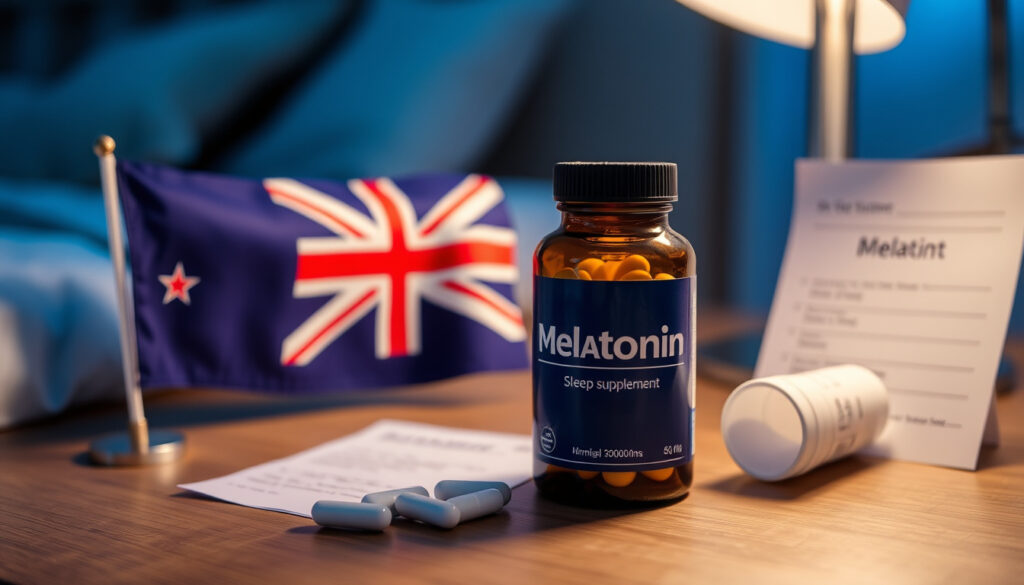
Melatonin NZ Buy Online: Rules, Doses & Where to Get It
If you’ve ever tried to buy melatonin for jet lag in New Zealand, you’ve probably run into a confusing wall of pharmacy rules and online contradictions. That confusion is about to clear up — as of late 2024, Medsafe reclassified melatonin so adults can pick it up from pharmacies without a prescription for short‑term jet lag use. Here’s exactly what’s legal, where to buy it online, and what dose actually makes sense.
Maximum OTC dose per intake: Less than 5 mg · Maximum supply without prescription: 10 days · Typical price (2 mg, 30 tablets): NZD $16.99 (Chemist Warehouse) · Allowed without prescription for: Jet lag only · Reclassification date (pharmacy‑only): 2024 (latest update October 2025)
Quick snapshot
- OTC sale for jet lag allowed at NZ pharmacies (Healthify NZ)
- Max OTC dose: less than 5 mg per unit (Medsafe MARC 2025)
- 0.5 mg to 5 mg doses are similarly effective for jet lag (Cochrane review)
- Actual availability of melatonin products in NZ stores is still uncertain (Healthify NZ)
- Import rules for higher‑dose melatonin from abroad remain ambiguous (Healthify NZ)
- Long‑term safety of daily melatonin use in healthy adults is not well studied (Healthify NZ)
- Medsafe reclassification effective October 2024 (Medsafe MARC report)
- Healthify updated their guidance on 23 Oct 2025 (Medsafe MARC report)
- No approved melatonin products are currently listed for jet lag or insomnia in adults under 55 (Medsafe warning)
- Expect pharmacies to stock melatonin for jet lag within months
- Online orders from overseas may face customs scrutiny if doses exceed 5 mg
- Ongoing trials may expand indications to primary insomnia
Five key facts, one pattern: New Zealand’s melatonin landscape shifted suddenly, but the practical availability still lags behind the legal change.
Here’s a quick reference for the main regulatory numbers.
| Fact | Value |
|---|---|
| Legal Status in NZ | Prescription medicine with OTC exemption for jet lag |
| Max OTC Dose | Less than 5 mg per dose |
| Max Supply Without Prescription | 10 days |
| Common Brands | Melotin, VIGISOM, Biovea |
| Price Range (30 tablets) | NZD $16.99 – $34.99 |
Can I buy melatonin over the counter in NZ?
Yes – provided you are 18 or older and using it for jet lag. As of October 2024, the Medicines Classification Committee approved a pharmacy‑only exemption for immediate‑release melatonin at ≤5 mg per dose unit, up to a 10‑day supply (Medsafe MARC report). That means you can walk into any NZ pharmacy or order online from a registered pharmacy like Chemist Warehouse, Zoom Pharmacy, or Bargain Chemist without a prescription.
What are the current regulations for ordering melatonin to NZ?
Online pharmacies that operate in New Zealand must follow the same rules: they can only supply melatonin for jet lag, in immediate‑release form, up to 5 mg per dose and a maximum 10‑day course. Some overseas websites may sell higher doses, but importing those is a grey area – customs could treat them as unapproved medicines.
New Zealanders can legally buy melatonin online from local pharmacies for jet lag, but importing stronger doses from abroad carries legal risk because those products are not approved by Medsafe.
Is a prescription required for melatonin in New Zealand?
For uses other than jet lag – chronic insomnia, shift work, or children – melatonin remains a prescription‑only medicine. The reclassification specifically exempts short‑term jet lag use in adults 18 +. That is per the official guidance from Healthify NZ.
Can I buy melatonin online without a prescription in NZ?
Yes, as long as the seller is a registered NZ pharmacy and you are purchasing a compliant product (immediate‑release, ≤5 mg, ≤10‑day supply). Websites like Chemist Warehouse and Zoom Pharmacy list melatonin products that meet these criteria. Always check that the product carries a Medsafe approval number – if it doesn’t, it may not be legally supplied.
The implication: the legal path is open, but supply chains need to catch up.
Is it legal to order melatonin from abroad?
Personal importation of medicines for up to three months’ supply is generally allowed under NZ law, but melatonin that exceeds the OTC limits (i.e., >5 mg or extended‑release) may be considered a prescription medicine. Customs could seize shipments if the product is not approved by Medsafe (Medsafe import guidance).
Is melatonin a controlled drug in NZ?
No – melatonin is not a controlled drug. It is classified as a prescription medicine, with a specific pharmacy‑only exemption for jet lag. This means you cannot be charged for possession, but supplying it outside the exemption (e.g., selling it without a pharmacist) is illegal.
What is the legal status of melatonin in NZ?
Medsafe clearly states that melatonin is a prescription medicine under the Medicines Act 1981. The 2024 reclassification created a narrow exemption: pharmacy‑only, for adults 18 +, for immediate‑relief of jet‑lag symptoms only, at ≤5 mg per dose and a maximum of 10 days’ supply (Medsafe MARC report).
This gap is critical: the regulatory change is ahead of the market, so don’t expect immediate availability.
The pattern: personal import remains possible for compliant doses, but enforcement can be unpredictable.
When will melatonin be OTC in NZ?
The reclassification took effect in October 2024, so technically melatonin is already available over‑the‑counter (at pharmacies) for jet lag. However, because Medsafe has not approved any specific product for this indication yet, pharmacies may not stock it. The first products – likely brands like Melotin, VIGISOM, or Biovea – are expected to appear on shelves within 2025–2026.
Has melatonin already become OTC in New Zealand?
In the narrow sense of “available without a prescription at a pharmacy,” yes. In the practical sense of “you can walk into a chemist and buy it,” not yet. The rules changed, but the products haven’t arrived. This is a common lag between regulatory decision and market supply.
What are the recent changes to melatonin regulations in NZ?
The key change: on 10 October 2024, Medsafe reclassified immediate‑release melatonin from prescription‑only to pharmacy‑only for adults with jet lag, up to 5 mg per dose, for a maximum of 10 days. The same report also allowed up to 30 days’ supply for primary insomnia, but only if a specific approved medicine becomes available (Medsafe MARC report).
What this means: the regulatory window is open, but product availability is a separate hurdle.
What is the maximum safe dosage for melatonin?
For jet lag, the evidence says more is not better. The Cochrane review found that doses between 0.5 mg and 5 mg are similarly effective, and doses above 5 mg show no additional benefit (via PubMed Cochrane review). BPAC NZ agrees that 0.5–5 mg is the effective range (BPAC NZ).
What is the recommended dosage of melatonin for adults?
- Start with 0.5 mg – 2 mg taken at bedtime in the destination time zone.
- If that doesn’t help, 5 mg is the maximum OTC dose in NZ.
- Do not take before 8 pm or after 4 am as it can shift your body clock the wrong way (Healthify NZ).
Is 30 mg of melatonin safe?
No – 30 mg is far above the effective range and may cause headaches, dizziness, nausea, and excessive drowsiness. There is no evidence it works better for jet lag, and it can be dangerous if combined with other medications (Drugs.com).
What is the maximum dose of melatonin per day?
In NZ, the legal OTC limit is less than 5 mg per dose. For prescription use, a doctor may recommend up to 10 mg for specific conditions, but daily use should only be under medical supervision.
Taking 30 mg of melatonin is like turning a dimmer switch up to full blast – it doesn’t turn off the lights faster, just risks blowing a fuse. Stick to the proven 0.5–5 mg window.
The catch: exceeding 5 mg offers no added benefit and adds risk.
What is the best sleep aid to knock you out?
Melatonin is not a sedative – it’s a chronobiotic that helps reset your body clock. For jet lag, it’s the best studied option. But for chronic insomnia, other options like ramelteon (a stronger melatonin receptor agonist) or low‑dose doxepin may be more effective – but they require a prescription in NZ.
How does melatonin compare to ramelteon?
Ramelteon is a melatonin receptor agonist with about 10 times the potency of melatonin at the MT1/MT2 receptors (PMC review). It’s approved for insomnia with sleep‑onset difficulty but is not available OTC. Melatonin is preferred for jet lag because it’s gentler and mimics natural sleep‑wake cues.
Are there natural sleep aids that work better than melatonin?
L‑theanine, valerian root, and magnesium are sometimes used for relaxation, but the evidence for their efficacy in jet lag is far weaker than for melatonin. The Mayo Clinic recommends melatonin as first‑line for jet lag, not herbal supplements (Mayo Clinic).
What are the side effects of melatonin vs other sleep aids?
Upsides
- Low side effect profile for short‑term use
- No anticholinergic effects (unlike diphenhydramine)
- Works with your natural circadian rhythm
- Safe for short‑term jet lag use in adults
Downsides
- Not a sedative – won’t “knock you out”
- May cause headaches, grogginess if taken at wrong time
- Long‑term safety data lacking
- Not effective for chronic insomnia without medical cause
The trade‑off: Melatonin is low‑risk but mild. If you need a strong sedative for occasional insomnia, antihistamines like diphenhydramine are available OTC but carry anticholinergic side effects – they are not recommended for repeated use (NHS).
The pattern: for jet lag, melatonin is the evidence-backed choice; for chronic insomnia, it’s not.
Steps for using melatonin for jet lag
- Identify travel direction. Melatonin works best for eastward travel (e.g., NZ to USA) and less well for westward travel (Healthify NZ).
- Choose your dose. Start with 0.5–2 mg. If you’ve used melatonin before, 3–5 mg is fine – but don’t exceed 5 mg for OTC use.
- Timing is everything. Take melatonin at bedtime in the destination time zone. Do not take it before 8 pm or after 4 am. Do not take it before departure (BPAC NZ).
- Repeat for up to five nights. Continue the same dose at the same bedtime for up to five nights after arrival (Healthify NZ).
- No pre‑flight doses. There is no proof that taking melatonin before the flight helps jet lag (Healthify NZ).
The takeaway: timing and dose discipline matter more than the drug itself.
What’s confirmed and what’s still unclear
Confirmed facts
- Melatonin OTC for jet lag is legally allowed in NZ as of 2025 (Healthify NZ).
- 5 mg per dose is the maximum for OTC sales in NZ (Medsafe MARC).
- 30 mg can cause adverse effects (Drugs.com).
- Doses between 0.5 mg and 5 mg are similarly effective for jet lag (Cochrane review).
What’s unclear
- Long‑term effects of daily melatonin use are not well studied.
- Exact date of the OTC reclassification published by Medsafe is not widely publicised.
- Whether imported melatonin will be stopped by customs if dosage exceeds OTC limit.
- Whether pharmacies will stock melatonin for jet lag in 2025 or 2026.
The balance: the confirmed facts outweigh the uncertainties for short-term jet lag use.
“You are allowed to buy immediate release melatonin for up to 10 days’ supply for jet lag (less than 5 mg per dose).”
— Healthify NZ (NZ Health Portal)
“Melatonin is a prescription medicine but can be supplied without a prescription for jet lag under certain conditions.”
— Medsafe guidance (via Healthify NZ)
“Melatonin is not a first‑line treatment for chronic insomnia; its use should be limited to jet lag and specific circadian disorders.”
— BPAC NZ (prescribing advisory for NZ clinicians)
The reclassification opens a door, but the practical reality is that New Zealanders may still need to wait for products to hit pharmacy shelves. For travellers, the smart play is to use low‑dose melatonin (0.5–5 mg) for eastward trips, follow strict timing rules, and avoid the temptation to import high‑dose bottles from overseas. For chronic insomnia, melatonin is not the answer – a GP should guide you towards evidence‑based treatments. For the average Kiwi looking to beat jet lag, the choice is clear: buy a compliant product from a local online pharmacy when it becomes available, or stick to natural light exposure and strategic napping.
medsafe.govt.nz, saferx.co.nz, youronlinepharmacy.co.nz, nzheadline.nz, youtube.com, trial.medpath.com, bpac.org.nz, edu.cdhb.health.nz
Frequently asked questions
Can I buy melatonin gummies in NZ?
Melatonin gummies are not yet widely available in NZ pharmacies. Most approved products are immediate‑release tablets or capsules. Gummies imported from overseas may not comply with Medsafe limits and could be seized by customs.
How much does melatonin cost at Chemist Warehouse?
As of late 2025, Chemist Warehouse NZ lists melatonin 2 mg (30 tablets) at NZD $16.99, and 3 mg (30 tablets) around NZD $24.99. Prices vary by brand and formulation.
Is it safe to buy melatonin online in NZ?
Yes, if you buy from a registered NZ pharmacy. Avoid unknown overseas sellers – they may sell unapproved strengths or counterfeit products. Always check for Medsafe approval markings.
What dosage forms of melatonin are available in NZ?
Currently the market offers immediate‑release tablets and capsules. Extended‑release formulations are not covered by the jet‑lag exemption and require a prescription.
Do I need a prescription for melatonin from Australia to NZ?
If you purchase from an Australian pharmacy and the product meets NZ OTC limits (≤5 mg, immediate‑release, ≤10‑day supply), it may be allowed. However, Medsafe recommends buying only from NZ‑licensed suppliers to avoid compliance issues.
Can I take melatonin every night?
Melatonin is not recommended for nightly use without medical supervision. Long‑term safety data is lacking, and chronic use may mask underlying sleep disorders.
What are the side effects of melatonin?
Common side effects include headache, dizziness, drowsiness, and nausea – especially at higher doses (>5 mg). Less common effects: irritability, vivid dreams, and mild hormonal changes.
Is it legal to buy melatonin on Amazon and ship to NZ?
Shipping melatonin from Amazon to NZ is technically legal for personal use if the quantity is small (≤3 months’ supply) and the product does not exceed 5 mg per dose. However, customs may inspect the shipment and could seize it if the product lacks Medsafe approval. The safer route is to buy from a NZ pharmacy.
Related reading: How to Lower Cholesterol in New Zealand · Symptoms of Kidney Stones: Early Warning Signs & Self-Care Tips
More related posts
 USB-C to USB-C Cable: Uses, Speeds, and Buying Tips
 Filco Farm & Sport: Nelson Harley, Yamaha, Triumph Dealer
 NZ Pension Increase 2025: Rates, Eligibility & Comparison
 Queenstown Airport Arrivals and Departures: Live Flight Status
 Houses for Rent in Levin: 2-3 Bed, Cheap & Private Rentals
 Everton vs Manchester United Timeline: Head-to-Head Record
 Spring Hill Corrections Facility: Security, Visits, Costs
 Queen Size Bed Dimensions NZ: 153x203cm vs King & Double