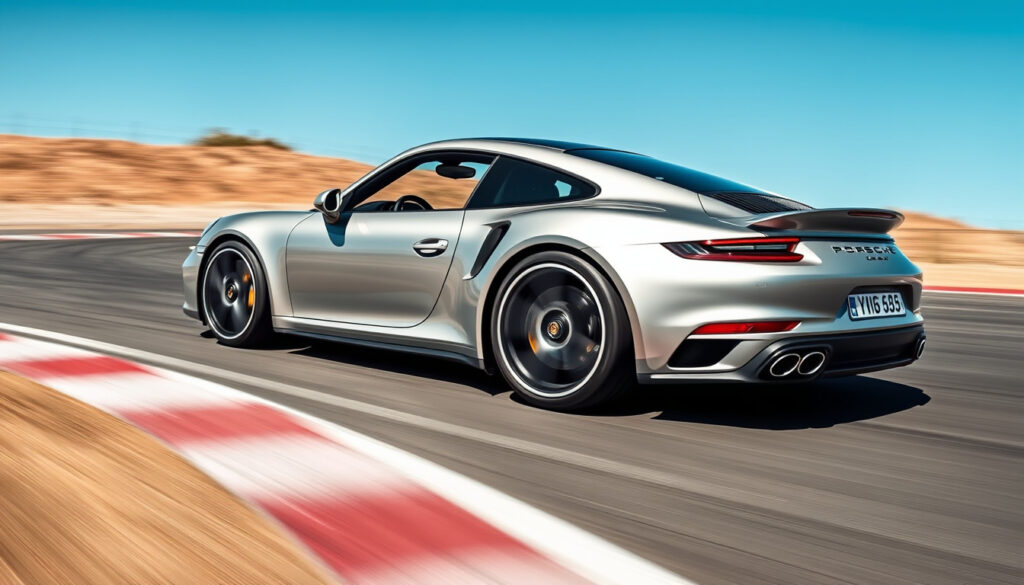
Porsche 911 Turbo S – 2026 Price, Specs and Performance
The 2026 Porsche 911 Turbo S represents a significant evolution in the 992 generation, introducing a T-Hybrid powertrain that pushes performance figures beyond what the previous non-hybrid model achieved. This latest iteration combines a 3.6-liter twin eTurbo flat-six engine with an 80 hp electric motor integrated into the 8-speed PDK transmission, delivering a combined output that places this sports car firmly in supercar territory.
Industry publications have noted the substantial leap in capability. Car and Driver describes the vehicle as “supercar adjacent,” while MotorTrend refers to it as a “hybrid hypercar” following their first tests. The combination of electrification and Porsche’s proven flat-six architecture appears to address the traditional trade-offs between performance and drivability.
What is the Porsche 911 Turbo S price?
Base pricing for the 2026 911 Turbo S varies by body style in the United States market. The Coupé model starts at $272,650, while the Cabriolet variant commands $286,650. These figures represent base configurations before optional equipment, which can substantially increase the final purchase price.
For buyers in other markets, pricing differs accordingly. Canadian listings indicate ranges around $270,300 to $289,300 depending on specification. Prospective purchasers can explore availability through MotorWeek’s authorized Porsche dealer network, who can provide detailed pricing based on individual configuration preferences.
The prices cited represent U.S. market figures. International markets may see different pricing structures due to import duties, taxes, and regional packaging. Dealers can provide market-specific quotes reflecting local requirements.
Key Performance Insights
- The T-Hybrid system adds approximately 61 hp over the prior non-hybrid Turbo S while reducing displacement from 3.7L to 3.6L
- Quarter-mile times of 9.9 seconds at 138-139 mph reportedly surpass the previous generation and even exceed some metrics of the 918 Spyder
- Weight increases by approximately 200 lbs due to hybrid components, though performance figures still improve
- Torque delivery spans from 2,300 to 6,000 rpm, providing broader pull than naturally aspirated alternatives
- The electric motor provides instant torque fill, improving throttle response across the rev range
- Both Coupé and Cabriolet body styles retain rear-engine, all-wheel-drive configuration
| Specification | Detail |
|---|---|
| Combined Horsepower | 701 hp (631 hp gas + 80 hp electric) |
| Engine Configuration | 3.6L DOHC 24-valve flat-six with twin eTurbos |
| 0-100 km/h (0-62 mph) | 2.5 seconds (claimed) |
| Quarter-Mile | 9.9 seconds at 138-139 mph |
| Boost Pressure | Up to 26.1 psi |
| Drivetrain | Rear-engine, all-wheel-drive with PASM suspension |
| Transmission | 8-speed PDK with integrated electric motor |
What are the Porsche 911 Turbo S performance specs?
The performance envelope of the 2026 Turbo S reflects Porsche’s approach to incremental improvement through electrification. The combustion engine alone produces 631 hp from its 3.6-liter displacement, with an additional 80 hp from the PDK-integrated electric motor. Peak torque reaches 590 lb-ft, available across a wide band from 2,300 to 6,000 rpm.
Acceleration metrics position this model among the fastest production vehicles available. Porsche claims 2.4 seconds to 60 mph with the Sport Chrono Package, though independent testing of prototypes and lightweight configurations has recorded times as low as 2.2 seconds. The quarter-mile distance, historically a benchmark for American performance expectations, completes in approximately 9.9 seconds at speeds approaching 139 mph.
Power Delivery and Responsiveness
The electrically assisted turbos represent a fundamental change in how boost pressure arrives. Unlike traditional turbochargers that suffer from lag during gear transitions, the eTurbo system maintains consistent pressure through electrical assistance. MotorWeek’s evaluation specifically noted “lightning-fast” response characteristics from this system.
The 400-volt electrical architecture supports not only the turbochargers but also enables torque vectoring through the all-wheel-drive system. This integration allows the vehicle to distribute power between axles more precisely than purely mechanical systems permit, particularly beneficial during cornering transitions. For those exploring other performance options, the Toyota Rav 4 For Sale NZ overview provides insight into how hybrid technology is being applied across different vehicle segments.
Performance figures can vary based on testing conditions, surface preparation, ambient temperature, and vehicle configuration. Porsche’s claimed figures typically assume optimal conditions with Sport Chrono Package equipped. Car and Driver and other independent magazine tests may achieve different results depending on their specific procedures.
What do we know about the Porsche 911 Turbo S 2026?
The 2026 model year marks the introduction of the 992.2 generation for the Turbo S, following the same refresh path taken earlier with the Carrera GTS. The most significant change involves the T-Hybrid powertrain, technology that Porsche has developed through motorsport involvement and transferred to production specification.
Unlike some hybrid systems designed primarily for efficiency gains, Porsche’s approach prioritizes performance enhancement. The electric motor serves dual functions: providing additional propulsion during acceleration and enabling the turbochargers to maintain boost more consistently. This results in an engine that produces more power than its predecessor despite a smaller displacement figure.
Comparison to Prior Generation
The previous 992 Turbo S utilized a non-hybrid 3.7-liter twin-turbo flat-six producing 640 hp. Testing demonstrated 0-60 times of 2.2 seconds and quarter-mile runs of 10.1 seconds at 137 mph for standard configurations. The 2026 model improves upon each of these figures, cutting 0.2 seconds from both the 0-60 and quarter-mile times while adding 61 horsepower to the total output.
Weight represents the primary trade-off for this performance improvement. The hybrid system adds approximately 200 lbs to the curb weight, pushing the vehicle toward the 4,000-lb mark. Despite this increase, the instantaneous torque delivery from the electric motor helps offset the additional mass during acceleration events. Those comparing performance vehicles across different market segments may find the Land Rover Defender Price NZ analysis useful for understanding how weight affects capability in all-wheel-drive platforms.
| Model | Horsepower | 0-60 mph | Top Speed | Engine |
|---|---|---|---|---|
| 2026 911 Turbo S (992.2) | 701 hp combined | 2.2-2.4 sec | 200 mph | 3.6L twin eTurbo hybrid |
| Pre-2026 992 Turbo S | 640 hp | 2.2 sec tested | 205 mph | 3.7L twin-turbo |
| 992 GT3 RS | ~525 hp | ~3.0 sec | 184 mph | 4.0L naturally aspirated |
The 2026 Turbo S remains available in both Coupé and Cabriolet configurations. Both variants share identical powertrain specifications, with the primary difference involving the folding soft-top mechanism on the Cabriolet, which adds approximately $14,000 to the base price.
How has the Porsche 911 Turbo S evolved over time?
The 992 generation began production in 2019, with the Turbo S variant arriving approximately in 2020 featuring the 640 hp 3.7-liter twin-turbo engine. This represented a continuation of the turbocharging strategy that began with the 930 generation in the 1970s and has defined the Turbo S identity across multiple generations.
The 992.2 update, arriving with the 2026 model year, introduces the T-Hybrid system that Porsche first applied to the non-turbo Carrera GTS. This marks the first time the flagship 911 Turbo S has received hybrid assistance as standard equipment, following a development path similar to the limited-run 918 Spyder hypercar.
- 2019-2020: 992 generation introduction with updated chassis and interior technology
- 2020: 992 Turbo S launch with 640 hp 3.7L twin-turbo engine and 2.6-second 0-60 capability
- 2024: 992.2 refresh begins, with Carrera GTS receiving T-Hybrid system first
- 2026: 992.2 Turbo S introduces T-Hybrid powertrain with 701 combined hp
What aspects of the 2026 Turbo S remain unclear?
Several details regarding the 2026 Turbo S require clarification as official documentation remains limited. While the core performance specifications appear consistent across multiple sources, certain technical details have not received official confirmation from Porsche AG directly. For more details on the 2026 Turbo S, you can explore the Rugby League Pacific Championships 2025. Rugby League Pacific Championships 2025
The specifications and pricing outlined throughout this article derive from dealer listings, automotive publications, and review sources such as MotorTrend. Official confirmation from Porsche’s public relations channels has been limited to the hybrid powertrain announcement and general output figures. Prospective buyers should verify specific details with authorized dealers.
| Established Information | Information Requiring Confirmation |
|---|---|
| 701 hp combined output (631 hp gas + 80 hp electric) | Official EPA fuel economy ratings |
| $272,650 Coupé / $286,650 Cabriolet base pricing | Specific weight distribution figures |
| 2.2-2.4 second 0-60 acceleration claims | Battery capacity specifications |
| 3.6L displacement with eTurbo configuration | Detailed warranty coverage for hybrid components |
| 200 mph top speed on summer tires | Availability dates for specific markets |
Where does the Turbo S fit in the 911 lineup?
The 911 range spans a diverse spectrum from the naturally aspirated Carrera variants through the track-focused GT series. The Turbo S occupies a unique position, offering supercar acceleration figures while retaining the practicality that defines the 911 family. Its all-wheel-drive system and luxurious interior distinguish it from the rear-drive, stripped-out GT3 RS, despite the RS carrying a higher price tag.
MotorWeek’s assessment noted that the 2026 Turbo S’s 3.6L boxer engine actually produces more power than the GT2 RS, representing a notable shift in the performance hierarchy. This places the Turbo S not merely as a comfortable grand tourer with performance credentials, but as the most powerful 911 variant outside of limited-production track machines.
The addition of hybrid technology also positions the Turbo S as a technology demonstrator for future 911 variants. As emissions regulations tighten globally, the T-Hybrid system’s combination of performance and efficiency may become standard across the range, potentially influencing other sports car manufacturers’ strategies.
What do industry experts say about the 2026 model?
Early evaluations from automotive journalists provide insight into how the 2026 Turbo S performs in real-world conditions. These assessments, while based on pre-production or early production examples, offer the most detailed look at the vehicle’s character beyond official specifications.
Car and Driver describes the vehicle as “supercar adjacent,” highlighting the substantial power increase over the prior 640-hp model while noting that the smaller eTurbos provide sharper response characteristics. The publication observed that despite the additional 200 lbs from hybrid components, the driving experience maintains the mechanical feel that has characterized previous Turbo S models.
MotorTrend’s first test of the vehicle earned the designation “hybrid hypercar,” with particular emphasis on the 2.2-second acceleration time that ties the quickest 911 the publication has tested. The quarter-mile performance of under 10 seconds reportedly surpasses the 918 Spyder, Porsche’s previous hybrid flagship.
MotorWeek specifically highlighted the redesigned 3.6L engine exceeding the output of the GT2 RS, attributing this achievement to the eTurbo technology and 400-volt electrical system that delivers what the publication described as “classic six-cylinder sound plus hybrid punch.”
Summary
The 2026 Porsche 911 Turbo S represents the most capable version of the iconic sports car to date, achieving 701 combined horsepower through a T-Hybrid powertrain that combines traditional flat-six engineering with motorsport-derived electrification. With base prices starting at $272,650 for the Coupé and $286,650 for the Cabriolet, the vehicle delivers supercar performance metrics—sub-2.5 second 0-60 times, 9.9-second quarter-miles, and a 200 mph top speed—while maintaining the daily usability that distinguishes the 911 family.
The transition to hybrid power marks a significant development in the Turbo S lineage, representing both a performance enhancement and a technological evolution that may influence future 911 variants. Those considering the vehicle should contact authorized Porsche dealers for specific configuration options and availability information.
For readers exploring other vehicle options in the sports and performance segments, comprehensive overviews of Toyota Rav 4 For Sale NZ and Land Rover Defender Price NZ provide additional context for comparing performance vehicle values across different market segments.
Frequently Asked Questions
What is the 2026 Porsche 911 Turbo S 0-60 time?
Porsche claims 2.4 seconds to 60 mph with the Sport Chrono Package, though independent testing has recorded times as low as 2.2 seconds with lightweight configurations and optimal conditions.
How much horsepower does the 2026 Turbo S produce?
The combined output reaches 701 hp, comprising 631 hp from the 3.6-liter twin eTurbo flat-six engine and 80 hp from the electric motor integrated into the PDK transmission.
What is the top speed of the 2026 911 Turbo S?
The vehicle achieves a top speed of 200 mph when equipped with summer performance tires. This represents a slight decrease from the prior model’s 205 mph figure.
How much does the 2026 Porsche 911 Turbo S cost?
Base pricing starts at $272,650 for the Coupé and $286,650 for the Cabriolet in the United States market. Additional options can significantly increase the final purchase price.
What engine does the 2026 Turbo S use?
The 2026 model features a 3.6-liter DOHC 24-valve flat-six engine with two electrically assisted turbochargers (eTurbos), representing a displacement decrease from the prior 3.7-liter engine while producing more power.
How does the 2026 Turbo S compare to the previous generation?
The 2026 model produces 61 hp more than the prior non-hybrid Turbo S while using a smaller displacement engine. Acceleration times improve by approximately 0.2 seconds for both 0-60 and quarter-mile figures, despite a weight increase of approximately 200 lbs from hybrid components.
Is the 2026 911 Turbo S available as a convertible?
Yes, both Coupé and Cabriolet body styles are available, with the Cabriolet featuring a folding soft-top mechanism. The Cabriolet commands a $14,000 premium over the Coupé base price.
More related posts
 The Bear Season 5: Final Season Release Date June 2026
 Harry Potter House Test: Official Sorting Hat & Free Quizzes
 Capital Lodge Motor Inn: Ferry Guide & Wellington Accommodation
 Police Incident in Christchurch Today – Latest on Papanui Death Probe
 Paekākāriki to Pukerua Bay Escarpment Track: Hiking Guide
 Princess Stéphanie of Monaco: Biography, Net Worth & Family
 Toyota Rav 4 For Sale NZ – Prices, Models & Buying Guide
 Catch of the Day NZ Closure: Why Wesfarmers Shut It Down