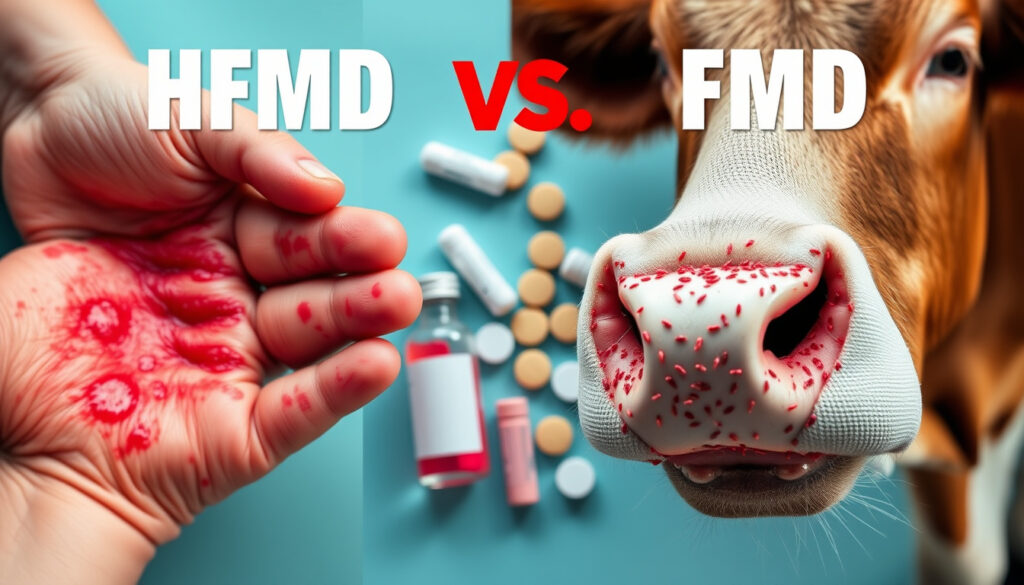
Foot and Mouth Disease: HFMD vs FMD Symptoms & Treatment
If you’ve ever Googled “foot and mouth disease” while your child has a fever and a rash on their hands, you know the confusion that follows. The search results blur two completely different illnesses—one that makes the rounds in daycare centers, and another that strikes livestock. Parents panic over something benign; farmers fear a catastrophe. The good news: once you know which one you’re dealing with, the picture becomes much clearer.
Common age group: Children under 5 years · Contagiousness: Highly contagious · Affects adults: Rare, most immune · Typical duration: Clears up in 7-10 days · Animal variant: Affects livestock like cattle
Quick snapshot
- Exact immunity rates in adults
- US outbreaks rising since late August 2025 (UC Riverside News)
- Most cases resolve within a week without intervention
The table below consolidates the core facts about both diseases, helping you quickly see where they diverge and where they overlap.
| Fact | Detail |
|---|---|
| Primary hosts | Children under 5 (HFMD); cattle/sheep (FMD) |
| Virus family | Enterovirus (HFMD); Picornavirus (FMD) |
| Incubation | 3-7 days (HFMD); 1-12 days (FMD in animals) |
| Contagious until | Blisters completely healed |
| Viral shedding | 3-7 weeks after symptoms start |
| Mortality risk | Low in humans; up to 90% in young livestock |
How do you treat hand, foot and mouth disease?
There is no antiviral targeting the Coxsackievirus or Enterovirus that causes HFMD. Treatment is entirely supportive, which means managing symptoms while the body clears the infection on its own (NIH/PMC – Foot-and-mouth disease in animals and humans).
Symptom relief options
- Acetaminophen or ibuprofen for fever and pain
- Ice chips, cold drinks, or soft foods to ease mouth sores
- Keep blisters clean and dry
- Ensure adequate fluid intake to prevent dehydration
When to see a doctor
- Fever lasting more than 3 days
- Signs of dehydration (dry mouth, no tears, fewer wet diapers)
- Difficulty swallowing
- Rash spreading to eyes or becoming unusually severe
- Extreme irritability or lethargy
Pain relief and hydration do more than any medication could. Most children start feeling better within 2-3 days once fever subsides and mouth blisters begin to heal (UC Riverside News).
What are the first signs of hand, foot, and mouth?
The illness typically announces itself with a fever and sore throat 3 to 7 days after exposure (Singapore Ministry of Health). Parents often notice the child becoming fussy or refusing food before they see any visible symptoms.
Rash and blister description
- Tender vesicles (small blisters) appear on the buccal mucosa, sides of the tongue, gums, and inside the cheeks
- Raised spots or blisters develop on palms, fingers, and soles of feet
- Lesions may also appear on the buttocks, thighs, and around the groin
- On darker skin, spots may appear as darker patches rather than red
Fever and sore throat
The fever usually peaks early and may be accompanied by a general malaise that makes children feel miserable. Sore throat from mouth lesions often leads to reduced eating and drinking, which is why hydration becomes the main concern (Mayo Clinic).
The combination of painful mouth blisters with fever distinguishes HFMD from simple viral rashes. Mouth lesions typically appear 1-2 days after fever onset and are often the telltale sign parents recognize first.
How does a person get foot and mouth disease?
HFMD spreads through multiple routes, making outbreak control in daycare settings particularly challenging. The virus travels in respiratory droplets, saliva, feces, and fluid from broken blisters (Singapore Ministry of Health).
Transmission methods
- Close contact with an infected person’s saliva (sharing utensils, kissing)
- Touching contaminated surfaces and then touching the mouth, nose, or eyes
- Changing diapers or handling feces, then touching the face
- Fluid from ruptured blisters
Prevention steps
- Wash hands thoroughly with soap after diaper changes and before eating
- Disinfect toys and surfaces that children put in their mouths
- Keep children with visible blisters home until lesions have crusted over
- Avoid sharing cups, utensils, and towels
Even after symptoms disappear, children can shed the virus for 3 to 4 weeks, and in some cases up to 7 weeks after onset. This extended contagious period explains why outbreaks burn through daycare classrooms despite symptomatic children staying home (GoodRx).
The pattern reveals why standard exclusion policies fall short: keeping kids home until blisters scab over still leaves weeks of silent viral shedding that standard hygiene practices cannot fully contain.
Can adults catch hand, foot, and mouth from a child?
Most adults are immune because they were exposed to the common enteroviruses during childhood. However, immunity is not absolute, and adults can occasionally contract HFMD (Mayo Clinic).
Adult immunity factors
- Prior exposure to enteroviruses builds antibody protection over time
- Adults with compromised immune systems face higher risk
- Healthcare workers and parents of young children have more frequent exposure
Risk level
When adults do develop symptoms, they typically experience the same presentation as children but often with more pronounced fatigue. The illness remains self-limiting and resolves within the same 7-10 day window. Severe complications are rare in healthy adults.
What clears up hand, foot, and mouth fast?
No treatment speeds the viral clearance itself, but supportive care prevents complications that extend misery. The body handles the virus; caregivers manage the discomfort.
Home remedies
- Offer cold, soft foods: yogurt, applesauce, ice pops
- Avoid acidic or spicy foods that sting mouth sores
- Give acetaminophen for pain before meals if needed
- Keep the child comfortable and rested
Recovery timeline
Most cases run their course in 7 to 10 days, though some children develop more extensive rashes that take 2-3 weeks to fully resolve. Fever typically disappears within the first 3-4 days, while skin lesions crust over and fade over the following week (UC Riverside News).
The implication for caregivers is that resisting the urge to demand antibiotics or supplements protects children from unnecessary interventions while the body’s immune response does its work.
The following table maps out the key clinical and epidemiological differences between the human and animal forms of the disease, allowing you to see at a glance why confusion arises and what the real distinctions are. For more information on foot and mouth disease, check out Duck Duck Goose rules explained. Duck Duck Goose rules explained
| Feature | Hand, Foot and Mouth Disease (Humans) | Foot-and-Mouth Disease (Animals) |
|---|---|---|
| Causative agent | Coxsackievirus A16, Enterovirus 71 (Enterovirus genus) | Aphthovirus (Picornavirus family) |
| Primary affected | Children under 5 years old | Cloven-hoofed animals: cattle, pigs, sheep, goats, deer |
| Incubation period | 3-7 days (up to 14 days possible) | 1-12 days |
| Transmission route | Fecal-oral, respiratory droplets, direct contact | Highly contagious between animals via aerosols, contact |
| Human-animal crossover | Not applicable | Extremely rare; requires intensive contact with diseased animals |
| Severity | Self-limiting; complications rare | Devastating livestock industry; up to 90% mortality in young animals |
| Economic impact | Minimal | Severe trade restrictions, culling operations |
Confirmed
- HFMD and animal FMD are completely unrelated diseases caused by different virus genera
- No cross-species transmission exists between the two conditions
- HFMD treatment is supportive; no antiviral exists
- Most adults are immune to HFMD through prior childhood exposure
- FMD in animals cannot be transmitted to humans through meat, milk, or fibers
Unclear
- Exact immunity rate in adults (varies by population and prior exposure)
- Long-term neurological outcomes following Enterovirus 71 complications
Treatment Steps for Managing HFMD at Home
- Confirm the diagnosis: Look for the characteristic pattern of fever plus blisters on hands, feet, and mouth. If uncertain, consult a pediatrician.
- Manage fever and pain: Give age-appropriate acetaminophen or ibuprofen. Never give aspirin to children due to Reye’s syndrome risk.
- Maintain hydration: Offer cold drinks, electrolyte solutions, or ice chips. Avoid acidic juices that sting mouth sores.
- Adjust food texture: Serve soft, bland foods like yogurt, pudding, mashed potatoes, and cool cereal. Skip crunchy or spicy items.
- Monitor for complications: Watch for signs of dehydration, fever beyond 3 days, or rash spreading to the eyes. Seek medical care if these appear.
- Prevent spread: Keep the child home from daycare until all blisters have crusted over. Wash hands frequently, especially after diaper changes.
- Allow natural recovery: Most children recover fully within 7-10 days without intervention. Avoid pressure to “speed up” healing with unnecessary supplements or antibiotics.
Hand, foot and mouth disease is a common childhood illness that can also affect adults. Most adults are immune.
— Health Service Executive (HSE) Ireland guidance
Hand-foot-and-mouth disease often causes a rash of painful, blister-like lesions on the soles of the feet.
— Mayo Clinic (leading US medical center)
Related reading: Psyllium Husk Cancer Warning · Ultra Violette Sunscreen Recall
vinmec.com, iowaagriculture.gov, intownpediatrics.com, extension.unr.edu, pmc.ncbi.nlm.nih.gov, aphis.usda.gov, en.wikipedia.org
While FMD ravages livestock herds, hand foot mouth treatment guide for children emphasizes hydration and pain relief during the typical 7-10 day course.
Frequently asked questions
Can you bathe a child with hand, foot and mouth disease?
Yes. Gentle bathing is fine and can help keep the child comfortable. Use lukewarm water, mild soap, and pat the skin dry rather than rubbing. Avoid hot baths, which can exacerbate discomfort from skin lesions.
Can I go to work with hand, foot, and mouth?
Adults with no symptoms can attend work. If you develop symptoms, stay home until fever-free for 24 hours and until mouth blisters have scabbed over. Practice thorough hand hygiene to protect colleagues, especially if you work around young children.
Is hand, foot, and mouth due to poor hygiene?
Not exactly. The viruses that cause HFMD spread easily even with normal hygiene practices. Outbreaks occur in settings with young children regardless of how clean the environment is. Good hygiene reduces transmission but cannot prevent it entirely.
Is HFMD still contagious after 5 days?
Yes. Children can shed viruses for 3 to 4 weeks, and sometimes up to 7 weeks after symptoms begin. They are most contagious during the first week of illness, but isolation until all blisters have crusted over is the safest approach for daycare settings.
What is foot and mouth disease in cattle?
Foot-and-mouth disease (FMD) in animals is a severe viral illness affecting cloven-hoofed livestock including cattle, pigs, sheep, and goats. It causes high fever and painful blisters and is one of the most contagious animal diseases worldwide. The US eradicated FMD in 1929.
Does foot and mouth disease spread to humans from animals?
Extremely rarely. Human infections with the animal FMD virus are documented but mild, occurring only after direct, intensive contact with diseased animals. The meat, milk, and fibers from infected animals remain safe for human consumption. There is no connection between FMD in animals and HFMD in humans.
How to prevent foot and mouth disease in kids?
Frequent hand washing after diaper changes and before food preparation is the most effective measure. Disinfect commonly touched surfaces, avoid sharing utensils and cups, and keep children with visible symptoms home until lesions have scabbed over. No vaccine exists for the common strains of HFMD in the US.
More related posts
 Cast of Sex Education – Complete Guide to All Seasons
 Māori All Blacks vs Japan: 2026 Fixture Preview and History
 Auckland Airport Rental Cars: Compare Prices & Fees
 Opening a Bank Account in New Zealand: Guide for Foreigners
 Cast of The Conjuring: Last Rites – Full Cast Guide
 Stop Shoes from Blistering: Top Expert Tips
 Paekākāriki to Pukerua Bay Escarpment Track: Hiking Guide