What Does Tonsillitis Look Like? Symptoms & Duration
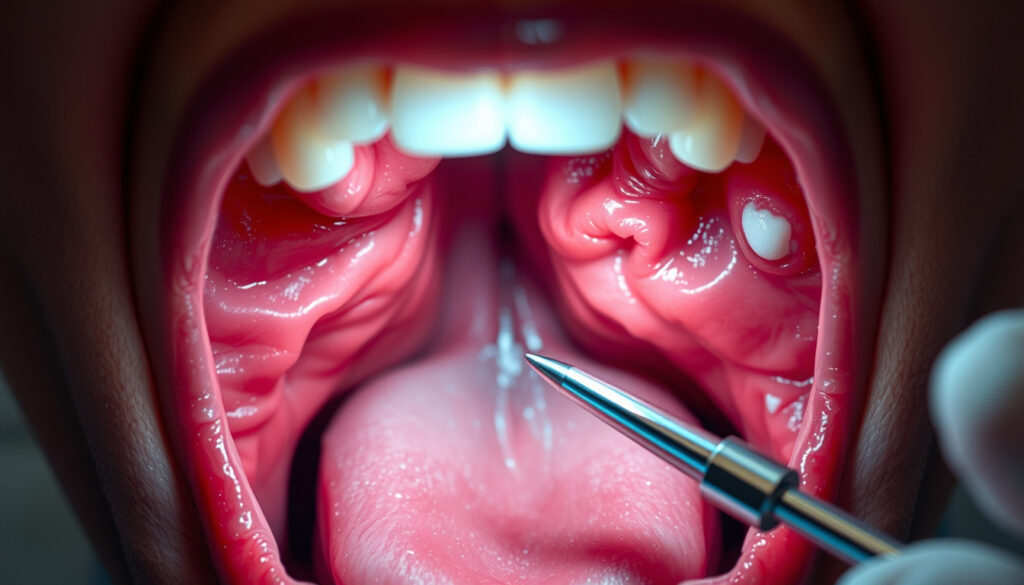
You wake up with a scratchy throat and wince as you swallow – that familiar pain is often the first clue your tonsils are under attack. Here’s what to look for when you suspect tonsillitis – the visual signs, the timeline, and the red flags that mean you need medical help.
Prevalence: Tonsillitis accounts for 1–2% of outpatient visits in the UK ·
Typical duration: 3–7 days for viral cases ·
Age group: Most common in children aged 5–15 ·
Cause: Viral in approximately 70% of cases ·
Key symptom: Red, swollen tonsils with or without white patches
Quick snapshot
- Tonsillitis is inflammation of the tonsils (NHS (UK health authority))
- Common causes include viruses and bacteria (Mayo Clinic (academic medical center))
- Symptoms include red/swollen tonsils, white patches, fever, sore throat (Cleveland Clinic (specialist hospital))
- Exact cause in a specific case without testing (NHS)
- Whether antibiotics are needed without a strep test (Mayo Clinic)
- Why some individuals experience recurrent tonsillitis (Cleveland Clinic)
- Day 1–2: Onset of sore throat, mild fever, swollen tonsils (Cleveland Clinic)
- Day 3–4: Peak symptoms – worst sore throat, white patches, high fever (NHS)
- Day 5–7: Gradual improvement for viral cases (Mayo Clinic)
- See a GP if symptoms last more than 3–4 days (NHS) (Right Decisions NHS Scotland (clinical guidance))
- Seek urgent care for difficulty breathing or swallowing (Mayo Clinic) (Right Decisions NHS Scotland (clinical guidance))
- Home care: rest, hydration, salt water gargles (Right Decisions NHS Scotland (clinical guidance))
Six key facts about tonsillitis, one takeaway: the visible signs – red, swollen tonsils with white or yellow patches – are the hallmark, but duration and cause vary widely.
| Fact | Value |
|---|---|
| Primary symptom | Red, swollen tonsils with possible white coating |
| Typical onset | 1–2 days after exposure to the virus or bacteria |
| Duration | 3–7 days for viral cases; bacterial cases may last longer without antibiotics |
| Common cause | Viral infection (70% of cases) |
| Age group most affected | Children aged 5–15 |
| Contagious period | Contagious until 24–48 hours after starting antibiotics (bacterial) or symptoms resolve (viral) |
How do you know if you have tonsillitis?
The most reliable way is to look at your throat in a mirror with a flashlight. What you see matters more than how you feel – though both tell a story.
Visual signs of tonsillitis
- Red, swollen tonsils that may almost touch each other (NHS (UK health authority))
- White or yellow coating or patches on the tonsils (Mayo Clinic (academic medical center))
- Pus-filled spots that look like small whiteheads (Cleveland Clinic (specialist hospital))
Common symptoms beyond the throat
- Painful swallowing, often described as “sharp” or “burning” (NHS)
- Fever above 100.4 F (38 C) (Cleveland Clinic)
- Swollen, tender neck glands (MedlinePlus (US National Library of Medicine))
- Bad breath, headache, and feeling generally unwell (Mayo Clinic)
When symptoms first appear
Symptoms usually come on suddenly, according to Cleveland Clinic. Within hours, a mild scratch can turn into a raw, painful throat. In young children, watch for drooling, refusing to eat, or unusual fussiness – they can’t tell you their throat hurts (Mayo Clinic).
The pattern of symptoms — red tonsils, white patches, and fever — provides a strong basis for suspecting tonsillitis.
What can be mistaken for tonsillitis?
Several throat conditions mimic tonsillitis so closely that even doctors rely on lab tests to tell them apart. The visual similarity is the biggest trap.
Strep throat vs. tonsillitis
- Strep throat also causes red, swollen tonsils with white patches or streaks of pus (Mayo Clinic)
- Strep is caused specifically by group A streptococcus bacteria; tonsillitis can be viral or bacterial (NHS)
- A strep test is the only way to distinguish them (WebMD (consumer health resource))
Other conditions with similar symptoms
- Pharyngitis: General inflammation of the pharynx, often without tonsil swelling (Mayo Clinic)
- Mononucleosis (Epstein-Barr virus): Causes severe sore throat, fatigue, and swollen lymph nodes; white spots can appear (NHS (glandular fever guidance))
- Common cold: Mild sore throat without white patches or high fever (Mayo Clinic)
When to see a doctor for a proper diagnosis
The catch: white spots on the tonsils are not specific to tonsillitis – they can also occur with strep throat, mononucleosis, or even oral thrush (WebMD). If you have a sore throat plus fever lasting 24–48 hours, or if it hurts too much to swallow, a strep test or throat culture is the only way to know for sure (Mayo Clinic).
White patches that look identical can mean viral tonsillitis, strep throat, or mono. You can’t tell by looking alone – that’s why a rapid strep test costs about $15 and can save you from unnecessary antibiotics.
Differentiating between these conditions often requires laboratory testing, not just visual inspection.
How long does tonsillitis typically last?
Most people want to know: “How many days will I feel miserable?” The answer depends on the cause, but a reliable pattern – the 7-5-3 rule – gives you a roadmap.
Typical duration of viral tonsillitis
Viral tonsillitis usually resolves in 3–7 days without specific treatment (NHS). The sore throat feels worst on days 3–4, then gradually improves. Cleveland Clinic notes that symptoms can come on suddenly and peak within 48 hours.
When symptoms peak
- Day 1–2: Scratchy throat, mild fever, tonsils start swelling
- Day 3–4: Worst sore throat, white patches may appear, high fever (Mayo Clinic)
- Day 5–7: Fever breaks, pain decreases, swallowing becomes easier
Recovery timeline and the 7-5-3 rule
The 7-5-3 rule, widely referenced in clinical contexts: symptoms resolve within 7 days, fever lasts up to 5 days, and severe pain lasts about 3 days. Bacterial cases treated with antibiotics often improve within 24–48 hours (NHS). If symptoms persist beyond 7 days, see a GP.
This timeline helps patients set realistic expectations for recovery.
Should I go to A&E if I have tonsillitis?
Most tonsillitis cases can be managed at home. But certain signs demand immediate medical attention – not “see your GP tomorrow,” but emergency care now.
Signs that require emergency care
- Difficulty breathing or feeling like your throat is closing (Mayo Clinic)
- Extreme trouble swallowing – you cannot swallow saliva (Right Decisions NHS Scotland)
- Difficulty opening your mouth (trismus) (Plymouth Hospitals NHS (peritonsillar abscess guidance))
- High fever that does not respond to paracetamol or ibuprofen (NHS)
- Severe one-sided throat pain or muffled voice – possible abscess (Right Decisions NHS Scotland)
What to expect at the emergency department
Doctors will check for airway obstruction, swab your throat for strep, and may do a blood test for mononucleosis. If a peritonsillar abscess is suspected, they may need to drain it (Plymouth Hospitals NHS).
When home care is sufficient
If you can swallow liquids, have no trouble breathing, and your fever responds to over-the-counter medication, home care is appropriate. The NHS recommends rest, paracetamol or ibuprofen, and staying hydrated. Warm salt water gargles can soothe the pain (Right Decisions NHS Scotland).
If you can’t swallow your own spit, that’s the line. Drooling in an adult or child with tonsillitis means the throat is so swollen that airway compromise is a real risk – that’s an emergency.
Recognizing these emergency signs can be life-saving.
What causes tonsillitis?
Understanding the cause helps predict whether you’ll need antibiotics and how long it will last. The vast majority of cases have one of two origins.
Viral causes
- Adenovirus – one of the most common causes of viral tonsillitis (NHS)
- Epstein-Barr virus (glandular fever/mononucleosis) – causes a more severe, prolonged illness (Mayo Clinic)
- Influenza and parainfluenza viruses – often peak during winter (NHS)
Bacterial causes (strep)
The primary bacterial culprit is group A streptococcus (Streptococcus pyogenes). It accounts for 15–30% of tonsillitis cases in children and 5–15% in adults (NHS). Bacterial tonsillitis often causes higher fever and more visible pus than viral cases (Cleveland Clinic).
Risk factors in adults
- Smoking or exposure to second-hand smoke – irritates and weakens tonsil tissue (Mayo Clinic)
- Weakened immune system (from stress, illness, or medications) (NHS)
- Frequent exposure to large crowds or children (teachers, parents) (Cleveland Clinic)
Knowing viral vs bacterial changes everything. Viral tonsillitis can’t be treated with antibiotics – they won’t help and may cause side effects. Only a strep test can tell you which monster you’re fighting.
Understanding the cause guides appropriate treatment decisions.
Timeline: what does tonsillitis look like day by day
The progression is predictable enough that you can track your recovery against a normal timeline. Here’s what a typical case looks like:
- Day 1–2: Sore throat begins, tonsils appear red and slightly swollen. Mild fever may start. (Cleveland Clinic)
- Day 3–4: Peak symptoms – tonsils are very red and may show white spots or pus. Fever may reach 38-39°C. Swallowing is very painful. (NHS)
- Day 5–7: Fever breaks, white patches start fading, pain decreases. Energy returns. (Mayo Clinic)
- Beyond 7 days: If no improvement, bacterial infection or complications (such as peritonsillar abscess) should be considered. (Right Decisions NHS Scotland)
Tracking symptoms against this timeline helps identify when medical attention is needed.
What’s confirmed and what’s not about tonsillitis
Confirmed facts
- Tonsillitis is inflammation of the tonsils, usually from infection (NHS)
- Red/swollen tonsils with white or yellow coating are the classic visual signs (Mayo Clinic)
- Most cases are viral (70%) and resolve in 3–7 days (NHS)
- Fever above 100.4°F (38°C) is common (Cleveland Clinic)
- Swollen neck glands are a reliable accompanying sign (MedlinePlus)
What’s unclear
- Exact cause in a specific case without testing – viral vs bacterial (Mayo Clinic)
- Whether antibiotics are needed without a positive strep test (NHS)
- Why some people get recurrent tonsillitis while others don’t (Cleveland Clinic)
- If white spots are just tonsillitis or something else (strep, mono) (WebMD)
- When exactly tonsillitis stops being contagious without testing (NHS)
The distinction between confirmed and uncertain aspects highlights the need for professional diagnosis.
What experts say about tonsillitis
“Tonsillitis usually causes visibly red and inflamed tonsils. In some cases, you might have a whitish coating on your throat or white spots on your tonsils.”
“Swollen, painful glands in your neck (feels like a lump on the side of your neck), pus-filled spots or white patches on your tonsils, bad breath.”
The pattern in the throat – red, swollen tonsils with white or yellow patches – is the visual calling card of tonsillitis. But the real question isn’t just what it looks like; it’s what it means for your recovery. For adults and parents in the UK, the choice is clear: track the days, watch for emergency signs (difficulty breathing, inability to swallow saliva), and get a strep test if symptoms persist beyond day 4. Without that test, you risk treating a viral infection with useless antibiotics – or missing a bacterial one that needs them.
mayoclinic.org, myhealth-devon.nhs.uk, valeofyorkccg.nhs.uk, mayoclinic.org, healthline.com
Frequently asked questions
Is tonsillitis contagious?
Yes, tonsillitis is contagious, especially the first few days. It spreads through respiratory droplets from coughing, sneezing, or sharing utensils. You are most contagious 24–48 hours before symptoms appear and until symptoms resolve (or 24–48 hours after starting antibiotics for bacterial cases). (NHS)
Can adults get tonsillitis?
Yes, although it is most common in children aged 5–15, adults can get tonsillitis too. Risk factors include smoking, weakened immunity, and close contact with infected individuals. (Mayo Clinic)
What is the difference between tonsillitis and strep throat?
Tonsillitis is inflammation of the tonsils, which can be caused by viruses or bacteria. Strep throat is a bacterial infection specifically caused by group A streptococcus. Both can cause red, swollen tonsils with white patches, but strep throat more often causes high fever, headache, and stomach upset. A strep test is needed to tell them apart. (Mayo Clinic)
How can I soothe a sore throat from tonsillitis at home?
Drink warm fluids (tea, broth), gargle with warm salt water (half a teaspoon in a glass of water), and take over-the-counter pain relievers like paracetamol or ibuprofen. Avoid acidic or spicy foods. Rest your voice and stay hydrated. (NHS)
Can tonsillitis cause ear pain?
Yes, referred pain from the throat to the ear is common because the same nerve (glossopharyngeal) supplies both areas. Ear pain does not necessarily mean an ear infection – it often resolves as the tonsillitis improves. (Cleveland Clinic)
What over-the-counter medications help with tonsillitis symptoms?
Paracetamol (acetaminophen) or ibuprofen can reduce fever and pain. Throat lozenges with benzocaine or lidocaine provide temporary numbing. Salt water gargles are a low-cost alternative. Avoid aspirin in children due to Reye’s syndrome risk. (NHS)
When should I stay home from work or school with tonsillitis?
Stay home until fever has resolved (24 hours without fever reducers) and you feel well enough to eat, drink, and work. For bacterial tonsillitis, stay home until 24 hours after starting antibiotics. (NHS)
Related reading: Mild Pelvic Organ Prolapse: Symptoms, Stages, and Treatment · Melatonin NZ Buy Online: Rules, Doses & Where to Get It
More related posts
 GBP to NZD Live Rate: Pound to New Zealand Dollar Today
 Barfoot and Thompson Waiuku – Local Real Estate Guide
 IRD Depreciation Rate Finder: How to Find Asset Rates in NZ
 Drift Boss Math Playground: Free Play, Records & Tips
 What Time Is It in Perth Australia Right Now? Live Clock
 New Zealand Work Visa 2026: Requirements, Cost & In-Demand Jobs
 IRD Copyright Settlement NBR: Breach, Ban, and What Happens Next
 Westlake Girls High School: Fees, Enrollment, and More