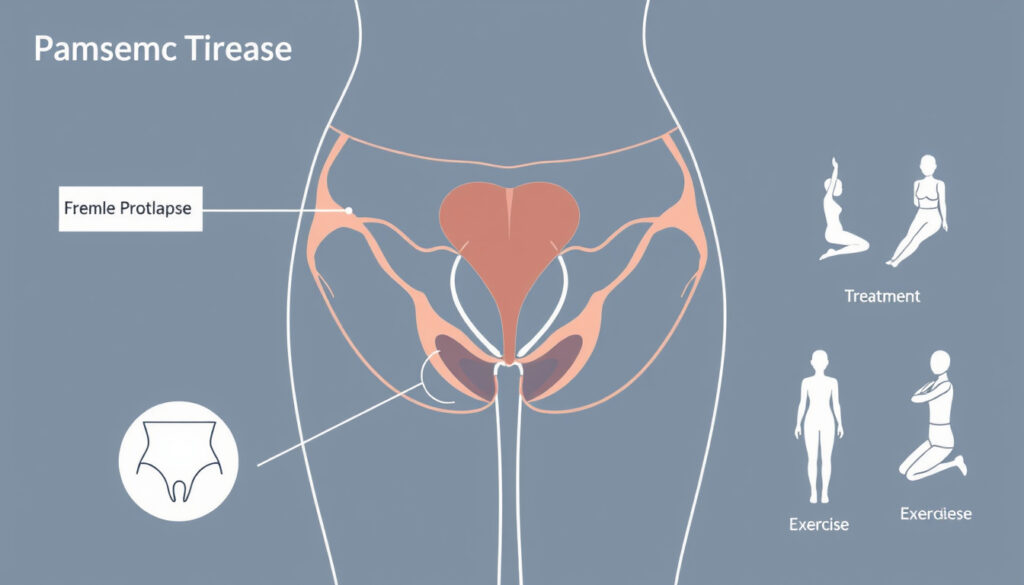
Mild Pelvic Organ Prolapse: Symptoms, Stages, and Treatment
Mild pelvic organ prolapse affects a surprising number of women, especially after childbirth or around menopause, yet it rarely comes up at dinner parties. The good news: most cases are stage 1, meaning the organ stays above the hymen, and many women never even notice — but you have options that don’t involve an operating table.
Women over 50 affected: 1 in 10 ·
Mild prolapse causes no symptoms: often ·
Stages: 4 (stage 1 = mild) ·
Treatment may not be necessary: for mild cases
Quick snapshot
- Stage 1 prolapse: organ at least 1 cm above the hymen (Cleveland Clinic (nonprofit medical centre))
- Often no symptoms reported (NHS (UK national health authority))
- Not dangerous; not a sign of cancer (Mayo Clinic (nonprofit medical institution))
- May progress slowly; can remain stable (NCBI Bookshelf / NICE evidence summary (UK clinical guideline))
- Pelvic floor exercises as first-line treatment (BNSSG ICB Remedy (NHS clinical guidance))
- Pessary and lifestyle changes also help (RCPI / IOG National Clinical Guideline (obstetrics & gynaecology authority))
- Symptoms appear: pain, discomfort, or bowel/bladder changes (NHS (UK national health authority))
- Avoid delaying if lump is felt in or around vagina (NHS (UK national health authority))
Here is a quick overview of the key facts about mild pelvic organ prolapse.
| Category | Detail |
|---|---|
| Definition | Pelvic organs bulge into vagina due to weakened muscles |
| Stages | 1 (mild) to 4 (severe) |
| Common in | Women over 50, after childbirth |
| Treatment | Exercise, pessary, surgery (rare for mild) |
What is a mild pelvic organ prolapse?
How is prolapse staged?
Prolapse is measured on a scale of 1 to 4. Stage 1 — the mildest — means the organ has dropped but remains at least 1 cm above the hymen (Cleveland Clinic (nonprofit medical centre)). Many women with stage 1 prolapse have no symptoms and may never know they have it. The NHS (UK national health authority) notes that a lump in or around the vagina is the most common reason women seek help, but that’s not typical for stage 1.
What does stage 1 mean?
Stage 1 is considered mild and is common after childbirth or with age. The Royal College of Obstetricians and Gynaecologists (RCOG) guideline emphasises that lifestyle changes are the first step for all women with prolapse, regardless of stage.
The implication: for most women, stage 1 prolapse is a benign finding that requires no intervention.
How serious is a mild prolapse?
Can mild prolapse get worse?
It can, but it often doesn’t. The NICE evidence summary (UK clinical guideline authority) notes that progression is typically slow, and many women remain at stage 1 for years. Regular pelvic floor exercises and avoiding strain (like heavy lifting or chronic constipation) can help keep it stable.
Is it dangerous?
No. The Mayo Clinic (nonprofit medical institution) states that prolapse is not life-threatening and is not a sign of cancer. The biggest risk is that symptoms may worsen if left unaddressed, but even then, treatment options are highly effective.
Mild prolapse itself is not dangerous, but ignoring new or worsening symptoms — like pressure, bulging, or bladder changes — can lead to more advanced stages that are harder to treat conservatively.
The pattern: early detection of progression is key to keeping treatment conservative.
What do they do for a mild prolapse?
Lifestyle changes
- Maintain a healthy weight (NHS (UK national health authority))
- Eat more fibre, drink 1.5–2 litres of water daily, and avoid straining on the toilet (University Hospitals of Derby and Burton NHS Trust (physiotherapy department))
- Quit smoking; treat chronic cough or constipation (Mayo Clinic (nonprofit medical institution))
Pelvic floor exercises
Supervised pelvic floor muscle training (PFMT) for at least 3–4 months is the first-line treatment for mild prolapse, according to the NICE evidence summary (UK clinical guideline authority) and the BNSSG ICB Remedy (NHS clinical guidance). A typical routine: tighten the muscles around the back passage and urethra, hold for up to 10 seconds, and repeat 10 times, three times a day (University Hospitals of Derby and Burton NHS Trust (physiotherapy department)).
Pessary
A vaginal pessary — a removable device that supports the prolapsed organ — is another non-surgical option. The RCOG guideline (obstetrics & gynaecology authority) lists it as a valid option for women who want support without surgery.
When to consider surgery
Surgery is rarely needed for mild prolapse. The Mayo Clinic (nonprofit medical institution) advises that non-surgical treatments help most women, but if symptoms persist and affect quality of life, surgical repair may be discussed.
For women with mild prolapse, the single most effective action is a consistent pelvic floor exercise routine — it costs nothing, has no side effects, and can prevent progression in the majority of cases.
Upsides
- Non-invasive, no recovery time
- No risk of surgical complications
- Can be done at home
- Often resolves symptoms completely
Downsides
- Requires daily commitment for weeks to see benefit
- May not work for everyone
- Pessary needs regular cleaning and fitting
- Progression possible if exercises stop
The takeaway: conservative options work for most, but consistency is critical.
- Step 1: See a healthcare professional if you have symptoms. A GP or gynaecologist can confirm the stage and rule out other conditions. (NHS)
- Step 2: Start supervised pelvic floor muscle training. Aim for 3–4 months of daily exercises. (NICE evidence summary)
- Step 3: Adopt lifestyle changes. Healthy weight, high-fibre diet, adequate hydration, and avoiding heavy lifting. (University Hospitals of Derby and Burton NHS Trust)
- Step 4: Consider a vaginal pessary if exercises alone aren’t enough. It provides mechanical support. (RCOG guideline)
- Step 5: Discuss surgery only if symptoms persist despite conservative care. Surgery is rarely needed for stage 1. (Mayo Clinic)
What should I avoid doing if I have a prolapsed uterus?
Activities to avoid
- Heavy lifting — avoid lifting anything that makes you strain (University Hospitals of Derby and Burton NHS Trust (physiotherapy department))
- High-impact exercise like running, jumping, or trampolining (NHS (UK national health authority))
- Pushing or pulling heavy objects (University Hospitals of Derby and Burton NHS Trust (physiotherapy department))
Constipation prevention
Straining on the toilet puts direct pressure on the pelvic floor. The RCOG guideline (obstetrics & gynaecology authority) recommends a high-fibre diet, adequate fluid intake (1.5–2 litres daily), and correct toileting posture to keep bowel movements easy.
Can I walk with pelvic organ prolapse?
Is walking safe?
Yes — walking is one of the safest and most recommended exercises for mild prolapse. The NHS (UK national health authority) specifically includes gentle walking as a positive activity, and the physiotherapy leaflet from University Hospitals of Derby and Burton NHS Trust advises taking regular rests if prolonged standing or walking worsens symptoms.
What exercises are beneficial?
- Walking, swimming, and stationary cycling — all low-impact (Mayo Clinic (nonprofit medical institution))
- Pelvic floor exercises can be done while walking; tighten your pelvic floor muscles as you step
- Avoid high-impact moves like jumping jacks, burpees, or running on hard surfaces
Walking is safe, but if you feel a dragging sensation or bulging during or after a walk, it may be a sign to reduce intensity or duration — listen to your body and adjust as needed.
The catch: low-impact exercise is encouraged, but symptom monitoring is essential.
Confirmed facts and remaining questions
Confirmed facts
- Mild prolapse is stage 1 — organ at least 1 cm above hymen (Cleveland Clinic)
- Often asymptomatic (NHS)
- Not cancerous (Mayo Clinic)
- Pelvic floor exercises are effective first-line treatment (NICE evidence summary)
What’s unclear
- Exact progression rate for mild cases varies widely
- Long-term outcomes without treatment are not well documented
- Optimal duration and intensity of pelvic floor exercise unclear for prevention
The pattern: the evidence base is strong on conservative management but lacks long-term natural history data.
Quotes from experts
Mild prolapse often causes no symptoms and treatment is not always necessary.
— RCOG patient information (UK obstetrics & gynaecology authority)
Stage one means the prolapse is mild. The organ measures at least 1 cm above your hymen.
Pelvic floor muscle training helps prevent symptoms of pelvic floor dysfunction.
For overall wellness, some women also consider protein supplements. Check our guide on what’s in a protein shake to make informed dietary choices. If you use sleep aids, our article on melatonin guidelines may also be helpful.
Summary
Mild pelvic organ prolapse is a common, benign condition that rarely requires aggressive treatment. The evidence points to a clear hierarchy: start with lifestyle adjustments and pelvic floor exercises, consider a pessary if needed, and only discuss surgery if symptoms persist despite conservative therapy. For women in New Zealand, the choice is straightforward: invest a few minutes each day in pelvic floor training, or risk progression to a stage that may limit your daily activities.
Frequently asked questions
Can mild prolapse cause pain?
Some women report a dull ache or pressure in the lower abdomen or pelvis, but many feel nothing. If pain is present, it’s often associated with prolonged standing or heavy lifting.
Can I have sex with mild prolapse?
Yes, most women can. If intercourse is uncomfortable, a pessary or pelvic floor therapy may help reduce symptoms.
Does mild prolapse affect fertility?
Prolapse itself does not directly affect fertility, but underlying pelvic floor weakness may be linked to other factors.
Can mild prolapse heal on its own?
Prolapse is a structural issue and rarely resolves completely without treatment, but symptoms may improve with pelvic floor exercises and lifestyle changes.
What does a prolapse feel like?
Many women describe a sensation of heaviness, pulling, or a “ball” in the vagina. Others have no sensation at all.
Should I see a specialist?
If you have symptoms that bother you, a GP or gynecologist can assess and recommend treatment. Mild asymptomatic prolapse may not require a specialist visit.
Is it safe to exercise with mild prolapse?
Yes, low-impact exercise like walking, swimming, and specific pelvic floor exercises are strongly recommended. Avoid high-impact or heavy resistance training.
The bottom line: most women with mild prolapse can manage it effectively without surgery, and the key is early action with conservative measures.
More related posts
 GBP to NZD Live Rate: Pound to New Zealand Dollar Today
 Amy Bradley Missing: 2025 Update, Timeline & Facts
 Black Snow Season 2 – Renewal, Premiere, Cast and Plot
 Job Check Processing Time: NZ AEWV & Irish Permit Wait Times
 Air NZ Unaccompanied Minor Service: Rules, Fees & Age
 Filco Farm & Sport: Nelson Harley, Yamaha, Triumph Dealer
 Longest Word in English: Dictionary, Chemical & Common Terms
 Papua New Guinea People: Ethnicity, Culture, and Key Facts