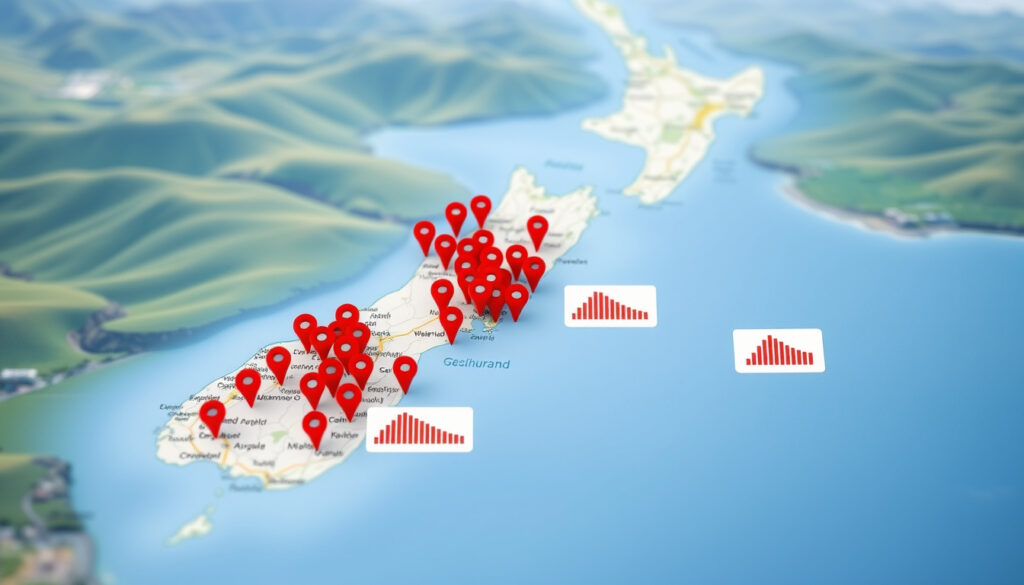
How Many People Live in New Zealand? 2025 Population Facts
Curious about how many people live in New Zealand? You’re not alone—it’s one of the most common questions travelers, investors, and even locals ask, and with a population hovering around 5.3 million as of 2025, New Zealand is one of the least densely populated countries on the planet, yet its demographic story is surprisingly rich and changing fast. Here’s what the data actually says.
Current population estimate (2025): ~5.3 million ·
Population density: ~19.5 people per km² ·
Largest city: Auckland (~1.7 million) ·
Median age: ~37.5 years ·
Projected population by 2050: ~5.8–6.0 million
Quick snapshot
- 5.3 million total (2025) Stats NZ (Official Statistics)
- 0.064% of world population Worldometers (World Population Data)
- 19.5 people per km² Worldometers
- Total population is ~5.3 million (multiple reliable sources) Worldometers
- European descent is ~70% Stats NZ (Maori Population)
- Median income ~$65,000 Stats NZ (Labour Market)
- Exact population by religion (census data 2023 not fully released)
- Precise future growth rate depends on net migration trends
- Impact of climate change on population distribution is uncertain
- 2020: Population reaches 5.0 million Stats NZ (Population Growth)
- 2025: Population estimated at 5.3 million Stats NZ (Official Statistics)
- 2050: Projected population 5.8–6.0 million UN Population Division (Global Demographics)
The following table summarizes key population metrics.
| Metric | Value |
|---|---|
| Current population (2025) | 5,287,479 (Worldometers estimate) Worldometers |
| Population density | ~19.5 per km² Worldometers |
| Largest city | Auckland (1.7 million metro) Wikipedia (Demographics of NZ) |
| Median age | 37.5 years UN Population Division |
| Projected 2050 population | ~5.8 million (UN medium variant) UN Population Division |
How many people live in New Zealand?
Population count and growth rate
- New Zealand’s estimated resident population was 5,342,000 as of 31 December 2025 (provisional) Stats NZ (Population Growth)
- Population growth runs at approximately 0.9% per year, driven by natural increase and net migration Stats NZ
Projected population for 2050
- UN medium-variant projections estimate a population of 5.8–6.0 million by 2050 UN Population Division
- Population density will remain low compared to most OECD countries — roughly 22 people per km² by mid-century
“New Zealand’s estimated resident population was 5,342,000 as of 31 December 2025.”
Stats NZ
New Zealand’s growth rate is modest by global standards, but for a country of 5.3 million, even half a percentage point shift in net migration can reshape housing demand, infrastructure planning, and workforce availability. Policymakers and investors alike should watch migration flows as closely as birth rates.
The implication: New Zealand’s population growth is steady but not explosive — the real story is where people are moving and who is arriving.
Is New Zealand a rich or poor country?
GDP per capita and global ranking
- New Zealand is classified as a high-income economy by the World Bank World Bank (International Development Data)
- GDP per capita is approximately $49,000 (2024 estimate), placing it in the top 30 globally World Bank (GDP Data)
Key economic sectors
- Agriculture (dairy, meat, wool) contributes roughly 5% of GDP but dominates exports
- Tourism contributed ~5.5% of GDP pre-pandemic and remains a major employer Tourism New Zealand (National Tourism Authority)
- Services sector accounts for over 70% of economic output
“New Zealand is classified as a high-income economy by the World Bank with a GDP per capita of approximately $49,000.”
World Bank
New Zealand is wealthy by global standards but faces the same challenge as many high-income economies: housing affordability and productivity growth lag behind peers like Australia and Canada. The country’s wealth is real — but so is the cost of accessing it.
The catch: High GDP per capita doesn’t automatically translate to affordable living. For newcomers, the gap between income and housing costs is where the real story lives.
What percent of New Zealand is white?
European New Zealanders percentage
- In 2023, European population comprised 67.8% of New Zealand (3,383,700 people) EHINZ (Public Health Research)
Māori, Asian, and Pacific Islander shares
- Māori ethnic population was 932,300 at 30 June 2025, comprising 17.5% of the national population Stats NZ (Official Statistics)
- Asian population comprised 17.3% (861,600 people) Wikipedia (Demographics of NZ)
- Pacific peoples comprised 8.9% (442,600 people) Wikipedia
- Middle Eastern, Latin American and African (MELAA) population comprised 1.9% (92,800 people) Wikipedia
- More than a quarter of the New Zealand population was born overseas (28.8%) Wikipedia
Four ethnic groups, one pattern: New Zealand is no longer a two-ethnicity country. The European share has been declining steadily for two decades while Asian and Māori populations grow fastest.
What this means: New Zealand’s ethnic diversity is increasing, and the European share continues to decline.
Is $70,000 a good salary in New Zealand?
New Zealand median salary (2025)
- Median annual personal income is approximately $65,000 (2025) Stats NZ (Labour Market)
- $70,000 is above the median, considered good for a single person in most regions
Average salary by age and industry
- Entry-level roles (ages 20-29): typical range $50,000–$60,000
- Mid-career (ages 30-44): typical range $65,000–$85,000
- Senior roles (ages 45-60): typical range $85,000–$110,000
- Highest-paying industries: IT, finance, mining, and professional services
A salary of $70,000 works well for a single person in Hamilton or Christchurch but feels tight in central Auckland, where median rent for a one-bedroom apartment exceeds $2,200 per month. Regional variation is the hidden variable every job seeker needs to factor in.
The trade-off: $70,000 is above median nationally but regional cost-of-living differences mean the same paycheck buys very different lifestyles. For a family on one income in Auckland, $70,000 is tight; for a single person in Dunedin, it’s comfortable.
What is the main cause of death in New Zealand?
Leading causes of death overall
- Ischemic heart disease is the leading cause of death (2023 data) Ministry of Health (New Zealand Health Statistics)
- Other top causes: stroke, chronic obstructive pulmonary disease, lung cancer
Preventable risk factors
- Smoking remains the leading preventable cause of death
- Obesity affects ~34% of adults, driving heart disease and diabetes rates
- Alcohol-related deaths account for approximately 5% of all mortality
The pattern: Like most developed nations, New Zealand’s leading killers are chronic, lifestyle-related conditions — not infectious disease. The good news is that many of these are preventable with lifestyle changes, but the population-level trend suggests rising obesity rates will keep heart disease at the top for years.
For a deeper look at the demographics behind the 5.3 million figure, see New Zealands 2025 population data which breaks down the official stats and trends.
Frequently asked questions
What is the population of New Zealand in 2025?
New Zealand’s estimated resident population was 5,342,000 as of 31 December 2025 (provisional) according to Stats NZ (Population Growth).
Is New Zealand a rich country?
Yes, New Zealand is classified as a high-income economy by the World Bank with a GDP per capita of approximately $49,000 (2024 estimate) World Bank (International Development Data).
What is a good salary in New Zealand?
The median annual personal income is approximately $65,000 (2025). A salary of $70,000 is above median and considered good for a single person in most regions, though cost of living varies significantly by location.
How do you say ‘hi’ in New Zealand?
The most common greeting is “Kia ora” (Māori), used widely in everyday conversation alongside English greetings like “Hi” and “G’day”.
What is the 92 day rule in New Zealand?
The 92-day rule refers to a tax provision that allows employees who work for 92 consecutive days or more without a break to be treated as having an employment agreement, affecting their tax residency status.
More related posts
 Houses for Rent in Levin: 2-3 Bed, Cheap & Private Rentals
 Cast of Sex Education – Complete Guide to All Seasons
 163 cm in Feet: 5’4″ + Height Guide for Men & Women
 Atlético Madrid vs Real Madrid Lineups: Latest XI & Guide
 Die My Love Movie: Plot, Baby & Horse Meaning
 PSG vs Real Madrid Stats: H2H, Wins, Goals & History
 Land Rover Defender Price NZ – 2024 New and Used Guide
 C-5M Super Galaxy: The $6B Upgrade That Keeps It Flying