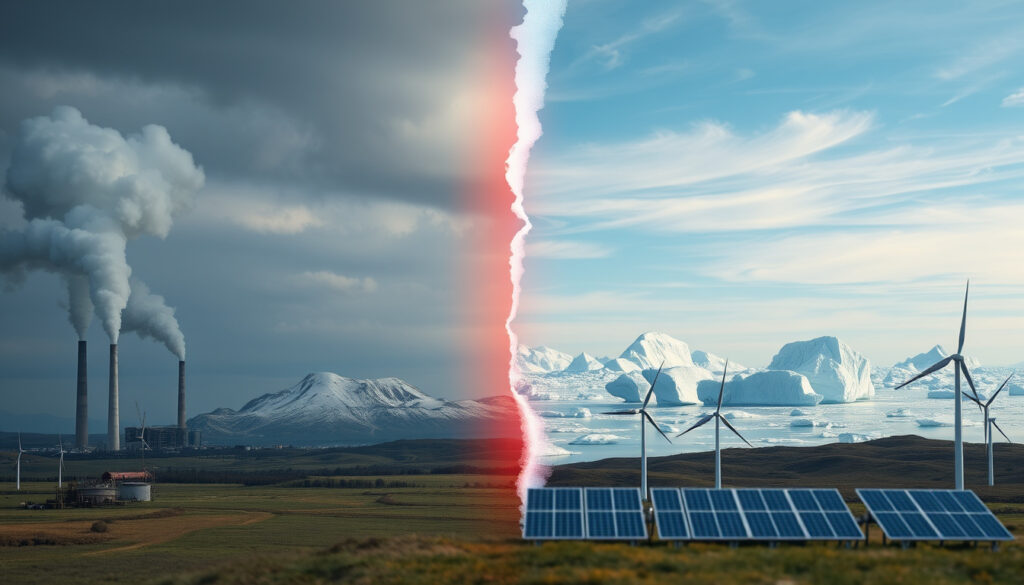
What Is Global Warming? Causes, Effects, and Solutions
You’ve probably noticed the summers feel hotter than they used to. That’s not your imagination—it’s a measurable shift in Earth’s climate, pushed 1.2°C higher by human activities since the Industrial Revolution.
Average temperature rise since pre-industrial: 1.2°C ·
CO₂ concentration (2023): 420 ppm ·
Sea level rise since 1900: 20 cm ·
Arctic sea ice decline per decade: 12%
Quick snapshot
- Earth’s average temperature has risen 1.2°C since pre-industrial times (NASA (U.S. space agency))
- Fossil fuels account for ~68% of global greenhouse gas emissions (United Nations (UN climate authority))
- The last decade (2015–2024) was the warmest on record (United Nations) (NASA (U.S. space agency))
- Exact rate of future warming depends on emission scenarios (Palmetto (climate education platform))
- Regional impacts vary and are harder to predict (Protect Earth Foundation (environmental NGO))
- Effectiveness of some carbon removal technologies at scale remains uncertain (Climate Discovery (climate science platform))
- CO₂ measurements began systematically at Mauna Loa in the 1950s (Palmetto) (IPCC (Intergovernmental Panel on Climate Change))
- IPCC established in 1988 to assess climate science (IPCC (Intergovernmental Panel on Climate Change))
- Paris Agreement adopted in 2015 by 196 parties (United Nations (UN climate authority))
- 2025 projected to be among hottest years on record (Palmetto citing NOAA)
- Net-zero emissions target for 2050 under many climate scenarios
- Without major cuts, global temperature could rise 1.5–2°C by mid-century
Five key data points, one pattern: every metric confirms that Earth is warming at an accelerating rate.
| Global temperature increase since 1880 | 1.2°C |
| CO₂ concentration in 2023 | 420 ppm (pre-industrial: 280 ppm) |
| Sea level rise since 1900 | 20 cm |
| Arctic sea ice decline | 12% per decade |
| Warmest years on record | Most have occurred since 2015 |
What is global warming in simple words?
Simple explanation of global warming
- Global warming is the long-term heating of Earth’s surface observed since the pre-industrial period due to human activities (Palmetto)
- Primary cause is the increase in greenhouse gases like CO₂ from burning fossil fuels
- Global warming is different from climate change
Think of Earth as a greenhouse: the sun’s energy comes in, some heat is trapped by gases, and the planet stays warm enough for life. Human activity has added extra layers to that glass, trapping more heat and raising the temperature. The United Nations confirms that human emissions have warmed the climate by nearly 2°F (1.1°C) since 1850–1900.
That 1.2°C average may sound small, but it represents an enormous amount of heat energy absorbed by the oceans and atmosphere. For every degree, the laws of physics amplify extreme weather: more evaporation, more intense storms, and faster melting of ice sheets.
Scientific definition of global warming
- Defined as the gradual increase in Earth’s average surface temperature primarily driven by greenhouse gases
- The IPCC states it is unequivocal that human influence has warmed the atmosphere, ocean, and land
The scientific consensus is overwhelming: 97% of climate scientists agree that climate-warming trends over the past century are extremely likely due to human activities, according to NASA.
The implication: global warming is not a natural cycle of the planet—it is a direct consequence of human industry.
What are the 5 causes of global warming?
Burning of fossil fuels
- Fossil fuels (coal, oil, gas) account for around 68% of global greenhouse gas emissions and nearly 90% of all CO₂ emissions (United Nations)
- Burning fossil fuels is responsible for over 75% of global GHG emissions (Catch Foundation citing IEA (International Energy Agency))
When we burn coal for electricity or gasoline for transportation, we release carbon dioxide that had been locked underground for millions of years. That’s why CO₂ concentrations have jumped from 280 ppm (pre-industrial) to 420 ppm today.
Deforestation
- Nearly 10 million hectares of forests are lost every year, mainly for agriculture and logging (Catch Foundation citing FAO)
- Forests act as carbon sinks; removing them reduces Earth’s capacity to absorb CO₂
Agriculture and livestock
- Agriculture accounts for ~11% of global emissions, including methane from livestock (Catch Foundation)
- Methane is a potent greenhouse gas, roughly 28 times more effective at trapping heat than CO₂ over a century
Industrial processes
- Manufacturing cement, steel, and chemicals releases both CO₂ and other greenhouse gases
- Nitrous oxide from fertilizers also plays a role (United Nations)
Waste decomposition
- Landfills produce methane as organic waste decomposes without oxygen
- Food waste alone contributes significantly to global methane emissions
Even if we stopped deforestation tomorrow, the CO₂ already in the atmosphere will continue warming the planet for decades. That’s why emission reductions must be paired with carbon removal strategies.
The pattern: all five causes share one root—human activity that releases stored carbon or reduces natural carbon absorption.
What is the difference between global warming and climate change?
Definition of climate change
- Climate change encompasses global warming and other changes such as sea level rise, precipitation shifts, and extreme weather (Palmetto)
Key differences
Three contrasts, one theme: global warming is the fever; climate change is the full set of health symptoms.
| Aspect | Global warming | Climate change |
|---|---|---|
| Scope | Rising average surface temperature | All long-term shifts in climate (temperature, precipitation, wind patterns) |
| Cause focus | Greenhouse gas emissions from humans | Includes natural factors (volcanoes, solar variability) plus human factors |
| Timeframe | Since Industrial Revolution (1850–present) | Can be decades to centuries, including natural cycles |
Why the terms are used interchangeably
- In public discourse, “climate change” has become the umbrella term because global warming is the most visible driver
- Policymakers and scientists prefer “climate change” to capture the broader systemic shifts (NASA)
What this means: when you hear “climate change,” think of the whole picture; “global warming” is the engine that powers it.
What will Earth look like in 2050?
Projected temperature rise
- Without major cuts in emissions, global temperature could rise 1.5–2°C above pre-industrial levels by 2050 (United Nations)
- 2025 is projected to be among the hottest years on record, a preview of what lies ahead (Palmetto citing NOAA)
Sea level rise
- Sea levels could rise 0.3–0.5 meters, threatening coastal cities like Miami, Dhaka, and Shanghai (Catch Foundation)
- Ice loss from Greenland and Antarctica has quadrupled since the 1990s (Climate Discovery (climate science platform))
Extreme weather events
- Heatwaves, droughts, floods, and wildfires will become more frequent and intense
- In 2025, over four times more record highs than record lows were set in 247 major U.S. cities, according to Climate Central (climate research nonprofit)
Ecosystem impacts
- Coral reefs (e.g., Great Barrier Reef) face severe stress from ocean warming and acidification
- Arctic sea ice is shrinking at 13% per decade, with summer ice coverage plummeting (Catch Foundation citing NASA)
A 0.5-meter sea level rise may not flood your home today, but it will push storm surges deeper inland, contaminate freshwater aquifers with salt, and force millions of people to relocate. The Netherlands already spends billions on coastal defenses—many developing nations cannot afford the same.
Why this matters: the world of 2050 will be hotter, wetter in some places and drier in others, and home to more climate refugees. The decisions made this decade will determine how severe that reality becomes.
What can be done to reduce global warming?
Reducing greenhouse gas emissions
- The Paris Agreement aims to limit warming to well below 2°C, pursuing 1.5°C (United Nations)
- Net-zero emissions by 2050 is a key target supported by most national climate plans
Transitioning to renewable energy
- Solar and wind are now the cheapest new electricity generation in many regions (IEA (International Energy Agency))
- Countries like Denmark and Costa Rica already generate nearly 100% of electricity from renewables
Energy efficiency
- Improving building insulation, LED lighting, and electric motors reduces demand and emissions
- Smart grids and electric vehicles can cut transport emissions dramatically
Carbon removal technologies
- Direct air capture, reforestation, and soil carbon sequestration can offset residual emissions
- But scaling these technologies remains a challenge, with costs still high (Climate Discovery)
Individual actions
- Plant-based diets, reduced air travel, and energy conservation each contribute
- But the bulk of emissions come from industrial and energy systems—policy and corporate action matter most
The trade-off: ambitious climate action requires investment today, but inaction guarantees far greater costs in the form of disaster relief, health crises, and lost productivity.
Timeline: Key moments in global warming science and policy
- Pre-industrial (1850–1900): Baseline for global temperature measurements
- 1896: Svante Arrhenius predicts CO₂ emissions could warm the planet
- 1950s: Systematic CO₂ measurements begin at Mauna Loa observatory
- 1988: IPCC established to assess climate science
- 2015: Paris Agreement adopted by 196 parties to limit warming
- 2023: Global average temperature reached 1.2°C above pre-industrial
- 2025: Projected to be among hottest years on record
- 2050: Emissions cuts target for net-zero under many climate scenarios
Clarity check: what we know and what’s still open
Confirmed facts
- Earth’s average temperature has risen by 1.2°C since pre-industrial times (NASA)
- Human activities, especially fossil fuel combustion, are the dominant cause (United Nations)
- The last decade (2015–2024) was the warmest on record (United Nations)
What’s unclear
- Exact rate of future warming depends on emission scenarios
- Regional impacts vary and are harder to predict (Protect Earth Foundation)
- Effectiveness of some carbon removal technologies at scale remains uncertain (Climate Discovery)
What experts say about global warming
“It is unequivocal that human influence has warmed the atmosphere, ocean, and land.”
— IPCC Sixth Assessment Report (2021) (UN climate science body)
“Ninety-seven percent of climate scientists agree that climate-warming trends over the past century are extremely likely due to human activities.”
— NASA (U.S. space agency)
“The climate crisis is a code red for humanity.”
— UN Secretary-General António Guterres, 2021 (United Nations)
For the global community, the choice is narrowing: accelerate the transition to clean energy and protect natural carbon sinks, or accept a future of more frequent heatwaves, coastal flooding, and food insecurity. For citizens in low-lying coastal cities like Miami, Mumbai, and Jakarta, the window for adaptation is shrinking with every tenth of a degree of warming. The next five years of policy decisions will determine whether that 1.5°C target remains within reach or becomes a missed milestone.
Understanding the definition of global warming is essential before exploring the specific causes and effects outlined in this article.
Frequently asked questions
Is global warming natural?
Natural climate variations (such as volcanic eruptions and orbital changes) have always occurred, but the current warming rate is far faster than natural cycles. Scientists have shown that the rapid rise in temperature since the Industrial Revolution can only be explained by human emissions of greenhouse gases (NASA).
How long has global warming been happening?
Modern global warming began around the mid-19th century, coinciding with the Industrial Revolution. Systematic temperature records show a clear upward trend since 1880 (United Nations).
What is the greenhouse effect?
The greenhouse effect is a natural process where certain gases (CO₂, methane, water vapor) trap heat in the atmosphere, keeping Earth warm enough for life. Human activities have intensified this effect by adding extra greenhouse gases, causing more heat to be trapped and raising global temperatures (Palmetto).
How do scientists know global warming is real?
Thousands of independent datasets confirm warming: thermometer records, satellite measurements, ocean heat content, melting glaciers, earlier spring blooms, and shifting animal ranges. Multiple lines of evidence converge on the same conclusion (NASA).
What is the difference between global warming and the ozone hole?
The ozone hole is a thinning of the stratospheric ozone layer caused by chemicals like CFCs. It does not cause global warming. However, ozone depletion and global warming are separate problems that both result from human emissions, but with different chemicals and mechanisms (United Nations).
Can global warming be reversed?
Some warming is already locked in due to past emissions, but we can slow and eventually stop further warming by reaching net-zero emissions. Achieving net-negative emissions (removing more CO₂ than we emit) could gradually lower temperatures over centuries (United Nations).
How does global warming affect weather patterns?
A warmer atmosphere holds more moisture, leading to heavier rainfall and more intense storms. It also shifts jet streams, causing prolonged heatwaves and droughts in some regions and extreme cold snaps in others (Climate Central).
What countries are most affected by global warming?
Low-lying island nations (e.g., Maldives, Tuvalu) face existential threats from sea level rise. Developing countries in tropical regions already experience more extreme heatwaves, storms, and agricultural disruption. However, no country is immune—heatwaves in Europe and wildfires in North America underscore the global reach (United Nations).
More related posts
 How to Calculate Mean: Step-by-Step Guide & Examples
 OKC Thunder vs Denver Nuggets Timeline: Head-to-Head Results
 Houses for Sale in Auckland, New Zealand: Price Guide
 150+ Most Likely To Questions: Funny, Juicy & Extreme
 Black Ferns Next Game: Schedule, Tickets, and How to Watch
 Harvey Norman Photo Centre: Print from Your Phone in Ireland
 NZTA Speed Cameras Range: Minimum Distances & Fines
 7 USD to NZD: Convert 7 US Dollars to New Zealand Dollars Today