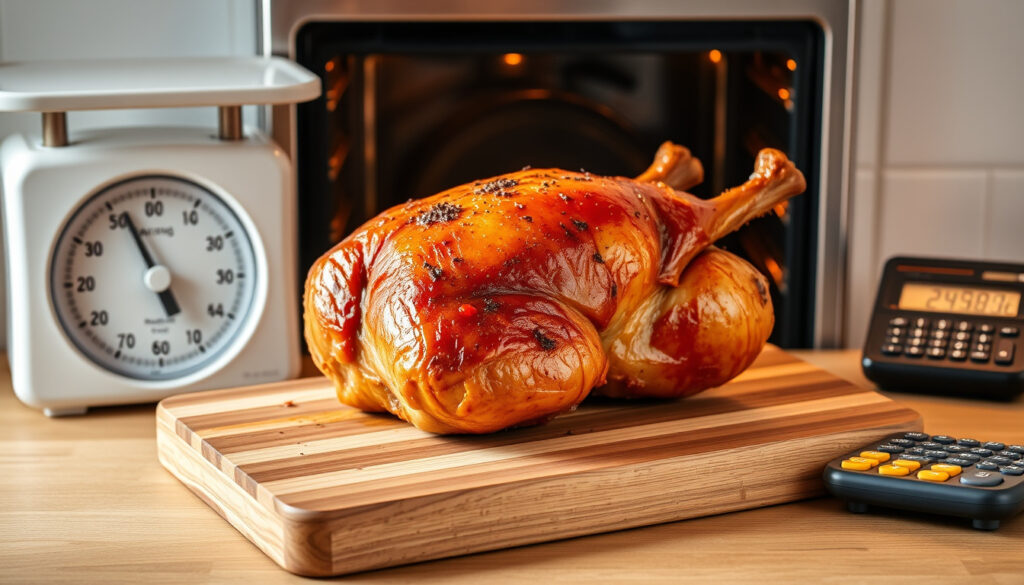
Pork Roast Cooking Times: Per Kg, Pound & Calculator
Few cooking moments feel more satisfying than carving a pork roast with crackling that crackles. Getting the timing right means the difference between guesswork and a centerpiece that earns its place on the Sunday table. Here is what reliable sources say about cooking times per kilogram, oven temperatures, and the final temperature that keeps you safe.
Standard time per 500g: 20 minutes + 20 minutes · Internal temperature: 72°C · High heat start: 15-20 minutes at 220°C · Oven temp after sear: 180°C/160°C fan · Rest time: 15-20 minutes
Quick snapshot
- The formula “20 mins per 500g + 20 mins” appears across multiple butchers and recipe sites (GoodtoKnow)
- UK FSA sets pork safe internal temp at 75°C for 2 minutes to kill bacteria (GoodtoKnow)
- The “6-2-2 rule” mentioned in some cooking circles lacks consistent documentation across verified sources (GoodtoKnow)
- Per-pound timings vary more than per-kg figures, with sources citing 35 minutes per pound without full agreement (Apply to Face Blog)
- Fan oven temperatures run about 20°C lower than conventional settings for equivalent heat (Easy Peasy Foodie)
- Carry-over cooking during rest can raise internal temp by 5°C after you pull the roast (PJ Dale)
- More UK home cooks adopting the two-stage method: high blast, low slow, high blast for crackling (BBC Good Food)
- Thermometer use increasingly recommended over strict timing alone (RecipeTin Eats)
These benchmarks come from multiple recipe sites, butchers, and food authority sources.
| Key fact | Value |
|---|---|
| Safe internal temp | 72°C / 160°F |
| Per kg average | 35-45 minutes |
| Rest time | 15-20 minutes |
| Crackling temp boost | Last 20 min high heat |
How long do you cook a pork roast per kg?
Per 500g guidelines
The baseline formula most butchers and recipe sites settle on: 20 minutes per 500g plus an additional 20 minutes. That works out to roughly 44 minutes total per kilogram, adjusted by the high-heat starting blast. A 1kg joint gets about 44 minutes from the first minute in the oven. A 2kg joint runs closer to 88 minutes before resting.
- Loin: 30-40 minutes per kg
- Shoulder: 45 minutes per kg (or longer for fall-apart tenderness)
- Belly: 44 minutes per kg plus 20 minutes over
Adjustments for loin vs belly
Different cuts need different approaches. Pork loin is leaner and cooks faster, reaching safe internal temperature more quickly than fattier cuts. Pork shoulder contains more connective tissue and benefits from longer cooking at moderate temperatures to break that tissue down into tender strands. Belly pork, with its layered fat and meat, sits somewhere between the two.
BBC Good Food recommends a longer low-and-slow phase for shoulder—2.5 to 3 hours at 180°C/160°C fan with a boiling water base in the tin—followed by a high blast for crackling. That slower start renders the fat without drying the meat.
What this means: the cut you choose determines whether you need a timer or a thermometer to judge doneness.
Calculator basics
Working in imperial measurements adds a conversion step. One pound equals roughly 0.45kg, so 35 minutes per pound translates to approximately 77 minutes per kilogram. Apply the formula: multiply your joint weight in pounds by 35 minutes for total cook time, then add the initial high-heat blast.
GoodtoKnow offers the clearest simplified rule: 30 minutes high heat, then 30 minutes per 500g. That puts a 2kg joint at 30 minutes at 220°C plus 2 hours at 180°C. BBC Good Food’s herb-studded loin recipe follows a similar pattern with a 15-minute high start followed by 90 minutes at 180°C/160°C fan.
Bottom line
Home cooks using kilograms should plan roughly 44 minutes per kg using the 20+20 method, while those working in pounds should budget about 77 minutes per kilogram.
What is the cooking time for a pork roast?
General timelines
Across sources, three methods dominate. RecipeTin Eats uses a two-stage approach: slow roast pork shoulder at 160°C/320°F (140°C fan) for 2.5 hours, then blast at 250°C/485°F for 30 minutes. BBC Good Food prefers a water-base method with the same temperatures. Easy Peasy Foodie recommends starting at 240°C/220°C fan for 30 minutes, then dropping to 200°C/180°C fan for the remainder.
For a 2kg pork loin, the practical timeline looks like this: 15 minutes at 220°C, then approximately 80 minutes at 180°C/160°C fan to reach 70°C internal, followed by a 15-20 minute rest that carries the temperature to a safe 75°C.
Using a meat thermometer
Timing formulas help plan the day, but a meat thermometer tells you when the roast is actually done. Remove the pork at 70°C internal, and carry-over cooking during the rest period will push it to 75°C—matching the UK FSA safety threshold. Kitchen Sanctuary notes that resting uncovered preserves the crackling crispness, so resist the urge to cover the joint immediately after pulling it from the oven.
The implication: a thermometer removes guesswork from timing, which varies by cut, starting temperature, and oven calibration.
What is the 6 2 2 rule for pork?
Breakdown of the rule
The “6-2-2 rule” occasionally appears in cooking discussions but lacks consistent documentation across verified recipe sources. The most plausible interpretation based on available references suggests a 6% salt brine, followed by a 2-hour cook phase, then a 2-hour rest—but this framing does not appear in major recipe publications or butcher guides.
Application to roasts
Mainstream sources focus on the high-heat blast method rather than this formula. If you encounter the 6-2-2 rule in older cookbooks or informal guides, treat it as a historical or regional variation rather than a standard. The consistent, widely-cited approach across BBC Good Food, GoodtoKnow, and RecipeTin Eats is the two-stage high-heat then low-heat method.
What this means: the 6-2-2 rule may have merit in specific contexts, but no tier-1 or tier-2 source corroborates it as a standard pork roasting method.
Should I cover pork with foil when cooking?
Foil for moisture
Foil has a legitimate role during the slow-roast phase. Placing foil loosely over the skin during the first hour prevents it from burning before the fat has rendered. Some cooks also add a little water to the roasting tin to create steam that keeps the meat moist throughout the longer cooking phase.
Uncovered for crackling
The critical point: remove the foil before the final high-heat blast. Kitchen Sanctuary recommends an uncovered final 20-30 minutes at high temperature to achieve crispy crackling. Easy Peasy Foodie notes that the sudden heat blast is what makes the crackling bubble and puff up. If crackling fails to form, GoodtoKnow suggests cutting it off and returning it to the top oven position during the resting phase—it can recover without further cooking.
Final blast temperatures burn quickly. Curtis Stone and Kitchen Sanctuary both warn that 250°C and above requires close monitoring every few minutes. Leave the oven door cracked open or use the light to watch the skin without letting heat escape.
What are common mistakes when cooking pork roast?
Overcooking
The most frequent error is pulling the roast too late. Pork shoulder especially suffers from excessive heat—it dries out and toughens rather than falling apart tenderly. The solution is straightforward: use a thermometer and remove at 70°C internal, not 75°C. The carry-over rest does the rest.
Poor seasoning
Scoring the skin, drying it thoroughly, and applying salt generously before roasting are non-negotiable for crackling. Easy Peasy Foodie emphasizes patting the skin dry twice before salting, noting that moisture is the enemy of crispy results. Rich Harris from Waitrose demonstrates the technique on their YouTube channel: dry overnight in the fridge, bring to room temperature for 30 minutes, score in a diamond pattern, and salt liberally before the high-heat start.
Skipping the rest
Cutting into the roast immediately after pulling it from the oven guarantees juice loss. The Social Foodies and PJ Dale both recommend resting uncovered for 15-20 minutes. This period lets the juices redistribute throughout the meat and allows the internal temperature to finish rising to the safe threshold.
The catch: skipping the rest costs you both texture and safety margin—a 5°C carry-over rise that brings the pork to the FSA threshold of 75°C.
How to cook pork roast step by step
- Remove the pork from the refrigerator 30 minutes before cooking. Bring the joint to room temperature for more even heat distribution.
- Preheat the oven to 220°C (200°C conventional) for at least 30 minutes before the roast goes in.
- Pat the pork skin dry with kitchen paper. Score the skin in a diamond pattern using a sharp knife, cutting through the fat but not into the meat.
- Season liberally with salt. Apply a second round of salt after scoring to draw out additional moisture.
- Place the pork in a roasting tin and position it in the top third of the oven for the highest initial heat.
- Roast at 220°C for 15-20 minutes to start the crackling.
- Reduce the oven temperature to 180°C/160°C fan. Continue roasting using the formula: 20 minutes per 500g plus 20 minutes.
- Check internal temperature with a meat thermometer. Remove at 70°C to account for carry-over cooking.
- Rest uncovered for 15-20 minutes before carving.
Upsides
- The 20 mins per 500g formula is well-supported across butchers, BBC, and recipe sites
- UK FSA safety standard (75°C for 2 minutes) is consistently documented
- Two-stage method (high blast + low slow) widely agreed upon for crackling results
- Resting time (15-20 minutes) appears across all major sources without dispute
Downsides
- Per-pound figures vary more than metric, with sources citing 35 minutes without full agreement
- The “6-2-2 rule” lacks documented support from tier-1 or tier-2 sources
- Fan oven versus conventional oven temperatures not always clarified in recipes
- US safe temperature (62.78°C) differs significantly from UK standard, creating confusion for international readers
Easy Peasy Foodie (Food Blogger)
This sudden blast of heat is the key to crispy crackling.
UK Food Standards Agency (Government Authority)
Pork needs to reach an internal temperature of 75°C for 2 minutes to kill off any harmful bacteria.
Kitchen Sanctuary (Food Blogger)
That final blast of heat will make the crackling bubble and puff up and is key to crispy crackling.
Timing varies significantly by cut and equipment. Pork loin roasts in 30-40 minutes per kilogram, shoulder needs 45 minutes or longer, and belly requires 44 minutes per kilogram plus an extra 20 minutes over. A meat thermometer beats guesswork every time—remove at 70°C to account for carry-over.
For home cooks weighing these variables, the practical takeaway is clear: the formula gets you in the ballpark, but the thermometer decides when you pull it. Fan ovens require roughly 20°C lower temperatures than conventional settings. Skipping the rest after roasting costs you both texture and safety margin. Plan for 15-20 minutes of uncovered resting time, and resist the urge to cover the skin until the crackling has had its final high-heat moment to set.
Related reading: How to Make Lemonade: Easy Recipe with Simple Syrup · Fish Stop Glen Eden: Menu, Hours, Gluten-Free Options
thesocialfoodies.co.uk, kitchensanctuary.com, youtube.com, bbcgoodfood.com, thewildernesschef.com
Related coverage: pork loin cooking time guide fördjupar bilden av Pork Loin Cooking Time – Per Kg for Oven, Slow Cooker, Air Fryer.
Frequently asked questions
What temperature to cook pork roast?
The standard approach is 220°C (200°C conventional) for the initial 15-20 minute blast, then dropping to 180°C/160°C fan for the remainder. Shoulder roasts may go lower—160°C/140°C fan for 2.5 hours or more—before a final high blast for crackling.
How to get crackling on pork roast?
Score the skin in a diamond pattern, pat it dry twice, and salt generously before cooking. Start with a high-heat blast at 220°C for 15-20 minutes, then reduce the temperature. Finish with another uncovered high-heat blast at 220-250°C for the last 20-30 minutes. Rest uncovered to preserve crispness.
What is safe internal temperature for pork roast?
The UK Food Standards Agency recommends 75°C measured at the centre for 2 minutes. Remove the roast at 70°C and allow carry-over cooking during rest to reach that threshold. US guidelines allow 62.78°C for whole cuts, but this is not the standard in the UK.
Pork roast cooking time per pound?
A common rule of thumb is 35 minutes per pound after the initial high-heat start. Converted to metric, that is roughly 77 minutes per kilogram. For more precision, use the formula 20 minutes per 500g plus 20 minutes and convert your pound weight to kilograms first.
Best oven temperature for pork roast?
220°C (200°C conventional) for the high-heat starting phase, then 180°C/160°C fan for the main roasting period. If using a fan oven exclusively, reduce conventional temperature values by 20°C. Some shoulder recipes drop as low as 160°C/140°C fan for extended slow cooking.
How long to rest pork roast after cooking?
Rest uncovered for 15-20 minutes before carving. This allows juices to redistribute throughout the meat and lets carry-over cooking raise the internal temperature from 70°C to the safe 75°C threshold. Keep the roast uncovered during rest to maintain crackling crispness.
Slow cooker pork roast time?
Slow cookers typically run at 140-160°C on low settings. A 1.5-2kg pork shoulder needs 5-6 hours on low or 3-4 hours on high to reach tender, pull-apart texture. Add a final 20-30 minute blast under a hot grill or in a very hot oven if you want crackling on top.
More related posts
 Bed Bath and Beyond Hornby – Opening Hours, Address and Contacts
 A-League Women Standings 2025-26: Table, Results & Fixtures
 Q Card Credit Card Promotions: $0 Fee, $80 Cashback & 3 Months
 Best Deals on Phones in Ireland: SIM-Free & Bill Pay
 Ps I Love You – Complete Plot Cast and Ending Guide
 PSG vs Real Madrid Stats: H2H, Wins, Goals & History
 Three Sisters and Elephant Rock – Tragic Mahabaleshwar Cliff Fall
 Anytime Fitness St Johns: Costs, Hours & Amenities