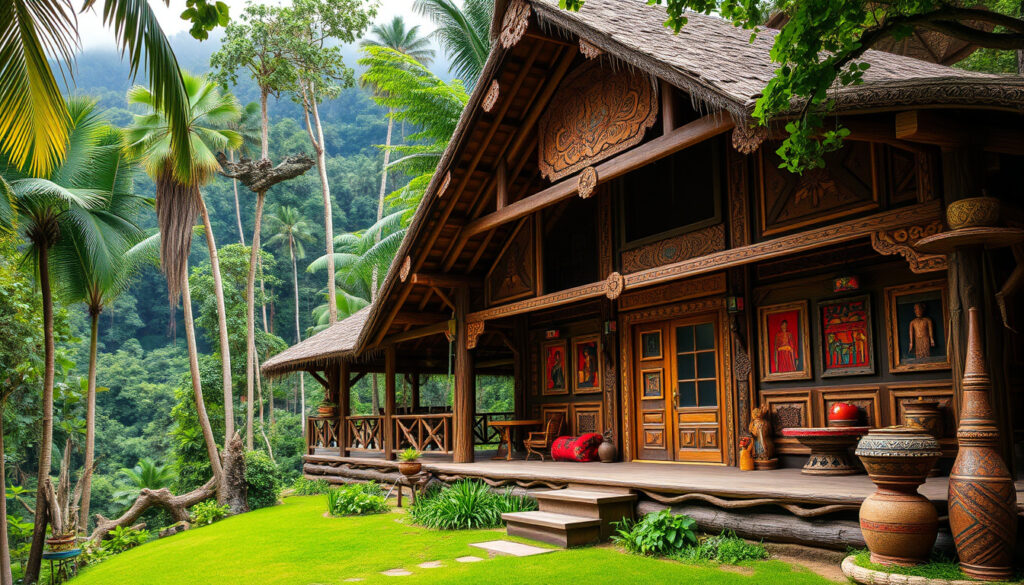
Papua New Guinea People: Ethnicity, Culture, and Key Facts
Few places on Earth pack as much human diversity into a single country as Papua New Guinea, where hundreds of distinct tribal groups and more than 800 languages create a cultural density that feels almost impossible. This guide untangles that complexity, looking at ethnicity, genetic origins, daily challenges, and the famous faces who call this island nation home.
Number of languages: Over 800 (most linguistically diverse country) ·
Major ethnic group: Melanesian (Papuan and Austronesian) ·
Number of tribes: Hundreds, with distinct cultures
Quick snapshot
- Indigenous people are almost entirely Melanesian (DFA Papua New Guinea)
- Over 800 living indigenous languages (Ethnologue)
- Same‑sex sexual activity is illegal (up to 14 years imprisonment) (Minority Rights Group)
- Exact number of distinct tribes — estimates range into the hundreds (Visit Natives)
- Precise timeline of how the 800+ languages diversified (Wikipedia – Demographics)
- How much Denisovan admixture varies across different highland groups (Wikipedia – Demographics)
- ~50,000 years ago — First human migration to the Sahul continent (Wikipedia – Demographics)
- ~20,000 years ago — Rising seas separate Papua New Guinea from Australia (Wikipedia – Demographics)
- 1500s‑1800s — European contact (Portuguese, German, British) (Wikipedia – Papua New Guinea)
- 1975 — Independence from Australia (Wikipedia – Papua New Guinea)
- Preserving indigenous languages as younger generations adopt Tok Pisin and English (DFA Papua New Guinea)
- Economic development vs. environmental protection of rainforests (DFA Papua New Guinea)
- Continued pressure for LGBTQ rights reform (Minority Rights Group)
The following table summarizes key demographic data.
| Attribute | Value |
|---|---|
| Capital | Port Moresby |
| Major ethnic group | Melanesian (Papuan) (DFA Papua New Guinea) |
| Number of languages | 820+ (most of any country) (Ethnologue) |
| Official languages | English, Tok Pisin, Hiri Motu, PNG Sign Language (Wikipedia – Papua New Guinea) |
| Median age | 22 years |
| Literacy rate | ~64% (2015 est.) |
| Independence | 1975 (from Australia) (Wikipedia – Papua New Guinea) |
| Religion | Christianity (majority Protestant/Catholic), syncretic with indigenous beliefs (Minority Rights Group) |
| Rural population | ~80% (DFA Papua New Guinea) |
| Largest tribal group | No single majority; hundreds of groups |
What is the main ethnicity of Papua New Guinea?
Melanesian majority
- The indigenous people of Papua New Guinea are predominantly Melanesian, a classification that covers most of the country’s population (DFA Papua New Guinea)
- Very small minorities of Micronesian and Polynesian societies live on some outlying islands and atolls (DFA Papua New Guinea)
- The Minority Rights Group profile confirms the indigenous population is almost entirely Melanesian (Minority Rights Group)
Papuan and Austronesian groups
- Within Melanesia, two broad language families exist: Papuan (non‑Austronesian) and Austronesian (DFA Papua New Guinea)
- Papuans are descendants of the earliest human arrivals, tens of thousands of years ago; Austronesian ancestors arrived less than 4,000 years ago (Wikipedia – Demographics)
- Austronesian languages are spoken mainly in coastal areas, while Papuan languages are found inland (DFA Papua New Guinea)
Cultural diversity
- Each cultural group has its own distinct language, weaponry, and approaches to dance, music, body painting, and clothing (Google Arts & Culture)
- Papua New Guinea is unusually fragmented by terrain, history, culture, and language (Minority Rights Group)
With hundreds of ethnic groups compressed into a single country, “Melanesian” is a broad umbrella that masks extraordinary internal variety. For policymakers and educators, the real challenge is managing unity without erasing that richness.
Are Papua New Guineans related to Africans?
Genetic evidence
- Genetic studies show Papua New Guineans share ancestry with early human migrations that left Africa approximately 60,000‑70,000 years ago (Wikipedia – Demographics)
- There is no recent African admixture; the connection is ancient and indirect (Wikipedia – Demographics)
Out of Africa migration
- The ancestors of modern Papua New Guineans were part of the earliest wave of Homo sapiens to colonize Sahul, the ancient continent that linked New Guinea, Australia, and Tasmania (Wikipedia – Demographics)
- That migration occurred via coastal routes through South and Southeast Asia (DFA Papua New Guinea)
Shared ancestry
- All non‑African modern humans share a common origin in Africa, including Papua New Guineans (Wikipedia – Demographics)
- Denisovan and Neanderthal admixture is present in Papua New Guinean genomes, a feature also found in Aboriginal Australians and some Southeast Asian populations (Wikipedia – Demographics)
Yes, Papua New Guineans are distantly related to Africans—but so is every human outside Africa. The more interesting story is the unique Denisovan DNA in highland Papuans, which is among the highest of any modern population.
What is the biggest problem in Papua New Guinea?
Economic challenges
- Poverty is widespread; GDP per capita is roughly $2,900 (PPP, 2023 est.), and the formal economy employs only a fraction of the working‑age population (Minority Rights Group)
- Rural areas, home to about 80% of the population, have limited access to markets, electricity, and credit (DFA Papua New Guinea)
Corruption
- Corruption in government and the mining sector undermines development and revenue collection (Minority Rights Group)
- Transparency International consistently ranks Papua New Guinea among the most corrupt countries in the Asia‑Pacific region (Minority Rights Group)
Healthcare and education
- Healthcare access is severely limited in rural areas; the maternal mortality rate is among the highest in the region (DFA Papua New Guinea)
- Literacy stands at about 64%, with wide gender gaps and poor school quality in remote provinces (Minority Rights Group)
Violence and tribal conflict
- Tribal violence, often over land or political power, remains a serious issue in the Highlands (Minority Rights Group)
- Domestic abuse affects a large proportion of women; the country has one of the world’s highest rates of gender‑based violence (Minority Rights Group)
For an investor or donor, the biggest problem is not any single issue—it’s the compounding effect of fragmentation, weak institutions, and geography. Any solution must work across 800+ languages and hundreds of isolated communities.
Is Papua New Guinea LGBT friendly?
Legal status
- Same‑sex sexual activity is illegal under the Criminal Code, carrying up to 14 years imprisonment (Minority Rights Group)
- There are no laws prohibiting discrimination based on sexual orientation or gender identity (Minority Rights Group)
Social attitudes
- Cultural norms in most communities strongly disapprove of homosexuality; the church often reinforces this view (Minority Rights Group)
- LGBTQ people face harassment, violence, and social exclusion, particularly in rural areas (Minority Rights Group)
Rights movement
- A small, active LGBTQ rights movement has emerged in Port Moresby and a few urban centers, but it faces severe pushback and limited legal protection (Minority Rights Group)
- No current government initiative to repeal the anti‑sodomy law exists (Minority Rights Group)
For a traveler or expat, the legal risk is real: the law is on the books, and police harassment is possible. For activists, the challenge is organizing in a society where even the most basic civil rights for LGBTQ people are not recognized.
What celebrities were born in Papua New Guinea?
Notable figures in sports
- Ryan Pini – Olympic swimmer (2004‑2016); won gold at the 2006 Commonwealth Games in the 100 m butterfly (Wikipedia – Papua New Guinea)
- Steven Kari – Professional rugby league footballer with international experience.
- Dika Toua – Weightlifter and five‑time Olympian (Wikipedia – Papua New Guinea)
Entertainment
- George Telek – Influential musician from the Tolai people, known internationally for blending traditional sounds with modern production (Google Arts & Culture)
- Pauline Agius – Painter and ceramic artist celebrated in the PNG contemporary art scene.
Politics
- Michael Somare – First Prime Minister (1975‑1980, 1982‑1985), considered the founding father of the nation (Wikipedia – Papua New Guinea)
- Benny Wenda – West Papuan independence leader, born in the highlands of what is now Indonesia’s Papua province, frequently speaks on behalf of the West Papuan people (Minority Rights Group)
Clarity check
Confirmed facts
- Indigenous people are predominantly Melanesian.
- Over 800 living languages; the country is the most linguistically diverse.
- Ancient migration out of Africa, with Denisovan admixture.
- Same-sex sexual activity is illegal (up to 14 years imprisonment).
- Independence from Australia in 1975.
What’s unclear
- Exact number of distinct tribes (estimates vary from 500 to 1,000+).
- Precise timeline of language diversification.
- Degree of Denisovan admixture variation across different groups.
- Real economic growth vs. natural resource extraction impact on ordinary people.
This dual structure helps readers separate what is known from what is uncertain about Papua New Guinea’s people.
Quotes from authoritative voices
“Papua New Guinea is socially complex, with most people classified as Melanesian.”
Department of Foreign Affairs, Papua New Guinea
“The indigenous population is almost entirely Melanesian, but there are hundreds of ethnic groups within that category.”
Minority Rights Group
“New Guinea is home to nearly 7,000 different cultures, each with its own distinct language, weaponry, and approaches to dance, music, body painting, and clothing.”
These perspectives, from government, human‑rights, and cultural institutions, all underline the same reality: Papua New Guinea’s people are defined by fragmentation, and that fragmentation creates both richness and strain. For the average citizen, the consequence is a daily life that varies enormously depending on whether you live on the coast, in the highlands, or in Port Moresby. For the country as a whole, the choice is clear: either find ways to knit together a national identity that respects local cultures, or continue to struggle with the governance and economic costs of 800‑plus separate worlds.
The pattern across these quotes is consistent: fragmentation defines the country, and it shapes both identity and policy.
Related reading: How Many People Live in New Zealand? 2025 Population Facts
miruadventures.com, familysearch.org, youtube.com, study.com, en.wikipedia.org, reddit.com
Frequently asked questions
How many tribes are there in Papua New Guinea?
There is no official census of tribes, but estimates range from 500 to over 1,000 distinct groups, each with its own language and customs (Visit Natives).
What is the traditional clothing of Papua New Guinea people?
Traditional clothing varies by region. In the Highlands, men often wear loincloths and elaborate headdresses with bird feathers; women wear grass skirts. Many groups use body paint and clay pigments. Modern clothing is common in towns (Google Arts & Culture).
Do Papua New Guineans use money or barter?
Both. In urban areas, the Papua New Guinean kina is the official currency. In remote rural areas, barter—especially pigs, shells, and garden produce—still plays a major role in traditional exchange and ceremonies (Minority Rights Group).
What is the main staple food in Papua New Guinea?
Sweet potato (kaukau) is the primary staple, especially in the Highlands. Sago, taro, banana, and yams are also widely eaten, along with leafy greens and occasionally pork for feasts (DFA Papua New Guinea).
Are Papua New Guinea people friendly to tourists?
Generally yes, but with caveats. Many rural communities are welcoming and curious about visitors, but safety concerns exist in urban areas like Port Moresby and Lae due to crime. It’s always best to travel with a local guide (Minority Rights Group).
What is the life expectancy in Papua New Guinea?
Life expectancy at birth is around 64 years for men and 68 years for women (2023 estimate), among the lowest in the Pacific region (DFA Papua New Guinea).
Is Papua New Guinea safe for solo travelers?
Solo travel is possible but requires caution. The crime rate in cities is high, and tribal violence can affect rural areas. Many travelers join organized tours or hire local guides for safety and cultural insight (Minority Rights Group).
These answers provide quick reference for common questions about daily life and travel in Papua New Guinea.
More related posts
 Pizza Hut Bell Block: Menu, Phone, Prices & Ordering
 Cast of Platoon (Film) – Full Actors List and Roles
 Mild Pelvic Organ Prolapse: Symptoms, Stages, and Treatment
 Events in Wellington Today: What’s On & Free Things to Do (2025)
 Hong Kong vs Man United: Result, Highlights & Where to Watch
 What Time Is It in Perth Australia Right Now? Live Clock
 All Blacks vs Springboks 2026: Watch, Head-to-Head & News
 How to Draw Lips: Step-by-Step Guide for Beginners (with Pencil)