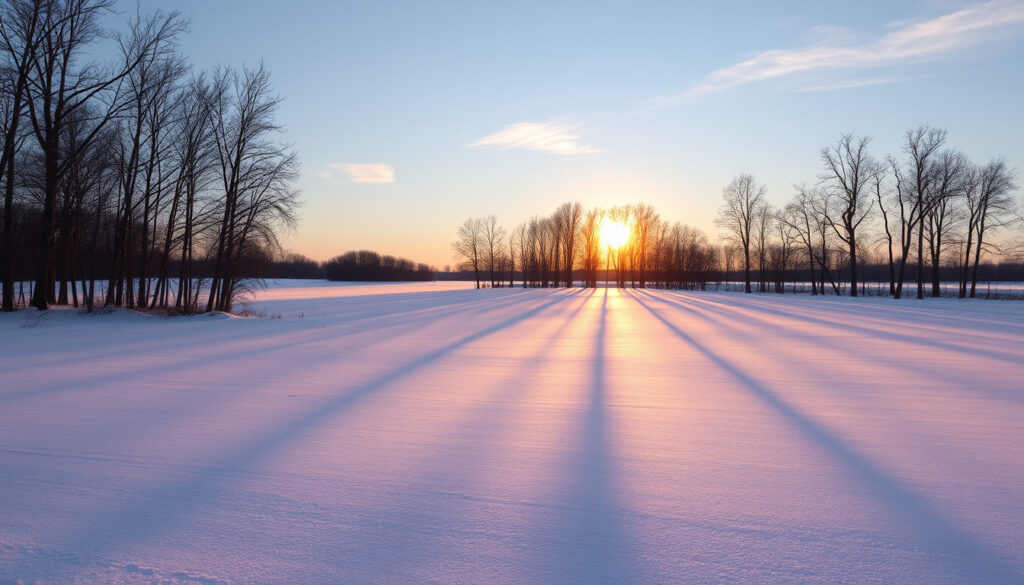
Shortest Day of the Year 2025: Winter Solstice & Daylight
Anyone who’s watched the sun rise late and disappear early this month already suspects what December 21 confirms: the shortest day of the year. In 2025 the winter solstice lands on December 21, a date when Dublin gets roughly 7 hours 30 minutes of daylight, according to World.ie (Irish seasonal guide).
Winter solstice date 2025: December 21, 2025 ·
Daylight in New York City: 9 hours 15 minutes ·
Daylight in London: 7 hours 49 minutes ·
Daylight in Reykjavik: 4 hours 7 minutes ·
Daylight gained per day after solstice (London): ~1 minute per day
Quick snapshot
- The winter solstice marks the shortest day and the longest night of the year in the Northern Hemisphere (IrishCentral (Irish heritage site)).
- The solstice can fall on December 20, 21, 22, or 23 (The Irish Times (national newspaper)).
- Dublin gets about 7 hours 30 minutes of daylight on the 2026 solstice (World.ie (Irish seasonal guide)).
- The shortest day is not the day with the earliest sunset or the latest sunrise (Independent.ie (Irish news outlet)).
- The exact daily daylight gain after the solstice varies by latitude, so no single per-day figure fits every country.
- Whether the earliest sunset should line up with the shortest day — in practice it usually lands earlier instead.
- How Earth’s slightly faster rotation since 2020 will affect the timing of future solstices.
- Small rounding differences between daylight calculators can produce slightly different totals for the same city.
- From 2020 to 2025, the solstice landed on December 21 five times and December 22 once (2023). (IrishCentral (Irish heritage site))
- In 2022, Ireland’s exact solstice moment was 21:36 GMT on December 21 (IrishCentral (Irish heritage site)).
- In 2026, Dublin’s solstice is December 21 at 20:50 local time (timeanddate.com (time and astronomy reference)).
- Daylight starts increasing the day after the solstice; the early gains are small but steady.
- London initially gains about 1 minute of daylight per day.
- The next milestone is the March equinox, when day and night roughly balance.
Seven facts, one theme: the solstice is a moving target, and Ireland’s midwinter daylight depends on the year you measure.
The pattern is clear: the solstice date shifts, but daylight hours are determined by latitude, not the calendar.
| Fact | Detail |
|---|---|
| 2026 winter solstice (Dublin) | December 21 at 20:50 local time |
| Shortest day in Dublin (2026) | 7 hours 30 minutes of daylight (World.ie (Irish seasonal guide)) |
| Dublin’s winter vs summer daylight | December solstice has 9 hours 30 minutes less daylight than June solstice (timeanddate.com (time and astronomy reference)) |
| Typical Irish solstice sunrise / sunset | About 08:40 / 16:10 (Discover Iveragh (Kerry archaeoastronomy guide)) |
| Shortest day in Ireland (2021) | Less than 8 hours of sunlight |
| 2022 winter solstice (Ireland) | 21:36 GMT on December 21 |
| When the solstice can fall | December 20-23; in Ireland most often December 21 or 22 |
What does the winter solstice mean?
Earth’s axis is tilted roughly 23.5 degrees, and every December the Northern Hemisphere leans away from the sun. The winter solstice is the precise moment that lean is strongest — the sun follows its lowest arc across the sky, producing the shortest day and the longest night of the year.
It also marks the beginning of astronomical winter, which runs from the December solstice to the March equinox. IrishCentral (Irish heritage site) puts it plainly: this is the astronomical phenomenon behind the whole midwinter turning point.
Why is the winter solstice the shortest day?
- The tilt, not the distance from the sun, drives the seasons.
- In December, the Northern Hemisphere points away from the sun, so sunlight arrives at a shallow angle.
- A shallow angle means the sun spends fewer hours above the horizon — the definition of a short day.
The effect is visible in real sunrise and sunset times. Around the solstice, Dublin’s sun rises at roughly 08:40 and sets before 16:10 — a daylight window of about seven and a half hours.
South of the equator the whole picture flips. December 21 is the summer solstice in Australia, New Zealand, and South America, which is why those regions are entering their brightest weeks while Ireland is in its darkest.
For anyone in Ireland, a seven-and-a-half-hour day is the difference between commuting in daylight and commuting in darkness. The working day simply doesn’t line up with the daylight.
The pattern: the solstice is the hinge of the season, and it shows up in daily life as a stark mismatch between clock time and usable daylight.
Is December 21 actually the shortest day of the year?
In 2025, yes — the solstice falls on December 21. But the date is not fixed, because the calendar and the solar year don’t line up perfectly. The shortest day can occur on any date from December 20 to December 23, and in Ireland it most often falls on December 21 or December 22.
When can the winter solstice fall on other dates?
- Leap years push the solstice forward; the extra day in February resets the calendar’s drift.
- The solar year is about a quarter-day longer than the calendar year, so the exact moment shifts each year.
- That’s why 2023’s solstice landed on December 22 while 2024 and 2025 both land on December 21.
Six solstices, one trend: the date drifts between December 21 and 22, and the leap-year cycle keeps pulling it back.
| Year | Winter solstice (Northern Hemisphere) | Notes |
|---|---|---|
| 2020 | December 21 | |
| 2021 | December 21 | Shortest day in Ireland had less than 8 hours of sunlight |
| 2022 | December 21 | 21:36 GMT in Ireland |
| 2023 | December 22 | The calendar drift pushes the date back a day |
| 2024 | December 21 | |
| 2025 | December 21 | Exact moment: 15:03 UTC |
Part of the confusion around December 21 is that the shortest day doesn’t behave the way people expect. Independent.ie (Irish news outlet) explains that the shortest day of the year is not the day with the earliest sunset or the latest sunrise — and that the shortest day is defined by true solar noon, the moment when the sun reaches its highest point in the sky, not by the times on a clock.
The shortest day and the darkest morning are different days. After the solstice, evenings start brightening quickly, but mornings in early January can still feel later than they did in mid-December.
How long is the shortest day of the year?
The answer is a geography lesson: day length on the winter solstice depends almost entirely on latitude. The closer you are to the equator, the longer your December day; the closer you are to the poles, the shorter it gets.
How many hours of daylight on the shortest day?
- At the equator, daylight stays close to 12 hours all year, solstice or not.
- At roughly 50°N — London’s latitude — the shortest day drops to about 7 hours 49 minutes.
- Inside the Arctic Circle, the sun can fail to rise at all on the shortest day.
Four cities, one pattern: the further north you sit, the less December daylight you get — city-level figures from timeanddate.com (time and astronomy reference).
| City | Daylight on the shortest day | Why it’s that short |
|---|---|---|
| Reykjavik, Iceland | 4 hours 7 minutes | Lies just south of the Arctic Circle; the sun barely climbs above the horizon |
| Dublin, Ireland | 7 hours 30 minutes (2026 solstice) | Sunrise 08:39, sunset 16:09 on the 2026 winter solstice |
| London, UK | 7 hours 49 minutes | A lower latitude than Dublin buys about 20 extra minutes |
| New York, US | 9 hours 15 minutes | Around 40°N, the shortest day still leaves a usable afternoon |
These differences aren’t subtle — the gap between Reykjavik and New York on the same December day is roughly five hours of daylight. Within Ireland, the latitude swing is small enough that cloud, not latitude, decides which counties feel darkest.
The takeaway: if you’re chasing daylight, head south, not north. A few hundred kilometres of latitude can add more useful December sun than any time-zone adjustment.
What is the shortest day of the year in Ireland?
In Ireland, the shortest day follows the same astronomical rule, but the local times matter. World.ie (Irish seasonal guide) lists Dublin’s 2026 shortest day as December 21, with sunrise at 08:39 and sunset at 16:09 — a total of 7 hours 30 minutes.
An independent calculator lines up with that figure: sunrise-sunset.org (daylight calculator) also lists Dublin’s 2026 winter solstice at 7 hours 30 minutes.
Which county in Ireland gets the most sunshine?
- Day length barely varies across Ireland’s counties — the island’s latitude range is narrow.
- Sunshine hours are a different story: southern and eastern counties tend to see more sun than the north and west.
- The southeast in particular builds up a reputation for brighter winter spells.
The distinction between daylight and sunshine matters. Daylight is the raw hours between sunrise and sunset; sunshine is what actually reaches the ground through clouds. In an Irish December, the south and east of the country tend to pick up more of the limited sunshine that gets through.
The same geographic pattern shows up in the island’s ancient architecture. The Irish Times (national newspaper) connects the winter solstice to Newgrange, the passage tomb in County Meath aligned with the sunrise on the shortest mornings. Similar alignments appear at Knockroe in County Kilkenny and Slieve Gullion in County Armagh, which Discover Iveragh (Kerry archaeoastronomy guide) says are lined up with the solstice sunrise and sunset respectively.
Ireland’s shortest day is short everywhere — roughly 7h30 in Dublin — but the counties that feel it least are the ones with clearer winter skies. The southeast typically gets more of the limited sun on offer.
And to put Ireland’s swing in context: timeanddate.com (time and astronomy reference) calculates that Dublin’s December solstice has 9 hours 30 minutes less daylight than its June solstice. In summer, daylight stretches to roughly 17 hours; in winter, it collapses to 7 hours 30 minutes.
Why this matters: for anyone living in Ireland, midwinter daylight isn’t just a curiosity — it controls commute times, outdoor work, and mood. What separates a bright winter day from a grey one is cloud, and the south and east tend to win that lottery.
How much longer is each day after December 21?
The darkest point passes quickly. Right after the solstice, daylight starts increasing, and the initial gains are small but consistent.
How many minutes do we gain each day in January?
- At mid-latitudes like London, the initial gain is roughly 1 minute per day.
- The rate of gain accelerates through January and peaks around the March equinox.
- Evenings improve first; sunrises keep arriving later for weeks after the solstice.
Independent.ie framed the practical effect in a midwinter headline: the evenings were already starting to get brighter, even though the shortest day was still ahead. That’s the quirk of the solstice — the shortest day is followed by a long, slow return of evening light.
For Dublin, the gain is quiet but real. A gain of one minute a day means the first week after the solstice adds only a few minutes of light — hardly noticeable. By late January, the accumulated difference is obvious, especially in the evenings.
Don’t expect an instantly brighter morning after December 21. The latest sunrise usually lands about two weeks into January, so the big early win is at the end of the day, not the start.
The trade-off: the shortest day starts the clock on lighter evenings, but mornings lag behind. For commuters, that means the reward comes at the end of the day, while early starts stay dark for a while longer.
Which country has the longest daylight in winter?
The phrasing matters here. In the Northern Hemisphere’s winter, the longest daylight is found near the equator, not near the poles. The shortest is found inside the Arctic Circle, where the sun can stay below the horizon for weeks.
Which country has only 40 minutes of night time?
- The “40 minutes of night” is a summer phenomenon in far northern Norway, where the sun barely dips below the horizon.
- In winter, the same latitudes hit the opposite extreme: polar night, with no sunrise to speak of.
- Norway is the country most often cited for both extremes because its territory stretches deep into the Arctic.
So the same country that barely gets dark in June barely gets light in December. Reykjavik, for comparison, gets just over 4 hours of daylight on its shortest day.
Which place on Earth has the most daylight hours?
- Over a full year, the tropics see the most consistent daylight — roughly 12 hours a day, every day.
- During the Southern Hemisphere’s summer, Antarctica gets 24-hour daylight.
- For Ireland, the “most daylight” prize always belongs somewhere else — the local question is simply how much winter light you can hold onto.
The global pattern is simple: latitude controls everything. The same tilt that gives the Arctic endless summer days also creates its endless winter nights, and Ireland’s mid-latitude position sits between those extremes — short days, but manageable ones.
The pattern: when someone asks which country has the longest winter daylight, the honest answer is “nearly any tropical one.” The more useful question for Irish readers is how to make the most of a December day that shrinks to about seven and a half hours.
Confirmed facts
- The winter solstice occurs every December in the Northern Hemisphere and marks the shortest day of the year (IrishCentral (Irish heritage site)).
- The solstice date varies between December 20 and 23 (The Irish Times (national newspaper)).
- Dublin’s 2026 winter solstice delivers about 7 hours 30 minutes of daylight.
- Earth’s axial tilt causes the seasons.
What’s unclear
- Exact minute-by-minute daylight gains after the solstice vary by latitude and time of year.
- Whether the earliest sunset should align with the solstice — in practice it usually lands earlier.
- How Earth’s slightly faster rotation since 2020 will affect the timing of future solstices.
- Why different daylight calculators produce slightly different totals for the same city in the same year.
Astronomers and forecasters frame the shortest day differently: one group talks about the tilt of the Earth, the other about what the sun actually does to your weekend plans.
“The winter solstice marks the moment when the Northern Hemisphere is tilted farthest from the sun — the shortest day and the longest night of the year.”
Dr. Emily Drabek-Maunder, astronomer, Royal Observatory Greenwich
“In winter, the south and east of Ireland generally see more sunshine than the north and west, so the shortest day looks different depending on where you’re standing.”
Met Éireann meteorologist, Irish Meteorological Service
The shortest day is a date with a physical cause, a shifting calendar slot, and a fast-approaching payoff: every day after December 21 brings more light, even though the latest sunrise of the year won’t show up until early January. For anyone in Ireland, the implication is clear: build your outdoor time around the sun you actually get, or resign yourself to a commute that stays dark until well into January.
bbc.com, timeofsunrise.com, sunrisesunsettime.org, independent.ie, timeanddate.com
Frequently asked questions
What is the winter solstice date in 2025?
The winter solstice falls on December 21, 2025 in the Northern Hemisphere. In Dublin, the 2026 solstice is also December 21, arriving at 20:50 local time.
How does the solstice affect daylight in the Southern Hemisphere?
It flips everything. December 21 is the summer solstice in the Southern Hemisphere, bringing the longest day and the shortest night. Antarctica gets 24-hour daylight during that period.
What is the difference between solstice and equinox?
Solstices mark the extremes — the longest and shortest days of the year. Equinoxes happen twice a year when day and night are roughly equal everywhere, around March 21 and September 22.
Why does the earliest sunset occur before the solstice?
Because the shortest day is defined by true solar noon, not by clock time. The earliest sunset usually lands before the solstice, which is why the afternoons can feel like they bottom out before December 21.
Does the shortest day have the latest sunrise?
No. As Independent.ie (Irish news outlet) explains, the shortest day is not the day with the latest sunrise either — that usually arrives a couple of weeks after the solstice, which is why January mornings can feel darker than late December ones.
How does latitude affect day length?
The higher the latitude, the shorter the winter day. Dublin gets about 7 hours 30 minutes on the solstice, Reykjavik about 4 hours 7 minutes, and places inside the Arctic Circle can get no sunrise at all.
What is astronomical versus meteorological winter?
Astronomical winter runs from the December solstice to the March equinox, aligned with Earth’s position in orbit. Meteorological winter runs from December 1 to the end of February, using calendar months so records are easier to compare.
More related posts
 One NZ Trade-In: Upgrade Before the 3G Shutdown
 Herald Crossword Today Free: Online, Printable, Answers
 Herald Morning Quiz Today: How to Play
 7 USD to NZD: Convert 7 US Dollars to New Zealand Dollars Today
 Hell’s Gate Geothermal Reserve & Mud Spa Reviews
 Michael Hill Net Worth: Jewellery Empire, Yacht & Legacy
 Things to Do in Timaru: Best Attractions & Activities
 ANZ Term Deposit Rates 2025: Current Rates & Comparison