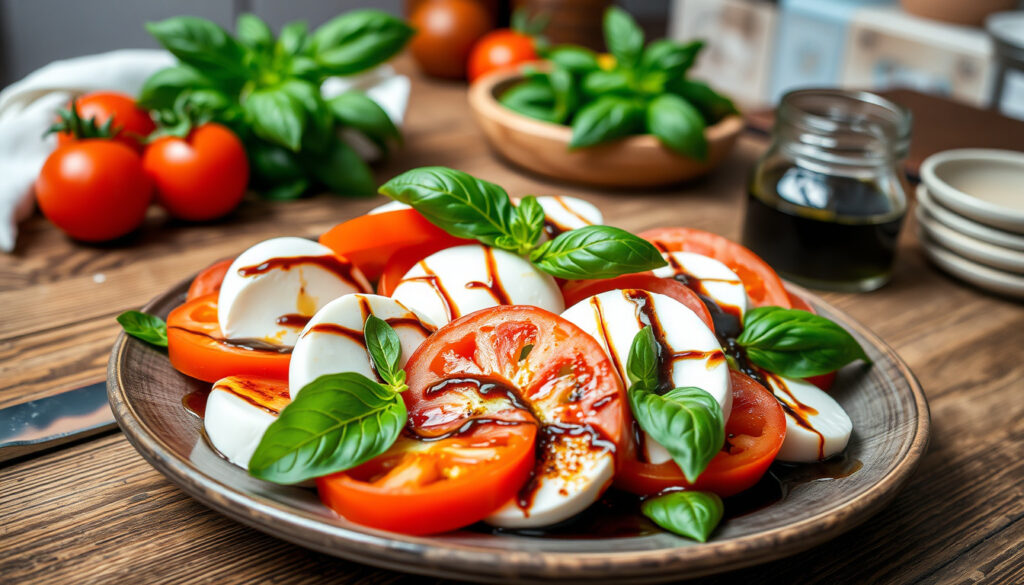
Caprese Salad Near Me: Order, Recipe & Italian Tips
There’s a reason a plate of tomato, mozzarella, and basil feels like summer on a plate — and another reason the search “caprese salad near me” pulls up everything from delivery apps to old-school Italian delis. Before you order, it helps to know what separates the real dish from the lookalikes (hint: it’s simpler than most menus suggest) — the authentic ingredient list, health numbers, Italian serving traditions, and how to spot a great one on a delivery menu — none of it requires a trip to Capri.
Average calories per serving (300g): 350 kcal ·
Preparation time: 10 minutes ·
Typical price for delivery (USD): $10–$15 ·
Classic ingredients: 5 ·
Top delivery rating: 4.5/5
Quick snapshot
- Core recipe: fresh mozzarella, tomatoes, basil, olive oil, and salt — according to Wikipedia (collaborative encyclopedia).
- The dish is strongly tied to the island of Capri, per food writer Janet Fletcher (food writer and author).
- Traditional assembly calls for basil at the very last moment, la Repubblica (Italian daily newspaper) reports.
- The exact origin is unconfirmed — multiple 1920s legends compete, as Mashed (food culture outlet) notes.
- Which mozzarella counts as “original” is debated: both buffalo mozzarella and fior di latte appear in the Neapolitan recipe (Visit Naples (official tourism site)).
- Balsamic vinegar divides opinion: traditional versions skip it, while many American recipes add it (The Pioneer Woman (popular recipe site)).
- One origin legend places the first caprese at the Grand Hotel Quisisana on Capri in the 1920s, at a conference attended by futurist Filippo Tommaso Marinetti (Mashed (food culture outlet)).
- By the 20th century, some preparations used chopped and drained tomatoes with diced mozzarella, according to Wikipedia (collaborative encyclopedia).
- Restaurant-ordering directories list caprese for pickup and delivery near you, with typical delivery fees around $3–$5 (Slice Life (restaurant-ordering directory)).
- At home, it’s a no-cook salad with 5 core ingredients (The Mediterranean Dish (Mediterranean recipe resource)).
- Before ordering, scan the menu for “fresh mozzarella” in the description — the strongest sign a restaurant treats caprese seriously (Slice Life (restaurant-ordering directory)). (Slice Life (restaurant-ordering directory))
Nine details do most of the work when you’re ordering or plating caprese — the pattern below is the quick version.
| Fact | Detail |
|---|---|
| Origin | Capri, Italy |
| Main ingredients | Fresh mozzarella, tomatoes, basil, olive oil, salt (Wikipedia (collaborative encyclopedia)) |
| Mozzarella | Buffalo mozzarella or fior di latte |
| Tomato slice thickness | 6–7 mm, matched by the mozzarella (Visit Naples (official tourism site)) |
| Basil | Whole leaves, added at the very last moment |
| Dressing | Extra virgin olive oil and sea salt |
| Calories | Roughly 350 kcal per 300g serving |
| Delivery availability | Pickup and delivery on ordering directories; typical fees $3–$5 (Slice Life (restaurant-ordering directory)) |
| Gluten | Naturally absent from the classic ingredients |
| Balsamic vinegar | Added in many American versions; not part of the traditional recipe (The Pioneer Woman (popular recipe site)) |
What is a Caprese salad made of?
Most cooks answer with the same five words: tomatoes, mozzarella, basil, olive oil, and salt. The fuller definition — an Italian salad of sliced fresh mozzarella, tomatoes, and basil, seasoned with salt and olive oil — comes from Wikipedia (collaborative encyclopedia).
Core ingredients and their origins
- Tomatoes — ripe, heavy, and good enough to eat raw
- Mozzarella — buffalo mozzarella or fior di latte, depending on the tradition
- Basil — fresh leaves, added whole at the end, never shredded in advance
- Extra virgin olive oil — the only “dressing” the classic recipe needs
- Salt — flaky sea salt, added right before serving
The details are where the story gets interesting. la Repubblica (Italian daily newspaper) reports the Capri memory as heart-of-beef tomato, basil, and fior di latte from Sorrento as the original lineup, with buffalo mozzarella arriving later as a richer, increasingly common variant. Two origin stories circulate around that lineup: one reads the dish as a patriotic tribute to Italy’s tricolor, and the other places it at a 1920s conference in Capri attended by futurist Filippo Tommaso Marinetti. Whatever the true beginning, the salad carries the island’s name — and the island’s standards.
The implication: caprese is a quality test, not a recipe. With good mozzarella and ripe tomatoes, the five-ingredient assembly is almost impossible to ruin; with pale supermarket mozzarella, no basil will save it.
How healthy is a Caprese salad?
For a dish that tastes this rich, caprese is surprisingly easy on the calorie budget. The Mediterranean Dish (Mediterranean recipe resource) defines it as fresh tomato and mozzarella with basil, olive oil, and sea salt — a combination that delivers protein from the cheese and lycopene from the tomatoes without adding a grain of wheat.
Nutritional breakdown and dietary considerations
- Calories: roughly 350 kcal per 300-gram serving
- Protein: mostly from fresh mozzarella
- Carbs: low — the only meaningful source is the tomatoes
- Fats: from the mozzarella and the olive oil
- Gluten: absent in the classic five ingredients
The exact math moves with the cheese. Foodess (recipe website) publishes an authentic-style caprese using cherry tomatoes and mozzarella or burrata, and burrata raises both richness and calories. A typical restaurant portion of the classic version — about 300 grams — lands near 350 kcal.
Most of the protein rides on the mozzarella, and the lycopene from the tomatoes is the same antioxidant linked to cooked tomato sauces. If you’re counting macros, the version to watch isn’t the cheese — it’s the extra drizzle of oil poured on top at the pass.
Delivery portions defeat the math. Extra olive oil, balsamic glaze, and a side of bread can push a 350-kcal caprese toward 600 kcal before it reaches your door.
Why this matters: caprese is one of the few takeout salads that doesn’t hide its calorie story in the dressing — as long as the dressing stays olive oil.
What do Italians eat with Caprese salad?
In Italy, caprese is rarely the whole meal. The Mediterranean Dish (Mediterranean recipe resource) describes it the way most Mediterranean kitchens treat it — as fresh tomato and mozzarella with basil, olive oil, and sea salt, served at the start of the table rather than as the centerpiece.
Traditional pairings and meal context
Italians treat caprese as a modest starter; American delivery menus often make it a towering main with chicken, avocado, or a balsamic reduction.
- As an antipasto before pasta or grilled meat
- Alongside grilled fish or chicken
- With crusty bread to soak up the tomato juices
- After a simple pasta, especially pesto or tomato sauce
What should I serve with Caprese salad?
On delivery apps, caprese arrives in one of two forms: a neatly plated classic with dressing on the side, or a tossed salad with a container of balsamic glaze. The first travels well; the second usually doesn’t. If you’re ordering near you, the question to ask is less “Italian or not” and more “did they pack the dressing separately?”
The pattern: caprese behaves like a side dish that thinks it’s a salad. Order it that way and you get the dish at its best; order it as a full meal and you usually get more cheese than the balance can handle.
What dressing goes best with Caprese salad?
Two schools of dressing exist, and they do not agree. The traditional school stops at extra virgin olive oil and salt, as Eat and Walk Italy (Italian food tour operator) instructs; the adapted school adds balsamic vinegar or a sweet reduction, which is where the dish’s identity gets murky.
Classic dressing and variations
- Traditional: extra virgin olive oil + flaky sea salt, added at the end
- Optional in some Neapolitan versions: oregano and black pepper
- American adaptation: balsamic vinegar or balsamic glaze
Janet Fletcher (food writer and author) describes the preference of many tradition-minded Italians: ripe but not-too-juicy tomatoes, fresh mozzarella packed in water or whey, whole basil leaves, extra virgin olive oil, and sea salt. The Pioneer Woman (popular recipe site) takes the opposite side, finishing her caprese with a balsamic reduction — a move that adds sweetness and gloss but flattens the tomato flavor the dish exists to show off.
The oil does double duty: it seasons the tomatoes and carries the basil’s aroma. That’s why tradition-minded cooks reach for extra virgin olive oil rather than a neutral oil — a cheap, waxy oil leaves a finish that no balsamic can rescue.
Balsamic glaze makes caprese look dressed and taste sweeter — but it buries the quality of the tomatoes and mozzarella, which is the entire point of the dish.
The catch: if you taste vinegar first, you can’t taste the cheese. That’s how cheap versions hide their ingredients.
How do Italians eat caprese?
If you want to eat it like an Italian, skip the salad bowl. Caprese is assembled, not tossed: the mozzarella slices are tucked between the tomato slices so both stay visible, as Natasha’s Kitchen (recipe blog) demonstrates.
Serving style, temperature, and etiquette
- At room temperature — never straight from the fridge
- Sliced and layered on a plate, not stirred together
- Basil leaves added whole after the slices are arranged
- Eaten with a fork and knife, one layer at a time
The sequence is the etiquette. Eat and Walk Italy (Italian food tour operator) instructs cooks to add whole basil leaves after arranging the tomatoes and mozzarella, then finish with salt and high-quality extra virgin olive oil. The basil wilts within minutes, which is why a proper caprese is dressed just before it’s served — and why delivery versions can’t completely replicate it. The closest delivery approximation is to order the components and assemble at home, or at minimum ask for the dressing on the side. The few minutes of assembly are what separate a true caprese from a soggy takeout salad.
What this means: the layering is the recipe. If a restaurant sends you a chopped, tossed tomato-mozzarella mix, it may taste fine, but it’s not the dish you ordered.
Order out or make it at home?
The delivery-versus-homemade decision comes down to two questions: how far is the best Italian deli, and how much do you trust the restaurant’s mozzarella?
Upsides
- Zero prep: ordering directories such as Slice Life (restaurant-ordering directory) list caprese for pickup and delivery nearby, often for $3–$5 fees.
- Restaurant-quality ingredients: a serious Italian kitchen sources better mozzarella and riper tomatoes than most home fridges hold.
- Consistent portions: a set menu portion keeps the calorie math predictable.
Downsides
- Soggy risk: dressing applied too early turns tomatoes watery and mozzarella slick.
- Price: a delivered caprese typically costs $10–$15 plus fees, against a fraction of that at home.
- Quality roulette: not every Italian-style spot uses fresh mozzarella, and the dish only works if it does.
The trade-off: delivery buys convenience and a tested kitchen, but it costs the 10-minute assembly window that makes caprese taste its best.
How to make a Caprese salad: 5 steps (and what to avoid)
The ten-minute method below follows the Neapolitan order of operations: choose ingredients first, slice to match, layer, then dress.
- Choose the tomatoes. Ripe, fragrant, and not too juicy — the Capri account favors heart-of-beef (cuore di bue) tomatoes.
- Choose the mozzarella. Buffalo mozzarella or fior di latte, ideally packed in water or whey.
- Slice to match. Keep tomato and mozzarella slices similar in thickness so every bite has both.
- Layer, don’t toss. Tuck the mozzarella between the tomatoes and add whole basil leaves on top, as Natasha’s Kitchen (recipe blog) shows.
- Finish last. Sprinkle salt and drizzle extra virgin olive oil right before serving; let it rest about 30 minutes first if you want the juices to mingle, per Cookie and Kate (whole-foods recipe blog).
What are some common mistakes to avoid when making Caprese salad?
And the failures to avoid:
- Low-quality mozzarella or mealy tomatoes
- Slicing too thick or too thin
- Dressing too early and letting it sit
- Serving it chilled
Why this matters: the most common caprese failure is timing, not technique. Dress too early and the dish waters out; dress at the last moment and it’s essentially perfect.
What’s confirmed about Caprese salad — and what’s still unclear
Confirmed facts
- Caprese is made from fresh mozzarella, tomatoes, basil, olive oil, and salt (Wikipedia (collaborative encyclopedia))
- The dish is strongly associated with the island of Capri (Janet Fletcher (food writer and author))
- The traditional assembly adds basil at the last moment, la Repubblica (Italian daily newspaper) reports
- Tomato slices around 6–7 mm, matched by mozzarella thickness, are the recommended proportion (Visit Naples (official tourism site))
What’s unclear
- The exact origin story — multiple 1920s legends compete, from a patriotic tricolor dish to a hotel conference on Capri (Mashed (food culture outlet))
- Whether the original cheese was fior di latte from Sorrento or buffalo mozzarella
- Whether balsamic vinegar should always be avoided — some American chefs add it, and Italian purists push back (The Pioneer Woman (popular recipe site))
- Whether oregano belongs in the recipe at all — it appears as optional in some Neapolitan versions, while many traditional instructions ignore it
What this means: the five-ingredient formula is universally agreed upon, but the finer points of its history and preparation remain open to interpretation.
What the experts say
The best advice on caprese tends to be short, which is fitting for a salad with five ingredients.
Let the salad rest for about 30 minutes so the tomatoes release their juices and the flavors mingle.
— Cookie and Kate (whole-foods recipe blog)
Tuck the mozzarella slices between the tomatoes so both are visible, and add whole basil leaves between the layers.
— Natasha’s Kitchen (recipe blog)
Add the basil leaves whole after arranging the tomatoes and mozzarella, then finish with salt and high-quality extra virgin olive oil.
— Eat and Walk Italy (Italian food tour operator)
The upshot
The picture is simple: an authentic caprese is just great tomatoes, fresh mozzarella, basil, olive oil, and salt — and the closer a restaurant stays to that list, the better the dish travels. Anyone searching “caprese salad near me” should treat the words “fresh mozzarella” on the menu as the single most important signal, because that ingredient decides whether the salad tastes like Capri or like a hotel buffet. For the home cook, the choice is clear: find a source of decent buffalo mozzarella or fior di latte, and you are ten minutes away from a better caprese than most delivery apps can bring you.
Related reading: Caprese salad – Wikipedia · Salted or sweet? History of the Neapolitan Caprese double recipe – Visit Naples
Frequently asked questions
Can I make Caprese salad ahead of time?
Yes, but assemble it close to serving. Cookie and Kate (whole-foods recipe blog) recommends letting the finished salad rest about 30 minutes so the tomatoes release their juices; much longer and the tomatoes water out.
What type of mozzarella is best for Caprese?
Buffalo mozzarella or fior di latte, ideally packed in water or whey. Both appear in the classic Neapolitan recipe, and both should taste fresh and milky rather than rubbery.
What tomatoes are best for Caprese salad?
Ripe, fragrant tomatoes you’d eat raw with salt. The Capri origin account favors heart-of-beef (cuore di bue) tomatoes; any heavy, sweet, low-water variety works.
Is Caprese salad gluten-free?
In its classic form, yes: mozzarella, tomato, basil, olive oil, and salt contain no gluten. Watch for balsamic glaze and bread sides at restaurants.
Can I use vegan mozzarella in Caprese salad?
You can, but it becomes a different dish. Plant-based mozzarella changes the texture and flavor, so choose it if you’re dairy-free rather than if you’re chasing the classic.
How do I store leftover Caprese salad?
Eat it within a few hours. Tomatoes keep releasing juice, so leftover caprese turns watery fast; store components separately if you must keep it longer.
What wine pairs with Caprese salad?
A crisp white from Campania — Vermentino or Falanghina — is a natural match; a light, low-tannin red also works well with the tomatoes.
More related posts
 HP Envy Pro 6420: Setup, WiFi, Ink, and Discontinuation Guide
 Spider Solitaire Four Suits: Rules, Strategy & Free Play
 Download Free Logo Canva Freelogopng: Step-by-Step Guide
 Best Places to Visit in Norway: Scenic Fjords & Towns
 b.box Lunch Box: Leakproof, BPA-Free, Whole Fruit Design
 Barfoot and Thompson Waiuku – Local Real Estate Guide
 Free APA 7 Reference Generator: How to Use & Top Tools
 Atlas Suites and Apartments Mount Maunganui Reviews