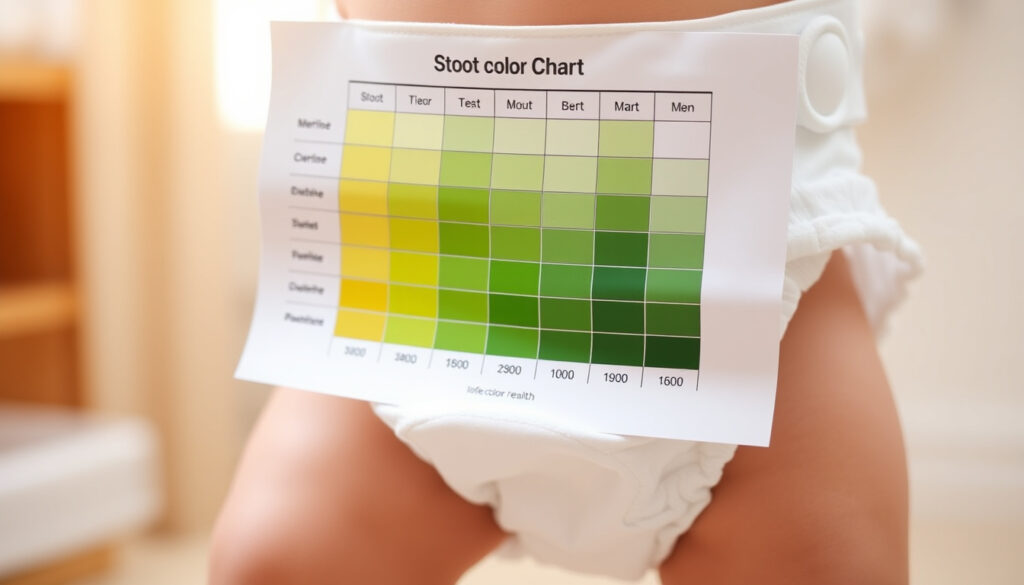
Green Poop in Baby: Causes, Normal Signs & When to Worry
Few diaper changes make a parent stop and stare like a sudden green surprise. In many babies, green poop is a normal phase of digestion — Mayo Clinic (health system research) notes it can be typical and is not automatically a sign of a digestive problem, but here’s how to tell whether green is a shrug, a feeding signal, or a red flag.
Color range: Pale green to bright green ·
First-week stool: Meconium is dark green to black ·
Typical pattern: Green poop can appear on and off in well babies ·
Feeding clue: Green, frothy stool can signal overfeeding
Quick snapshot
- Green is a normal bile-stained stool color range for many babies (Children’s Hospital Colorado (pediatric hospital guidance)).
- Breastfed babies can pass green-yellow-brown stools, and slight changes are typically not concerning (BabyCenter (parenting resource)).
- Iron-fortified formula can make stool green (Cleveland Clinic (children’s health guidance)).
- A protein hydrolysate formula used for milk or soy allergy can itself turn stool green, so color alone is a weak allergy clue (Mayo Clinic (health system research)).
- Green stools are more common with diarrhea because food moves through the gut faster (Seattle Children’s (pediatric hospital guidance)).
- Medications taken by a breastfeeding parent can affect baby stool color, including green (Pampers (baby-care brand)).
- Newborns normally pass dark green meconium in the first days (Mayo Clinic (health system research)).
- Foremilk-hindmilk imbalance can create bright, frothy green stool during breastfeeds (Pregnancy, Birth and Baby (Australian parenting service)).
- Stomach bugs can speed up gut transit and make green stool more likely (Seattle Children’s (pediatric hospital guidance)).
- Red, white, black, or pale stool needs a pediatrician call (Cleveland Clinic (children’s health guidance)).
- If green comes with fever, blood, mucus, poor feeding, or lethargy, call your pediatrician (BabyCenter (parenting resource)).
One pattern ties the color chart together: green usually appears when bile speed, iron, or feeding balance changes; the alert colors are the outliers.
| Fact | What it means |
|---|---|
| Normal for breastfed babies | Green-yellow-brown stools can be normal with slight color shifts. |
| Newborn stage | Meconium is dark green to black in the first days. |
| Foremilk-heavy feed | Bright, frothy green stool can occur when feeds switch too often. |
| Formula-fed pattern | Iron-fortified formula can cause dark green stool. |
| Diarrhea | Green stools are more common when food moves through the gut faster. |
| Medication effect | A breastfeeding parent’s medication can change baby stool color. |
| Iron supplements | Iron-fortified foods or supplements can turn stool green. |
| Alert colors | Red, white, black, or pale stool needs medical evaluation. |
Green stool is a color clue, not a diagnosis. The same green can mean newborn meconium, foremilk-heavy feeding, iron-fortified formula, or a fast-moving bug.
Why is my baby’s poop randomly green?
Random green is usually not random. It tracks with what went in, how long it stayed, and which side of the breast or bottle the baby got.
Why is green poop sometimes normal?
- Children’s Hospital Colorado points to bile as the source of dark green stool (Children’s Hospital Colorado (pediatric hospital guidance)).
- Breastfed babies can pass green-yellow-brown stools, and slight color shifts are usually not concerning.
- Formula-fed babies can have green stool from iron-fortified formula or a recent formula change.
Green looks alarming because we expect brown, but brown is what happens when bile sits in the gut long enough to be transformed. If a well baby suddenly has a green diaper, the color alone is usually a “no action needed” event.
The pattern: green is a timing signal, not a verdict. If the baby looks well, the color alone is rarely useful.
Can overfeeding cause green poop?
In breastfed babies, yes — in a roundabout way. When feeds switch breasts before the baby reaches the higher-fat hindmilk, the meal can be foremilk-heavy.
- Bright, frothy green stool can happen when a baby gets too much foremilk or when feeds switch frequently between breasts (Pregnancy, Birth and Baby (Australian parenting service)).
- If a baby is formula-fed, green stool may simply reflect iron-fortified formula or a recent formula change.
Does green poop mean milk allergy?
- Not by itself. A protein hydrolysate formula used for milk or soy allergy can turn stool green, so the diaper color alone is a weak diagnostic clue.
- If you also see blood, mucus, eczema, vomiting, or poor weight gain, have a pediatrician help sort out whether allergy is part of the picture.
Overfeeding is less about volume and more about mix. A foremilk-heavy feed can speed through the gut, leaving bile green and froth behind.
The trade-off: fixing green stool from a feeding imbalance means adjusting the feeding pattern — not stopping breastfeeding — while formula-related green may be as simple as noting the change.
Does baby poop turn green when sick?
Yes, and the reason is speed. When the gut moves faster, bile stays green.
Can a stomach bug cause green poop?
- Green stools are more common with diarrhea because food moves through the gut faster (Seattle Children’s (pediatric hospital guidance)).
- Stomach bugs shorten transit time, which means less time for bile to turn brown.
What virus turns poop green?
- Pediatric guidance doesn’t assign green poop to one virus; the color reflects transit speed, not a specific germ.
- Any virus that causes diarrhea can produce green stool through the same fast-transit effect.
What parasite makes your poop green?
- A parasite can cause diarrhea, and that rapid transit can make stool green — but green stool alone is not a parasite test.
When green stool travels with diarrhea, the priority shifts to hydration and overall energy, not to stool color.
The catch: green stool with diarrhea tells you things are moving fast, not which bug caused it. That’s why treatment decisions — including antibiotics — don’t start with the color.
What should I do if my baby has green poop?
- Check for other colors. Red, white, black, or pale stool needs a pediatrician call (Cleveland Clinic (children’s health guidance)).
- Review the feeding pattern. If breastfed, finish one breast before switching (Pregnancy, Birth and Baby (Australian parenting service)). If formula-fed, note whether the formula is iron-fortified or changed recently.
- Look for symptoms beyond the diaper: fever, blood, mucus, poor feeding, lethargy, or dehydration signs.
- Keep feeding normally. Green stool alone is not a reason to stop breastfeeding or formula.
- Call your pediatrician if green poop persists with red-flag symptoms or the baby seems unwell.
Do I need antibiotics for green poop?
- No. Antibiotics are not a stool-color treatment.
- If a doctor suspects a bacterial infection, the decision will be based on symptoms, culture, or other tests — never on green alone.
If the diaper turns red, white, black, or pale, call a pediatrician now — that list outweighs how green the green looked.
The decision rule: stay calm, check the pattern, and let the red flags decide whether the next step is a diaper change or a doctor call.
Is green poop sepsis?
No. Green poop alone is not a sign of sepsis. Sepsis is a whole-body emergency response to infection, with symptoms like high fever, fast breathing, lethargy, poor feeding, or a mottled appearance — not a stool-color change.
What is the unhealthiest poop color?
- Red, black, white, or pale stool carries more concern because it can point to bleeding or liver issues.
- Bright green is not on that warning list.
If a baby looks seriously ill — limp, very cold, struggling to breathe, or difficult to wake — call emergency services immediately, whatever the diaper color.
The line: green is a stool color; sepsis is a clinical picture. When the baby’s behavior looks wrong, act on the behavior.
What’s clear and what’s still uncertain
Confirmed facts
- Green stool can be normal in babies and is not automatically a digestive problem.
- Newborns pass dark meconium in the first days.
- Breastfed babies can pass green-yellow-brown stools.
- Iron-fortified formula can cause green stool.
What’s unclear
- Whether green stool alone is enough to diagnose milk allergy.
- Which virus or parasite is behind a green diarrheal stool is often unknown from color alone.
- Whether antibiotics are needed based only on green stool is not supported by pediatric guidance.
- Whether green stool indicates a lack of certain gut bacteria in breastfed babies remains less certain.
The balance: most green causes are well documented, but a diaper alone is rarely enough to name the culprit.
What parents and experts say
Green poo is common in babies and usually nothing to worry about; the shade can vary from pale green to bright green.
Emma’s Diary (parenting resource)
Green poo is common in the first week as meconium clears and can appear on and off in healthy babies.
Lullagram (pediatric contributor)
A breastfed baby can have green poop for days with no other symptoms; it is often normal.
Practo (community Q&A)
The message: green is common, context is everything.
What this means for you
Green poop is rarely an emergency, but it is always information. It can be a normal color, a feeding-balance clue, or a sign that a stomach bug is moving things quickly. Pair the color with age, feeding method, and the baby’s overall behavior before deciding whether to worry. For parents, the decision rule is practical: keep feeding normally, watch for dehydration and the alert stool colors, and call your pediatrician when green arrives with fever, blood, mucus, poor feeding, or lethargy — because at that point it’s not the color that matters, it’s the pattern.
ubiehealth.com, blueberrypediatrics.com, blueberrypediatrics.com, healthline.com
Frequently asked questions
What color green is normal for baby poop?
Green-yellow-brown stools can be normal for breastfed babies. Green alone is usually not concerning if the baby is feeding and acting well.
Can iron supplements turn baby poop green?
Yes. Iron-fortified formula and iron supplements can make stool green (BabyCenter (parenting resource)).
Can my diet make my breastfed baby’s poop green?
Some foods and medications taken by the breastfeeding parent can affect baby stool color, including green.
Can formula changes cause green baby poop?
Yes, iron-fortified formula and some protein hydrolysate formulas can produce green stool.
Should I stop breastfeeding if my baby has green poop?
No. Green stool alone is not a reason to stop. Finishing one breast before switching can reduce frothy green stools.
How long does green baby poop last?
It lasts as long as the trigger is present — often a short stretch with a feeding imbalance or stomach bug. Call a pediatrician if red flags appear or the baby starts to look unwell.
Related reading: What Does Tonsillitis Look Like? Symptoms & Duration · Is Couscous Gluten Free? Facts, Alternatives & Celiac Safety
More related posts
 Melatonin NZ Buy Online: Rules, Doses & Where to Get It
 Shipping Containers for Hire: Costs & Guide for Ireland
 HP Envy Pro 6420: Setup, WiFi, Ink, and Discontinuation Guide
 How to Make Lemonade: Easy Recipe with Simple Syrup
 Things to Do in Rome: 25 Must-See Attractions & Insider Tips
 How Many People Live in New Zealand? 2025 Population Facts
 New Zealand Traveller Declaration: Required Forms & How To
 Pasadena Bakery Point Chevalier – Menu, Hours and Reopening Update