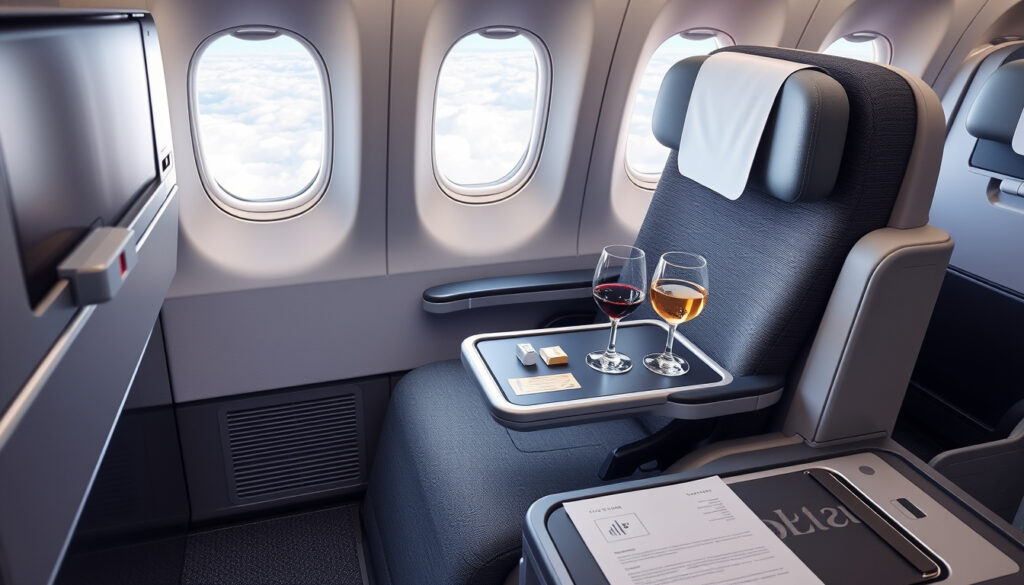
Air NZ Premium Economy Review: Is It Worth It? Practical Guide for 2024/2025
Booking a long-haul flight and spotting the Premium Economy upgrade is tempting, but the devil is in seat details and fine print, not advertised perks. This guide unpacks the practical trade-offs between Air New Zealand’s 787-9 and 777 variants and decodes the often-misunderstood lounge-access rule.
Seat pitch: 38–41″ (depending on aircraft) · Seat width: 19–20″ · Checked baggage allowance: 2 x 23kg · Priority boarding: Yes · Lounge access: Not included for standard fares
Key Facts
- The 787-9 (with 21 seats) has a 2-3-2 layout; the 777-300ER uses a 2-4-2 layout with 36 seats (Air New Zealand 787-9 Seat Map).
- Boeing 777-367ER has 34 seats in rows 30–34 (Air New Zealand 777-367ER Seat Map).
- 787-9: Rows 23–25, 21 seats (Air New Zealand 787-9 Seat Map).
- 777-300ER: Rows 23–30, 54 seats (Air New Zealand 777-300 Seat Map).
- Lounge access is not included as a standard Premium Economy cabin benefit (Air New Zealand Long Haul Premium Economy).
- Priority check-in, boarding, and baggage handling are typically included (Air New Zealand Long Haul Premium Economy).
- Generous recline and adjustable headrests are standard; no fully flat seats (Going Guide).
- Free inflight Wi-Fi is available on most aircraft (Air New Zealand Long Haul Premium Economy).
Is Premium Economy on Air NZ worth it?
The answer depends on how you weigh seat space, baggage, and airport perks against the fare premium. On a Los Angeles–Auckland route, Premium Economy typically costs 50–100% more than standard Economy. For passengers who value a 38–41-inch seat pitch and two checked bags, the upgrade pays for itself on flights over 10 hours.
“Premium economy will give you more room, and the food is similar to business premier, but served in plastic.” — Reddit user in r/newzealand
Passenger reviews on Tripadvisor note that Premium Economy delivers “90% of the comfort for 60% of the cost” compared to Business Premier, with the main gap being recline angle rather than seat width (Tripadvisor Discussion).
| Feature | Economy | Premium Economy | Business Premier |
|---|---|---|---|
| Seat pitch | 31–32 inches | 38–41 inches | Lie-flat (78 inches) |
| Seat width | 17–18 inches | 19–20 inches | 21–22 inches |
| Checked baggage | 1 x 23kg | 2 x 23kg | 3 x 23kg |
| Lounge access | No | No (unless status) | Yes |
| Priority boarding | No | Yes | Yes |
| Free Wi-Fi | Paid on most routes | Free on most aircraft | Free |
- Extra legroom vs Economy (38–41″ pitch)
- Two checked bags included (23kg each)
- Priority check-in and boarding
- Free inflight Wi-Fi on most planes
- No lounge access unless you have status
- No lie-flat seat (recliner only)
- Aircraft swaps can alter seat layout
- Price premium can be 50–100% over Economy
The 787-9 vs. 777-300ER: The Seat Map Reality Check
When booking, aircraft type changes everything—most search engines don’t reveal it until after payment. On the 787-9, Premium Economy uses a 2-3-2 layout across three rows, capping the cabin at 21 seats that feel intimate. On the 777-300ER, the layout expands to 2-4-2 across four rows with 36 seats, meaning more passengers and a busier cabin (Air New Zealand 787-9 Seat Map); (Air New Zealand 777-300 Seat Map). The 787’s higher cabin pressure reduces fatigue on a 17-hour hop to Auckland, but the 777 holds its own with solid seat specs (The Alviator Premium Economy Impressions).
The 777-367ER variant squeezes 34 seats into rows 30 to 34 with a rare 2-3-2 layout (Air New Zealand 777-367ER Seat Map). On the standard 777-300ER, a middle seat in the 2-4-2 row means two strangers on both sides—most flyers avoid that position.
The pattern: Air New Zealand doesn’t offer a uniform product across its long-haul fleet. If you’re booking a flexible fare, the 787-9 is the quieter ride; the 777’s extra seat per row means a fuller cabin.
Does Air New Zealand Premium Economy give lounge access?
No—lounge access is not included as a standard Premium Economy cabin benefit. Air New Zealand’s official page lists priority check-in, priority boarding, and priority baggage handling, but conspicuously omits lounge entry (Air New Zealand Long Haul Premium Economy). Standard Premium Economy tickets don’t grant access to Air New Zealand lounges unless you have Star Alliance status, a credit card with a lounge perk, or purchase a “Lounge Pass” add-on.
Third-party sources confirm this limitation (Going Guide). The experience page’s FAQ even warns that the cabin doesn’t include lounge access—a fact often buried in third-party booking fine print (Air New Zealand Long Haul Premium Economy).
What comes with Premium Economy Air NZ?
- Seat specifications: 38–41-inch pitch, 19–20-inch width, fixed back-shell with winged headrest, footrest
- Meal service: Full multi-course meal with complimentary drinks
- Amenities: Noise-cancelling headphones, larger IFE screen
- Baggage: 2 checked bags at 23kg each + 2 carry-on pieces at 6.8kg each
- Airport benefits: Priority check-in, priority boarding, priority baggage handling (Air New Zealand Long Haul Premium Economy)
When you break down total value, free inflight Wi-Fi alone is worth $20–30 per segment on other carriers (The Alviator Review). The two-bag allowance is a solid win compared to the one-bag limit in standard Economy on many transpacific routes (Air New Zealand Baggage Allowance).
The catch: Priority Boarding doesn’t always mean a dedicated jet bridge lane at every hub—sometimes it’s “enhanced” zone boarding, meaning you board after Business but before SkyPriority elites only if gate staff are on the ball.
What to Avoid: Seat Choice and the Fine Print
Seat selection can make or break the flight. On the 787-9’s 2-3-2 layout, pick a window seat in row 23 for a solid sleeping surface against the bulkhead wall—but bulkhead row 23 has no underseat storage. On the 777-300ER’s 2-4-2, the middle of the 4-seat block is where you end up if you don’t pick seats early; those are the seats to avoid unless flying with three friends (Air New Zealand 777-300ER Seat Map).
“The 777-300ER’s last row before the galley is best avoided due to light and noise from the crew area.” — r/airnz community advice
Aircraft substitutions happen frequently. If a last-minute swap from a 787-9 to a 777-300ER occurs, your chosen window seat might become a middle aisle on a 4-abreast row. Check your seat assignment 24 hours before departure and call the airline to move if necessary.
Can I sleep in Premium Economy?
Premium Economy seats on Air New Zealand recline 6–8 inches (varies by aircraft) and include a fixed back-shell that prevents encroachment from the passenger behind (Going Guide). The winged headrest provides lateral support for side-sleeping. There is no fully flat seat—the recliner is closer to a comfortable armchair than a bed.
For tall travelers (6’2″ or taller), the 38–41-inch pitch is a literal back-saver compared to Economy’s 31–32 inches. However, the lack of a lie-flat means you’ll wake up a few times on an overnight crossing. If you’re a side-sleeper or chronic insomniac, the extra $300–600 for Business might be worth it for the fully flat bed.
On the 787-9, bulkhead rows offer extra legroom but sometimes trade under-seat storage for a solid footrest—a worthwhile trade for taller passengers who value knee space over storage access.
How to Make the Most of Premium Economy (Before and After Booking)
Here’s a decision checklist based on the research:
- Check the aircraft type on your specific flight using the airline’s mobile app’s “view details” link. 787-9 means a quieter ride; 777-300ER means pay for a window seat to avoid the 4-seat middle block.
- Do the math on the “extras”: add up checked-bag fees, seat-selection costs, and onboard Wi-Fi to see if the fare premium over Economy is covering those items plus legroom.
- Set a hard budget cap for lounge passes: if you can’t justify $60 extra per person for Koru lounge, calculate whether a Priority Pass through a travel credit card is better value.
- Consider the outbound vs. return experience: on a westbound night flight from LAX, recline matters; on the eastbound day flight, food and amenities matter more. Upgrade only the overnight direction if budget is tight.
Passengers who usually fly Business acknowledge that Premium Economy is “90% of the comfort for 60% of the cost,” with the gap mostly in recline angle, not seat width (Tripadvisor Discussion).
The editorial angle: the biggest variable isn’t the seat—it’s your expectations. If you board expecting a business-lite lounge experience, you’ll be disappointed. If you board expecting a spacious recliner with two checked bags, priority boarding, and free Wi-Fi, you’ll be thrilled. That mismatch is the entire story.
Related reading: Air New Zealand Boeing 777-300ER: Seat Map, Best Seats & Fleet Age · Air NZ Unaccompanied Minor Service: Rules, Fees & Age
airnewzealand.com, airnewzealand.com, nznewsdesk.com, airnewzealand.com, airnewzealand.com, airnewzealand.com, vidque.com, airnewzealand.com
Frequently Asked Questions
Why not wear jeans on a plane?
Jeans lack stretch, trap heat, and restrict circulation during extended sitting, increasing swelling in legs and feet. For Premium Economy’s reclined position, loose-fitting trousers or joggers in breathable fabric provide better comfort.
What row to avoid on a plane?
On Air New Zealand’s 787-9, row 23 is a bulkhead row with no underseat storage. On the 777-300ER, avoid the last row before the galley where seat recline is often limited and galley noise can be disruptive.
How to choose the best seat in Premium Economy?
For a couple, pick a window pair on the 787-9’s 2-3-2 layout. For solo flyers on the 777-300ER, select an aisle in the 2-4-2 configuration. Use Air New Zealand’s seat-map tool to identify bulkhead rows or those with extra legroom but reduced recline (Air New Zealand Seat Maps).
Does Air New Zealand Premium Economy give lounge access?
No—lounge access is not included as a standard Premium Economy cabin benefit. You need Star Alliance status, a qualifying credit card, or a paid Lounge Pass add-on to enter Air New Zealand lounges.
Is Air New Zealand Premium Economy worth it?
Yes, if you value a 38-inch seat pitch, priority check-in, and two 23kg bags, the upgrade beats standard Economy on long-haul routes over 10 hours. However, it’s not a substitute for Business Class if you plan to sleep flat—the recliner is a comfortable armchair, not a bed.
More related posts
 Kings Plant Barn St Lukes: Cafe, Hours & Dog Policy
 The Bear Season 5: Final Season Release Date June 2026
 Suspicious Item Nelson Evacuation: Waimea Road Incident
 Things to See in Auckland: Top Attractions & Guides
 Cast of Better Man (Film) – Full Cast List and Key Roles
 Surf Shop Near Me in Ireland: Dublin Lahinch Dingle Guide
 Mother’s Day 2025 NZ: Date, History & Employment Guide
 Herald Crossword Today Free: Online, Printable, Answers