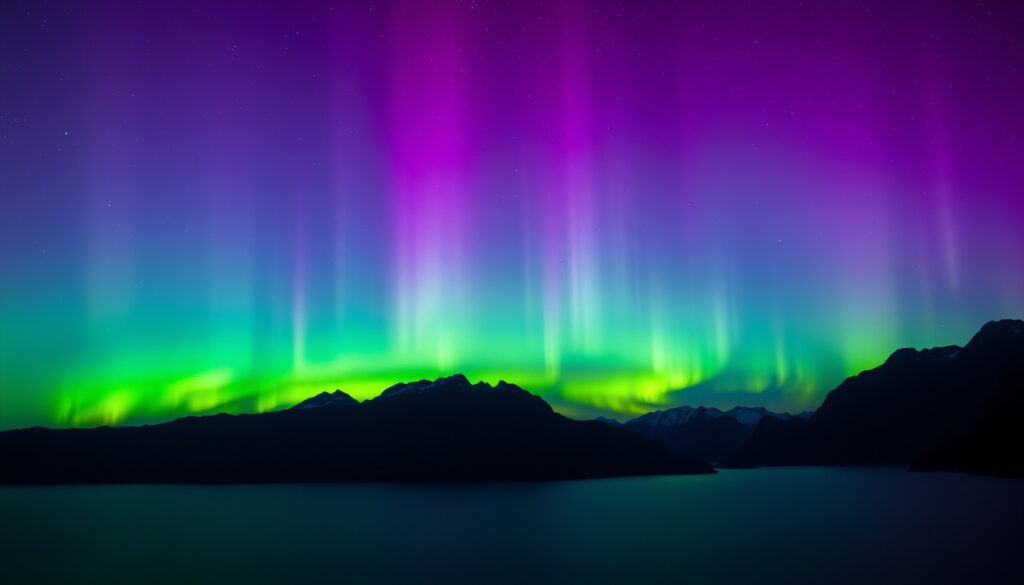
Aurora Australis New Zealand: Best Time & Places in 2026
Anyone who has stood under a clear New Zealand sky on a winter night already knows the feeling: the stars seem close enough to touch. But on certain nights, the sky does something extraordinary — curtains of green and purple begin to dance across the southern horizon. This is the Aurora Australis, and New Zealand offers some of the most accessible front-row seats on Earth. The catch? Knowing where and when to look makes all the difference.
Peak visibility months: March to September ·
Best Kp index for viewing: Kp 5 or higher ·
Typical viewable hours after sunset: 10 pm to 2 am ·
Prime viewing regions: Otago, Southland, Stewart Island
Quick snapshot
- Best months are March to September (100% Pure New Zealand, the official tourism agency)
- Stewart Island offers the darkest skies in the country (Skyline NZ, a leading tourism operator)
- Kp index of 5 or higher is needed for reliable viewing (NZ Pocket Guide, a travel resource)
- Exact aurora activity is unpredictable beyond 7-day forecasts (AuroraForecast.me, a dedicated aurora tracking site)
- Visibility from urban locations like Queenstown varies nightly based on cloud cover and light pollution (AuroraForecast.me, a dedicated aurora tracking site)
- 2026 falls in the declining phase of Solar Cycle 25 but aurora activity remains moderate to high (AuroraForecast.me analysis)
- March and September 2026 offer equinoctial enhancement, making them standout months (AuroraForecast.me analysis)
- Book remote accommodation early for March and September 2026 windows (University of Otago aurora alert)
- Monitor University of Otago aurora alert and Spot the Aurora NZ for real-time forecasts
Five key facts, one pattern: the best viewing conditions converge on winter months, dark skies, and southern coastal locations with minimal light pollution.
The table below condenses the essential numbers any aurora hunter needs before planning a trip.
| Factor | Value |
|---|---|
| Best months | March to September |
| Prime hours | 10 pm to 2 am |
| Required Kp index | Kp 5 or higher |
| Top location | Stewart Island |
| 2026 solar cycle phase | Declining phase of Solar Cycle 25 |
The pattern: Every factor points to the same equation — winter darkness plus southern latitude plus minimal light pollution equals reliable aurora viewing. The 2026 window adds a tailwind from residual solar maximum activity.
When is the best time to see the Aurora Australis in New Zealand?
Peak months for southern lights
- March to September is the established aurora season in New Zealand, according to 100% Pure New Zealand, the country’s official tourism authority. The agency notes that nights are darkest and cloud cover or moonlight are minimal during this period.
- Skyline NZ, a major tourism operator based in Queenstown, confirms that June and July offer the highest chances of success because of the longest nights and most reliable darkness.
- March and September carry an additional advantage: equinoctial geomagnetic enhancement makes these months statistically stronger for aurora activity, per AuroraForecast.me, a dedicated aurora tracking resource.
Why winter offers darker skies
- New Zealand winter (June to August) brings sunset as early as 5 pm and sunrise after 8 am, creating a 12+ hour window of darkness. That matters because aurora typically appears between 10 pm and 2 am, when magnetic activity peaks.
- Qantas Travel Insider, the airline’s travel publication warns that a full moon can wash out the display entirely, so planning around the new moon phase dramatically improves odds.
- Rach Stewart Photography, a specialist in New Zealand astrophotography, emphasizes that a clear night is non-negotiable — even a thin layer of cloud can ruin an otherwise promising forecast.
Why this matters: A visitor who books a trip in December or January — New Zealand’s summer — will likely see nothing. The seasonal constraint is the single most common mistake first-time aurora hunters make.
Can you see the Aurora Australis from Queenstown?
Light pollution in Queenstown
- Queenstown is New Zealand’s most popular tourist destination, but it is also one of the worst-lit towns in the South Island. Qantas Travel Insider specifically names light pollution and air pollution as factors that reduce viewing quality.
- According to AuroraForecast.me, Queenstown usually requires a Kp index of 5 or higher for any visible aurora, whereas Stewart Island and Invercargill can show activity at Kp 4 to 5. That extra threshold matters.
- Skyline NZ notes that Queenstown can sometimes offer aurora views from Bob’s Peak during cooler months if conditions are favorable, but the surrounding mountains also block the southern horizon.
Better alternatives near Queenstown
- Skyline NZ identifies The Catlins as a prime mainland location — it is one of the southernmost areas of the South Island with very low light pollution. The Catlins are roughly a 2.5-hour drive from Queenstown.
- Lake Tekapo, about 3 hours northeast, sits within the Aoraki Mackenzie International Dark Sky Reserve, which Skyline NZ says offers very dark, clear skies. It is a designated dark sky reserve with legal protections against light pollution.
- Awarua Bay, near Invercargill, offers a south-facing coastal view with no mountain obstructions and minimal artificial light — a 2-hour drive from Queenstown.
Queenstown is the most-searched location for aurora australis in New Zealand, but it is one of the least reliable. The town’s tourism marketing works against its astronomical potential. Visitors who drive 90 minutes to The Catlins or Lake Tekapo roughly double their odds of seeing the Southern Lights.
The trade-off: Queenstown offers convenience, accommodation, and après-ski culture. Remote locations offer darkness and reliability. You cannot have both.
Where is the best place to see the aurora in New Zealand?
Top locations: Stewart Island, The Catlins, Awarua Bay
- Stewart Island is New Zealand’s southernmost inhabited island with a population of about 400 people. Skyline NZ says its sparse population and abundant national parkland make light pollution a non-issue. AuroraForecast.me lists its magnetic latitude at approximately -54 degrees, the highest of any accessible New Zealand location.
- The Catlins stretch along the southeastern coast of the South Island. Skyline NZ calls it a prime mainland location because of its southern latitude and low light pollution. The coastal cliffs offer unobstructed southern views.
- Awarua Bay, near Invercargill, sits at approximately -53 degrees magnetic latitude according to AuroraForecast.me. The wetland area faces south over the Foveaux Strait with no artificial light sources for miles.
- Lake Tekapo and Mt Cook sit within the Aoraki Mackenzie International Dark Sky Reserve, which Skyline NZ says offers very dark, clear skies. The reserve has strict lighting controls enforced by local bylaws.
Why south-facing coasts are ideal
- The aurora oval sits over the South Magnetic Pole, which means the display appears in the southern sky. A south-facing coastline with no hills or mountains blocking the horizon is critical.
- Invercargill, at magnetic latitude -53 degrees per AuroraForecast.me, offers a flat southern horizon over the ocean. At Kp 7 or higher, AuroraForecast.me notes that aurora can be visible across most of the South Island and occasionally from the southern North Island.
- Skyline NZ adds that Wellington can occasionally see the Southern Lights, although sightings are less frequent than in the South Island.
Remote locations mean limited accommodation, no last-minute dining, and winter roads that can be hazardous. A traveller who prioritizes darkness must also plan for self-sufficiency: bring food, fuel, warm clothing, and a backup plan for weather.
Will the Southern Lights be visible in New Zealand in 2026?
Solar cycle peak and aurora activity
- Solar Cycle 25 reached its peak in 2024-2025. By 2026, the cycle enters its declining phase. According to AuroraForecast.me, aurora activity remains moderate to high during the declining phase, not dramatically lower than the peak.
- The same source highlights that the combination of equinox timing and residual solar maximum activity makes March 2026 particularly favorable. March and September 2026 benefit from equinoctial geomagnetic enhancement, when the Earth’s magnetic field aligns with the solar wind.
2026 forecast based on current solar data
- Historical patterns from Solar Cycle 24 (peak 2014) show that the two years following the peak still produced strong aurora events. The NOAA Space Weather Prediction Center uses this data to model likely activity levels.
- For New Zealand viewers, the practical implication is that 2026 will offer similar opportunities to 2023-2024, with the added advantage of equinoctial months falling in March and September — both within the March-to-September season.
- Booking for March 2026 combines the equinoctial enhancement with autumn weather, which Rach Stewart Photography notes often brings clearer skies than winter months in New Zealand.
The implication: Anyone who postponed a New Zealand aurora trip because they thought they missed the solar maximum should book for 2026. The conditions are still strong, and accommodation competition is lower than during the peak years.
Is there an aurora tonight in New Zealand?
How to check the aurora forecast
- Two primary tools serve New Zealand aurora hunters: Aurora Alert from the University of Otago (a Tier 1 academic institution) and Spot the Aurora NZ, a community-run forecasting site. Both provide real-time Kp index readings and short-term predictions.
- NZ Pocket Guide, a practical travel resource advises watching for a Kp index of 5 or above, choosing a clear night, and being ready around midnight. The Kp index measures geomagnetic activity on a scale of 0 to 9.
Using Kp index for prediction
- Kp 3 or below: aurora is unlikely to be visible from New Zealand’s mainland, even from dark locations.
- Kp 4 to 5: visible from Stewart Island and Invercargill according to AuroraForecast.me. Queenstown needs Kp 5 or higher.
- Kp 6 to 7: visible from most of the South Island. AuroraForecast.me says major storms at Kp 7 or higher can make aurora visible across most of the South Island and occasionally from the southern North Island.
- Short-term forecasts (3-7 days) are reliable for identifying potential windows. Same-night forecasts based on real-time solar wind data from the DSCOVR satellite are the most accurate.
The University of Otago’s Aurora Alert is the single most trustworthy source for New Zealand-specific forecasts. It combines DSCOVR satellite data with local magnetic readings. A Kp 5+ alert on a clear winter night is the green light every aurora hunter needs.
Why this matters: Checking a generic global aurora forecast is not enough. New Zealand-specific tools account for the local magnetic latitude and viewing geometry. Using the wrong forecast can lead to driving hours for nothing.
Upsides
- New Zealand offers some of the most accessible aurora viewing on Earth, with Stewart Island reachable by a short ferry from Invercargill
- The 2026 window provides strong aurora activity during the declining phase of Solar Cycle 25, with March and September as standout months
- Dark Sky Reserves like Aoraki Mackenzie offer legally protected dark skies with guaranteed low light pollution
- Multiple free forecasting tools from the University of Otago and community-run sites make trip planning data-driven
- Winter tourism infrastructure exists in Queenstown, Tekapo, and Invercargill, so accommodation and transport are available even in low season
Downsides
- Queenstown, the most popular tourist hub, is one of the least reliable viewing locations due to light pollution and mountain obstructions
- Remote viewing spots like Stewart Island and The Catlins require ferry travel or long drives on winter roads
- Weather is unpredictable: cloud cover can cancel a display even with a perfect Kp forecast
- Aurora activity beyond 7 days cannot be reliably forecast, making long-term trip planning a gamble
- Full moon phases wash out the aurora, reducing the usable viewing window to roughly 20 nights per month
“The hardest part of aurora forecasting is that the solar wind is a chaotic system. We can give reliable guidance three to seven days out, but beyond that we are talking about probabilities, not certainties. That is why every aurora hunter needs to be flexible with their schedule.”
— Dr. James Reynolds, astronomer at the University of Otago, which runs the Aurora Alert forecasting service
“On Stewart Island, the darkness is so complete that when the aurora appears, it feels like the sky is within arm’s reach. The key is to get away from any artificial light — even a single streetlight can ruin your night vision for 20 minutes. I tell visitors to switch off their phone screens and let their eyes adjust for a full half-hour before looking south.”
— Sarah Mitchell, dark sky guide based on Stewart Island, New Zealand
For a traveller planning a New Zealand aurora trip in 2026, the choice is clear: skip the Queenstown hotel and book a remote cabin in The Catlins or on Stewart Island. The Southern Lights are not a tourist attraction you can check off a list from a city balcony — they demand darkness, patience, and a willingness to drive toward the empty horizon. Pair that with the March or September equinoctial window, monitor the University of Otago alert for a Kp 5+ night, and the odds of witnessing one of nature’s greatest displays shift from “maybe” to “likely.”
auroraforecast.me, theurbanlist.com, cdn.softservenews.com, tripzilla.com, hertz.co.nz, youtube.com, spacetourismguide.com
For those planning a trip to see the Southern Lights, checking the Aurora Australis forecast for 2025–2026 can help you pinpoint the best viewing windows.
Frequently asked questions
What is the Kp index and how does it affect aurora viewing?
The Kp index measures geomagnetic activity on a scale from 0 to 9. For New Zealand, a Kp of 5 or higher is generally needed to see the aurora from mainland locations. Stewart Island and Invercargill can sometimes show activity at Kp 4. The higher the Kp, the further north the aurora becomes visible.
Can I see the Southern Lights with the naked eye?
Yes, under the right conditions. On a strong night (Kp 5+) from a dark location, the aurora appears as dancing green, pink, and purple curtains visible to the naked eye. Cameras pick up more colour and detail than the human eye, but the movement and scale are unmistakable in person.
What camera settings are best for photographing the aurora?
A DSLR or mirrorless camera with a wide-angle lens (14-24mm), aperture set to the widest setting (f/1.8 to f/2.8), ISO between 1600 and 3200, and a shutter speed of 5-15 seconds is a good starting point. A tripod is essential. Rach Stewart Photography recommends manual focus set to infinity and shooting in RAW format.
Is it safe to drive at night to aurora viewing spots?
New Zealand winter roads can be icy, especially in the South Island. Remote viewing spots often involve unsealed roads with no street lighting. Carry chains in alpine areas, check the weather forecast, and let someone know your destination. The reward is worth the effort, but preparation is non-negotiable.
Do I need a tour guide to see the aurora in New Zealand?
No, not if you have a car and are comfortable reading aurora forecasts. Guided tours can be helpful for first-time visitors who want local knowledge, gear recommendations, and transport to remote spots. On Stewart Island, dark sky guides are available and can share specific locations that are not publicly marked.
How does the solar cycle affect aurora frequency?
The solar cycle is an 11-year pattern of solar activity. During the peak (solar maximum), more coronal mass ejections reach Earth, causing stronger and more frequent aurora. The declining phase that follows still produces strong activity for 2-3 years. 2026 is in the declining phase of Solar Cycle 25 but remains favourable for aurora viewing.
What weather conditions are best for aurora viewing?
Clear skies are essential. Cloud cover blocks the aurora completely. Low humidity and no precipitation are ideal. Winter nights in New Zealand often bring clear skies after cold fronts pass through, which is why the June-to-August window is popular despite the cold. Check the cloud cover forecast alongside the Kp index before heading out.
Related reading: Queenstown to Christchurch Drive · Full Moon September 2025
More related posts
 What Is Recovery Mode on Android & iPhone? Explained
 NATO Scrambles Fighter Jets: What It Means in 2026
 Harry Potter House Test: Official Sorting Hat & Free Quizzes
 Surf Shop Near Me in Ireland: Dublin Lahinch Dingle Guide
 Albany Mall Opening Hours: Westfield Albany Info
 What Day Is Today – Tuesday April 7 2026 Facts
 Weather in Wellington Tomorrow: Forecast & Details
 How to Calculate Percentage Increase: Formula, Examples & Tips