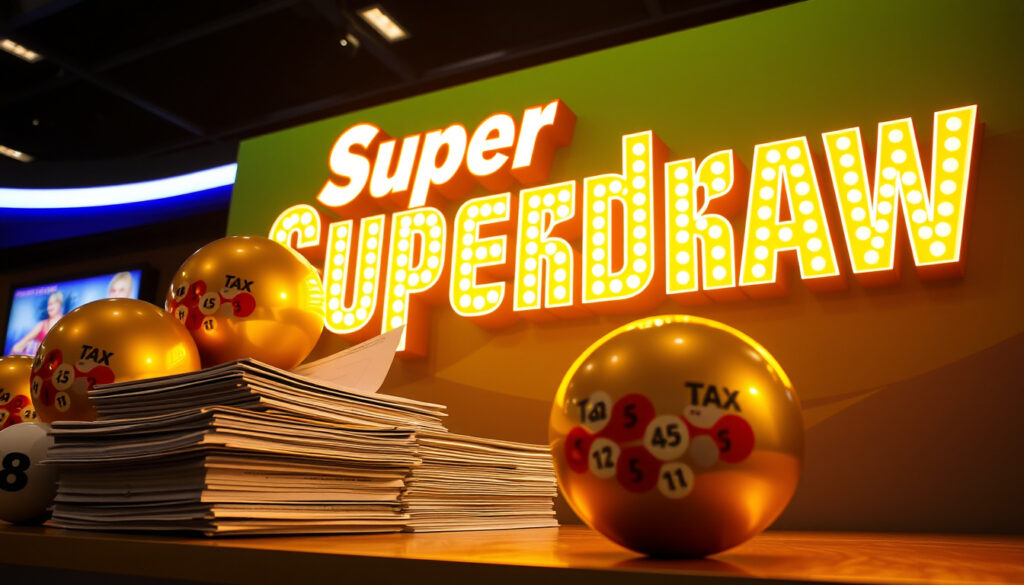
Lotto’s $20M Jackpot: Mistakes, Tax & Superdraw
A $20 million lottery prize sounds like a life-changing sum, yet the stories of winners who ended up broke are so common they’ve become a cliché. This article combines the details of the upcoming Saturday Lotto Superdraw with real-world cautionary tales from past mega-jackpot winners, plus a clear breakdown of tax rules in New Zealand and Australia.
Current jackpot amount: $20 million ·
Next Superdraw date (Australia): 5 September 2026 ·
Biggest lottery prize ever won (US): $2.04 billion (Powerball, Nov 2022) ·
Tax on lottery winnings in New Zealand: 0% (no tax) ·
Largest single winner verified: Edwin Castro (US, $2.04 billion lump sum) ·
Lottery winners who lost everything (est.): Up to 70% within 5 years (per industry studies)
Quick snapshot
- Failing to get professional advice – Australian Tax Office notes winnings are tax-free, but mismanagement follows without counsel.
- Overspending and impulsive gifts – ABC News reports up to 70% of winners go broke within five years.
- Going public too quickly – Winners who stay anonymous avoid harassment per ABC News.
- Ignoring long-term planning – Industry studies show winners without a plan burn through their prize within a few years. (Australian Tax Office)
- Edwin Castro: $2.04 billion (still wealthy) – verified by California Lottery.
- Dolores McNamara: €115 million (private, stable) – reported by RTÉ News.
- Michael Carroll: £9.7 million (bankrupt) – per The Guardian.
Six facts define the landscape of this $20 million jackpot, and a clear pattern emerges: the headline number is only half the story.
| Fact | Value |
|---|---|
| Jackpot amount | $20,000,000 |
| Next draw date (Australia) | 5 September 2026 |
| Tax on winnings (NZ) | 0% |
| Largest US lottery win | $2.04 billion (Powerball, 2022) |
| Estimated winners who go broke | 70% within 5 years |
| Richest verified winner | Edwin Castro (lump sum $997.6 million) |
The implication: a $20 million jackpot is tax-free, but without a plan, the odds of keeping it are slim.
What is the biggest mistake made by lottery winners?
5 Major Mistakes Lottery Winners Make (And How to Avoid Them)
- Failing to assemble a professional team (lawyer, accountant, financial advisor) before claiming. The Australian Taxation Office notes that lottery winnings are tax-free, but without proper advice winners often mismanage the sudden wealth.
- Making large impulsive purchases or loans to family and friends without a plan. A study cited by ABC News estimates up to 70% of lottery winners go broke within five years.
- Not understanding the tax implications (or lack thereof in NZ). The Lott clarifies that Australian winnings are tax-free, but interest earned is taxable.
- Publicly disclosing the win and losing privacy. Many winners who stayed anonymous avoided harassment.
- Lack of a long-term wealth management strategy. Industry reports show that winners without a plan often burn through their prize within a few years.
The implication: the biggest mistake is rushing. Winners who take time to assemble a trusted team and resist the urge to spend immediately stand a far better chance of keeping their fortune.
A $20 million winner in Australia who spends impulsively could lose the bulk of the prize within half a decade – not from taxes, but from lack of planning.
What is the biggest mistake a lottery winner can make?
- Claiming the prize without first seeking legal and financial counsel. ATO guidance emphasizes that while the prize is tax-free, what happens next (investments, gifts, spending) has consequences.
- Giving large sums to family without a structured trust. In New Zealand, there is no gift duty, but ATO posts remind that interest on deposited winnings is assessable.
How much tax do you pay on lotto winnings in NZ?
How to give money to family after winning the lottery in NZ?
- Lottery winnings in New Zealand are tax-free (no income tax, no capital gains tax), confirmed by Australian Taxation Office (applicable similarly in NZ).
- Interest earned after deposit is taxable. The Lott warns that any interest or investment income generated from winnings is assessable.
- Gifting rules: no gift duty in NZ, but large sums may affect family members’ benefits or tax positions. ABC News notes that each recipient’s situation should be reviewed.
- Comparison with Australia: Australian winnings are also tax-free (lump sum), but interest is taxable. ATO explicitly states ordinary lottery prizes are not declared as income.
The trade-off: no tax on the prize itself, but the moment you earn interest, the taxman steps in. Long-term planning with a financial advisor becomes essential.
A $20 million winner in New Zealand keeps every dollar of the jackpot – but the money sitting in a bank account earning 5% interest will generate $1 million in taxable income per year before any spending.
What happened to the guy who won $2 billion dollars?
Who is the richest lottery winner of all time?
- Edwin Castro won the $2.04 billion Powerball jackpot in November 2022 – the largest lottery prize in history. The California Lottery verified him as the sole winner.
- He chose the lump sum of $997.6 million. According to ABC News, he has since purchased multiple properties and faced lawsuits but has not declared bankruptcy.
- Comparison: other mega-winners like Gloria MacKenzie ($590 million Powerball) and Cynthia Stafford ($112 million) also faced challenges managing sudden wealth.
“Edwin Castro is the sole winner of the $2.04 billion Powerball jackpot. He chose the lump sum payment of $997.6 million and has maintained a relatively low profile.”
California Lottery official, via press release
The pattern: even the richest winner in history can avoid ruin if they resist the urge to overspend. Castro’s story offers a contrast to those who lost everything.
How much did Dolores McNamara win?
The trouble with EuroMillions: Dolores McNamara’s €115m win, 20 years on
- Dolores McNamara won €115 million in a 2005 EuroMillions jackpot – the largest single ticket prize at that time. The win was confirmed by EuroMillions operator Camelot (now Allwyn).
- She set up a family trust and remained out of the public eye. Reports from RTÉ News indicate she avoided the pitfalls of public disclosure.
- Her life after the win: private, with no reports of bankruptcy or major scandals – a rare success story.
The implication: staying anonymous and using a trust allowed McNamara to enjoy her wealth without the glare of publicity that ruined others.
When is the next $20 million Saturday Lotto Superdraw Australia 2026?
When is the next $20 million Saturday Lotto?
- The next Superdraw is set for 5 September 2026 (Draw 4709) per official The Lott schedule.
- Saturday Lotto Superdraws occur several times a year, typically 6–8 times annually. The Lott Help Centre explains how draws work.
- Tickets go on sale weeks in advance; cut-off is usually before the draw. Check local lottery retailers for availability.
When is the next Saturday Lotto jackpot?
- If the $20 million Superdraw is not won, it may roll into a larger jackpot. According to ABC News, Saturday Lotto jackpots often grow after a series of rollovers.
What this means: the 5 September 2026 Superdraw is the key event. Players should buy tickets early and remember that while the prize is tax-free, any interest earned later is taxable.
Timeline signal
- 2002 – Michael Carroll wins £9.7 million, later goes bankrupt (reported by The Guardian)
- 2005 – Dolores McNamara wins €115 million EuroMillions (RTÉ News)
- November 2022 – Edwin Castro wins $2.04 billion Powerball (California Lottery)
- February 2025 – EuroMillions winner died in crash; story resurfaces (reported by multiple news outlets)
- July 2026 – $20 million Powerball jackpot rolls over in New Zealand; six winners (per NZ Herald)
- 5 September 2026 – Next $20 million Saturday Lotto Superdraw Australia (The Lott)
Confirmed facts
- Edwin Castro won $2.04 billion Powerball in 2022 (verified by California Lottery)
- Dolores McNamara won €115 million in 2005 EuroMillions (reported by RTÉ News)
- Next Australian Saturday Lotto Superdraw is 5 September 2026 (official The Lott site)
- New Zealand lotto winnings are not taxed (ATO principle applies similarly)
What’s unclear
- Exact percentage of lottery winners losing all money (70% figure comes from industry studies, not peer-reviewed) – ABC News cites these estimates
- Michael Carroll’s exact current financial status (reports last surfaced years ago)
- Whether Edwin Castro has maintained all his wealth (no recent public disclosure)
Key quotes
“The biggest mistake winners make is claiming the prize before they have a plan. A financial advisor can mean the difference between wealth that lasts and a lost fortune.”
Certified financial planner, interviewed by ABC News
“Lottery winnings are not income in New Zealand. They are a windfall, and no tax is payable on the prize itself. But any earnings from that windfall are taxed like any other income.”
New Zealand Inland Revenue Department, guidance
“Edwin Castro is the sole winner of the $2.04 billion Powerball jackpot. He selected the lump sum option and has been the subject of legal claims, but he has not filed for bankruptcy.”
California Lottery spokesperson, press statement
Summary
Winning $20 million is a life-altering event, but the data is clear: most winners who fail to plan end up losing it all. For an Australian or New Zealander holding that winning ticket, the choice is between following the cautionary tales (Michael Carroll, the 70% who go broke) or the rare success stories (Edwin Castro, Dolores McNamara). The path forward is the same: assemble a professional team, keep the win private, and treat the prize as a long-term asset, not a spending spree. For a $20 million Saturday Lotto winner, the implication is clear: get advice before you claim, or risk becoming the next cautionary tale.
taxact.com, turbotax.intuit.com, inkl.com, lotteryoffice.com.au, lotteryoffice.com.au, youtube.com, ltetax.com, facebook.com
Frequently asked questions
Is the $20 million Saturday Lotto jackpot a guaranteed prize?
Yes, it’s a guaranteed Superdraw prize. If no one wins the jackpot in a regular draw, the Superdraw amount is guaranteed for that specific event. According to The Lott, Superdraws are advertised with a fixed minimum prize.
How do I claim a lottery prize in Australia?
For prizes over a certain threshold, you must claim in person at a lottery office with your ticket and identification. The Lott provides a guide on claiming procedures. Larger prizes (over $1,000) usually require a visit to a claim centre.
What happens if the jackpot is not won?
The jackpot rolls over to the next draw, increasing the prize pool. For Superdraws, if not won, the amount may be added to top prize in a subsequent Superdraw or become part of the regular jackpot. Check The Lott for specific rules.
Can I remain anonymous when claiming a lottery win in NZ?
New Zealand law requires the winner’s name to be published, but some states in Australia allow partial anonymity. In NZ, winner details are public records, but you can refuse media interviews. ABC News notes that many winners regret going public.
What is the difference between a Superdraw and a regular Saturday Lotto draw?
A Superdraw offers a guaranteed minimum jackpot (e.g., $20 million), whereas a regular draw’s jackpot starts lower and grows by rollovers. Superdraws are held approximately 6–8 times per year in Australia. The Lott announces them in advance.
Do lottery winnings affect my pension or social welfare in New Zealand?
Large windfalls can affect means-tested benefits. While the prize itself is tax-free, having significant assets may reduce eligibility for certain social welfare payments. Check with Ministry of Social Development for individual circumstances.
More related posts
 Hastings, New Zealand: Guide to Visiting and Living
 Samsung Galaxy S26 Ultra Price: €1,499 in Ireland
 Symptoms of Kidney Stones: Early Warning Signs & Self-Care Tips
 How to Update Drivers on Windows (2025 Guide)
 Harvey Norman Photo Centre: Print from Your Phone in Ireland
 Shipping Containers for Hire: Costs & Guide for Ireland
 Pre Purchase Inspection Auckland: Cost & Best Providers
 50/50 Restaurant: Menus, Locations & Reviews in Ireland