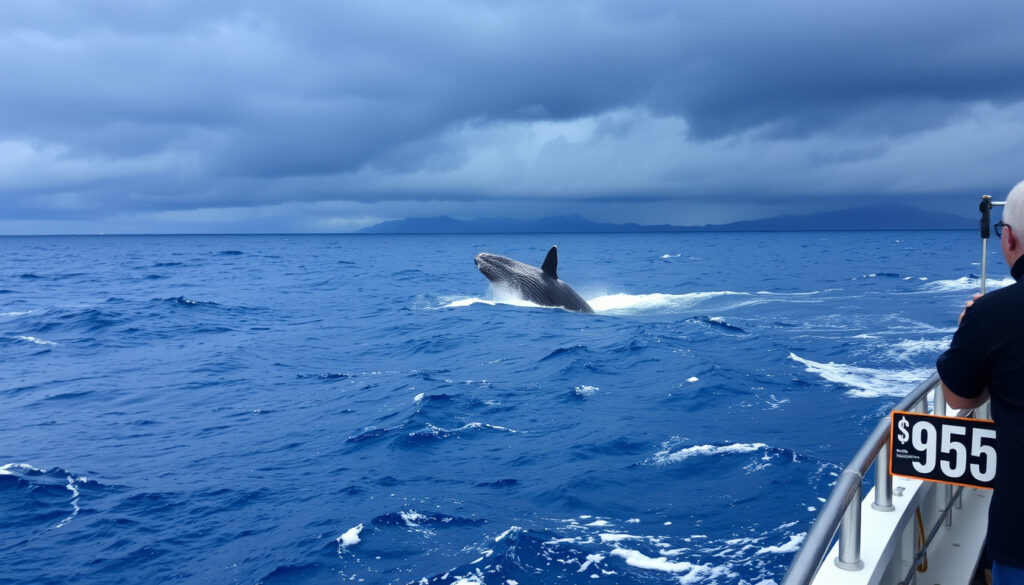
Whale Watch Kaikoura Reviews: Price, Seasickness, and Is It Worth It
Most people I know have a bucket list, and somewhere near the top, usually sandwiched between “see the Northern Lights” and “road trip the South Island,” is the dream of seeing a whale in the wild. It feels almost mythical, but when you actually start planning, standing on a boat in the middle of the ocean with a pair of binoculars isn’t the pinnacle of excitement—it’s the part where you hope not to throw up your breakfast.
Sighting success rate: 95%+ year-round | Tour duration: 3h 15m total | Adult ticket: NZD 150 (approx.) | Distance from Christchurch: 2.5 hours drive
| Field | Details |
|---|---|
| Operator | Whale Watch Kaikoura |
| Adults ticket | NZD 150 (approximate) |
| Children ticket | NZD 75 (approximate) |
| Sighting guarantee | 80% refund if no whale seen (conditions apply) |
| Boat capacity | Up to 80 passengers |
| Accessibility | Wheelchair accessible |
A quick snapshot of the key details before we dive deeper.
Is Whale Watching Worth It in Kaikoura?
When a tour costs over a hundred dollars per person, you’re not just paying for a boat ride; you’re paying for the probability of a magical moment. The verdict from most sources, including the operator itself and various review platforms, leans heavily toward “yes,” but it’s contingent on your tolerance for risk and the time of year you visit.
The operation’s own statistics are the cornerstone of the value argument. Whale Watch Kaikoura (official operator) states a remarkable 95%+ success rate for whale sightings year-round, which mitigates the gamble typically associated with wildlife viewing. However, the experience is not cheap. Standard adult tickets are around NZD 150, and for a family, the cost adds up quickly, making it crucial to weigh the likelihood of a sighting against the financial outlay.
One of the most common criticisms involves the price-to-experience ratio. A review from Tripadvisor describes the experience as expensive but worth it, while another Tripadvisor review from a 17-day trip notes that while they were glad they did it, they weren’t sure they’d do it again, pointing to the premium cost as a deciding factor. This dichotomy is present across platforms: the experience is often labeled a “bucket list” must, but the price is the primary barrier to universal praise.
The implication: budget-conscious travelers should weigh the high likelihood of a sighting against the non-refundable cost.
What Time of Year Is Best for Whale Watching in Kaikoura?
Understanding the operational side is just as important as the cost. The tour isn’t a hop-on, hop-off thing; it’s a structured Marine Mammal Protection Act controlled experience, which limits the number of boats and the time spent with the animals.
Daily operations start at 7:00 AM, with the first tour departing early. Weather and ocean conditions are the primary factors that determine whether boats can leave the harbor. According to Tripadvisor (Tour Operator), conditions can change rapidly, and the operator has a strict policy regarding safety and comfort. It’s a smart practice to book for an earlier time slot in the day, not just for the weather—which is often calmer in the morning—but also to allow wiggle room for a reschedule if the sea gets rough.
The “best time” to go isn’t just about the whales; it’s about the seas. While sperm whales are resident year-round, the Southern Hemisphere summer (December to February) offers the calmest seas and the warmest weather. However, this also means it’s the peak tourist season. In the winter (June to August), the seas are typically rougher, and while you might encounter Humpback or Blue whales migrating, the risk of motion sickness increases substantially. One experienced traveler reflected on a winter trip in Tripadvisor, noting the water was incredibly rough, stating it was a “must-do” but advising that you prepare for the possibility of being sick.
The pattern: summer mornings provide the best balance of calm seas and high sighting probability, but winter offers the chance to see migrating species.
How long does a whale watch Kaikoura take?
The total experience is 3 hours 15 minutes, including a 30–45 minute motor out to the canyon, time on site, and the return. Check-in is 45 minutes before departure, so budget roughly 4 hours from arrival back to town.
How much does it cost to watch a whale in Kaikoura?
Standard adult tickets run around NZD 150, children approximately NZD 75. The operator also offers a premium Captain’s Cabin upgrade (around NZD 255) for better views. Promo codes are occasionally available online, and free land-based whale watching is possible from the Kaikoura Peninsula.
Dealing with the Motion Sickness Factor
The most significant physical hurdle a potential visitor faces is the aptly named “sea legs” or, more realistically, seasickness. The reviews are full of anecdotes from people who discovered they were not good sailors while bobbing on the Pacific swells.
The good news is that the crew is experienced. They offer free ginger tablets and often advise passengers to take seasickness medication before boarding. According to Whale Watch Kaikoura (operator), the boats are fitted with stabilizing technology, but on a rough day, no amount of engineering can outsmart mother nature. A review collated by Journey by Backpack noted that the boat ride itself was quite sheltered, but the moment they stopped to view the whales, the rolling motion got to people.
For those who are highly susceptible to motion sickness, there is a non-boat alternative: the Loving New Zealand (flight operator) aerial flight. While more expensive at around NZD 131 per person for a shorter experience, it eliminates the seasickness factor entirely, offering a bird’s-eye view of the whales. This is a practical backup plan for those who want the sighting without the “splash” of the boat experience.
Here’s a quick breakdown of what to expect to bring:
- Warm, waterproof jacket: Conditions are often wet and cold on the water, even in summer.
- Motion sickness pills: Buy them beforehand; even if you don’t need them, someone near you will.
- Binoculars: While you can see the whales up close, some dolphins are fast, and the binoculars help spot them in the distance.
The trade-off is clear: the boat offers the 3D experience with the risk of seasickness, while the plane offers a 2D view with zero risk.
Will I get seasick on a whale watching tour?
Seasickness is the most common complaint in negative reviews. Rough winter swells are the primary cause, but even in summer some passengers feel queasy, especially when the boat stops. The operator provides ginger tablets and warns passengers before departure, but medicated pills must be purchased beforehand. If you are prone to motion sickness, consider the aerial flight alternative.
Real Reviews: The Good, The Bad, and The Nauseous
The modern traveler’s bible is the review section. Reading between the lines of trip reports provides the most actionable intelligence on what to expect.
The Enthusiasts (The “Worth It” Crowd)
The majority of reviews—and the operator’s 95% success rate—support the “worth it” side of the argument.
“The experience was amazing, I cried, my mum cried, it’s a memory for life.” — Tripadvisor reviewer
These are the reviews that focus on the emotional payoff, using phrases like “unbelievable encounter,” “highlight of our South Island trip,” and “worth every cent.” The emphasis is on the sheer scale of the animal and the professionalism of the crew in positioning the boat for a perfect view.
- Quality of the sighting: Reviewers frequently highlight that the crew is expert at predicting where the whales will surface, leading to close encounters that often come right alongside the boat, a point echoed by a detailed guide from NZNavigator.
- Logistical efficiency: The operation is slick. Check-in is via a modern building, the boat is large and stable (as much as a boat can be), and the staff provide a steady stream of commentary, which adds value, especially for families, as noted by Tripadvisor.
The Dissenters (The “Not My Favourite” Crowd)
You’ll find a minority of reviews where it’s just not worth the price, especially if the weather doesn’t cooperate or if the motion sickness medicine fails.
“It’s a lot of money for what is essentially a fast boat ride out to see a spout and a tail.” — Tripadvisor reviewer (17-day trip)
- The Price Point vs. Experience: “It’s a lot of money for what is essentially a fast boat ride out to see a spout and a tail,” reads one review, where the reviewer had a 17-day trip and felt the cost was a lot relative to the short viewing time.
- The Seasickness Spoiler: The absolute worst-case scenario is spending the majority of the tour leaning over the railings with your head in a bucket. This doesn’t happen on every trip, but it’s a risk you have to be willing to take. A review from a winter sailing noted the journey out was the roughest part, and the seasick bags were well-used.
It’s a delicate balance. The right captain and a calm sea make it a world-class adventure, but a winter swell can turn a dream into a painful, pricey mistake.
Upsides
- 95%+ sighting success rate (industry-leading)
- Professional, experienced crew
- Close encounters with sperm whales year-round
- Stabilized boats and free ginger tablets
- Wheelchair accessible
Downsides
- High price (NZD 150 per adult)
- Seasickness risk, especially in winter
- Only 80% refund if no whale seen
- Medicated seasickness pills not provided
- Short viewing time for the cost
How to Prepare for Your Whale Watch Tour
- Book a morning tour (7:00 AM or first departure) for the calmest seas.
- Take motion-sickness medication 1–2 hours before departure; buy it at a pharmacy beforehand.
- Arrive 45 minutes early for check-in and safety briefing.
- Dress in warm, waterproof layers and bring binoculars.
Specifications, Inclusions, and the Fine Print
Before you hand over your credit card, it’s wise to understand exactly what you’re getting into logistically. The details matter, and they often distinguish a good time from a great time.
| Specification | Details |
|---|---|
| Tour duration (total experience) | 3 hours 15 minutes |
| Distance from Christchurch | 2.5 hours drive |
| Operational Hours | Starts 7:00 AM (multi-departure day) |
| Accessibility | Wheelchair accessible |
| Included | Free ginger tablets, safety gear, commentary |
| Exclusions | Hotel pickup, meals, seasickness pills (medicated), tip |
The Tripadvisor listing confirms the tour duration includes the time to motor out to the canyon, which can take about 30 to 45 minutes each way. The “80% refund” guarantee is a crucial piece of fine print. It’s not 100%—they keep a small booking and admin fee if they don’t see a whale, which is standard practice for this type of high-end wildlife tour.
The catch: make sure you read the terms before booking, especially regarding refunds and what you need to bring.
Summary: The Verdict
Whale Watch Kaikoura sits firmly in that rare category of high-cost experiences that actually delivers on the core promise. The near-guaranteed sighting, backed by a 95%+ success rate and corporate commitment, makes it a lower-risk gamble than almost any other wildlife encounter in the world. However, the experience is a delicate dance between budgeting, luck with the weather, and managing a sensitive stomach. If you go in expecting perfection, you’ll be delighted. If you go in worried about the sea, you might just find the cure is a deep breath and the sight of a giant tail slipping into the deep blue—and the price becomes irrelevant. Choose a calm summer morning, book early, and take the ginger tablet. The ocean, and the whales, are waiting.
It’s a once-in-a-lifetime event that demands a once-in-a-lifetime budget—but for most, the memory far outweighs the cost.
Confirmed Facts
- 95%+ success rate for whale sightings year-round
- NZD 150 approximate adult ticket price
- Total duration: 3 hours 15 minutes, including 2.5-hour drive from Christchurch
- Boats: Up to 80 passengers, wheelchair accessible
- Sighting guarantee: 80% refund if no whale seen (conditions apply)
- Seasickness: Free ginger tablets provided; medicated options not sold by operator
- Kaikoura Whale Watching Flight: approx. NZD 131 per person (non-boat alternative)
- Winter seas are significantly rougher; summer offers calmer seas (Dec-Feb)
What’s Unclear
- Exact number of sperm whales resident in the canyon at any time.
- Long-term impact of tourism on whale behavior – debated among scientists.
- Effect of boat strikes on whale health – not fully documented.
All the critical data is here. This is the reality of what you are paying for, and the potential limitations.
Related reading: **Fiji Things to Do: Must-See, Cost, Safety & Best Time** · **Tongariro Alpine Crossing Map: Distance, Time & Difficulty**
tripadvisor.co.uk, everythingnewzealand.com, reddit.com, newzealand-spirit.com, walkmyworld.com, tripadvisor.com, tripadvisor.com, lovingnewzealand.com, newzealand-spirit.com
Frequently Asked Questions
What is a sad fact about whales?
Whales have been known to beach themselves in large numbers, and in some cases, this is linked to naval sonar exercises that disrupt their navigation. Sperm whales, the main draw in Kaikoura, are also highly social animals, and a disruption in their pod can have long-term impacts.
Is Whale Watch Kaikoura good value for money?
Yes, given the 95%+ sighting success rate, the value is high compared to similar wildlife tours. However, if you get seasick easily, the NZD 150 ticket might feel like a waste if you can’t enjoy the experience, making the flight alternative or a calm summer day a better investment for that specific traveler profile.
Can I take seasickness pills before the tour?
Yes, you are strongly advised to take them. The operator officially states that natural, non-medicated tablets are available. However, medicated options are not sold by Whale Watch Kaikoura and should be purchased beforehand at a pharmacy, as Whale Watch Kaikoura (official operator) specifies they do not sell them.
What is the best time of day to go whale watching?
Experts recommend a morning tour. The seas are typically calmer in the morning, and the mid-day sun can cause glare, making it harder to spot spouts. The earliest departure at 7:00 AM is often touted as the best time to go, as weather systems are usually more stable at that time.
What else is there to do if the trip is cancelled?
If the trip is cancelled, look for a refund or a reschedule. You can also ask for a credit for the alternative Loving New Zealand (flight operator) flight, which might still be able to fly. Kaikoura itself also offers excellent seal colony visits and a famous crayfish restaurant scene to fill a few hours.
More related posts
 What Is a BSB Number? Bank State Branch Code Guide
 Cast of Sex Education – Complete Guide to All Seasons
 Mandeville Fish and Chips: Menu, Reviews, Delivery & Gluten-Free
 Surf Shop Near Me in Ireland: Dublin Lahinch Dingle Guide
 Full Moon September 2025: Date, Blood Moon Eclipse & Meaning
 Barfoot and Thompson Waiuku – Local Real Estate Guide
 A Man Called Otto: True Story, Reviews, and Tom Hanks
 Michael Hill Net Worth: Jewellery Empire, Yacht & Legacy