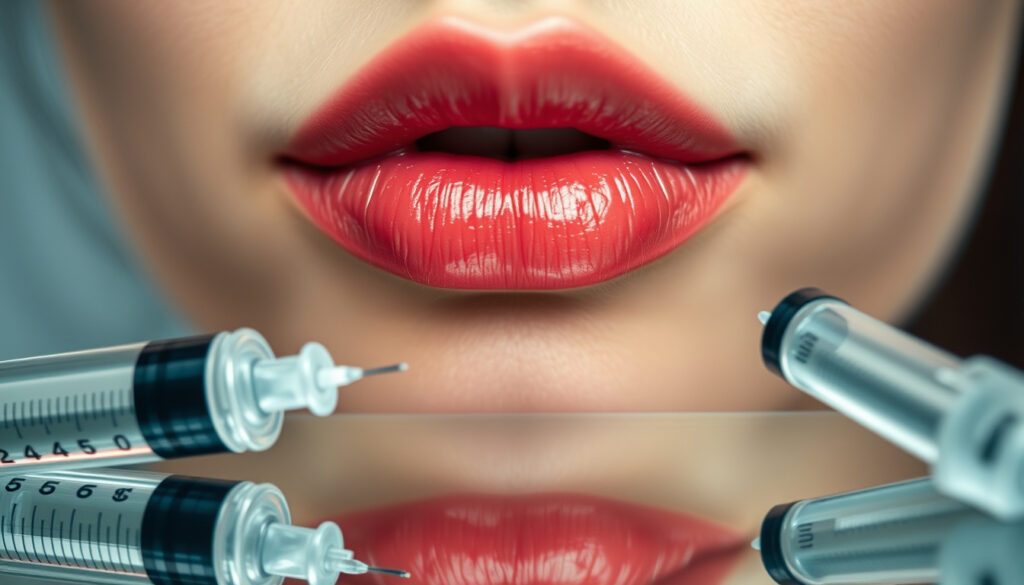
Lip Flip Before and After: Results, Cost, and Risks
You have probably caught a friend or a beauty influencer raving about a “lip flip” and wondered if it is just another trend or the real deal. It is easy to confuse it with the classic lip filler, but the two procedures are actually quite different in how they work, what they cost, and what they can do for your face.
Average cost: $80–$200 per session | Duration of results: 2–3 months | Procedure time: 15–20 minutes | Peak effect: 2–4 weeks post-injection | Number of injections: 4–6 points above the upper lip | Back to normal: 3–4 months
What Is a Lip Flip?
- Nonsurgical treatment using botulinum toxin
- Relaxes upper lip muscle to curl lip outward
- Results appear over 14 days
Who It’s For
- People with thin upper lips
- Those wanting a subtle smile enhancement
- Individuals seeking no lost lip sensation
Who Should Avoid
- Pregnant or breastfeeding women
- Those with neuromuscular disorders
- Patients with active oral infections
Source: Healthline medical review
Results at a Glance
- Lasts 2–3 months
- Peak effect at 2–4 weeks
- Reversible over time
Source: Forefront Dermatology
| Aspect | Lip Flip | Lip Filler |
|---|---|---|
| Core action | Relaxes the orbicularis oris muscle; reshapes the lip to appear fuller when smiling. | Adds volume and structure to the lip tissue itself. |
| Main result | Subtle eversion and enhanced smile line. | Real volume, plumpness, and definition. |
| Reversibility | Not instantly reversible; wears off naturally. | Reversible with hyaluronidase enzyme injections. |
| Cost | $80–$200 per session (2–3 sessions a year). | $500–$1,000 per syringe (typically 1–2 syringes, 1–2 times a year). |
| Duration of results | 2–3 months. | 6–12 months. |
| Onset | 2–4 weeks to peak effect. | Immediate (with some post-injection swelling). |
| Best for | Flipping the lip for a gummy smile or subtle smile definition. | Adding actual volume or correcting asymmetry. |
| Ideal candidate | Someone with a long philtrum, a gummy smile, or a desire for slight definition. | Someone requesting plumpness, more cupid’s bow definition, or a dramatic pout. |
Source: Cleveland Clinic, Healthline
How long does your lip flip last?
The most straightforward way to think about it is that a lip flip relaxes the muscle to create an illusion of a fuller lip, while a lip filler physically adds volume. The lip flip uses tiny amounts of botulinum toxin (like Botox or Dysport) injected into the upper lip’s orbicularis oris muscle to relax it, causing the upper lip to flip slightly outward and show more pink tissue. According to the Cleveland Clinic, this relaxes the muscle but does not create actual lip enlargement. Instead, it makes the lip appear fuller when you smile. In contrast, a lip filler involves injecting hyaluronic acid (HA) into the lip tissue to add actual volume, shape, and structure, with results that are immediately visible.
Typical duration of results
Because the lip flip is not a volume replacement, it is often marketed as a “lunchtime procedure” with minimal downtime. The injection itself takes only 15–20 minutes, and the subtle results make it an excellent option for a “trial” of sorts. The effect of the lip flip is usually visible within about a week, with full assessment typically around two weeks post-treatment. Unlike filler, a lip flip does not create physical volume and is not reversible with an antidote; you have to wait for the muscle to return to normal. This makes the lip flip a conservative, low-risk starting point for someone who wants to see a subtle change before committing to something more permanent like filler.
The duration of results for a lip flip typically spans 2–3 months. According to the Cleveland Clinic, the effect fades as the botulinum toxin is metabolized. A 2023 survey of aesthetic procedures noted that the lip flip was top in patient satisfaction for natural-looking results.
A lip flip costs less upfront, but because results only last 2–3 months, maintaining the look all year can cost about as much as a single filler session that lasts longer.
The implication: you will need repeat treatments to maintain the look, making the annual cost a key consideration.
Factors influencing longevity
When deciding between the two, it helps to understand the subtlety of the lip flip. It enhances your smile line, creates a slight eversion of the upper lip, and can improve the balance between lips. But it is not a solution for flat or deflated lips. The lip flip’s main job is cosmetic “micro” changes—like showing more of the pink lip and reducing the appearance of a gummy smile.
Because the lip flip relaxes the muscle, the results are best for people who have a lot of muscle activity when they speak or smile. The muscle relaxes, allowing the lip to rest in a slightly everted and more relaxed position. It is a delicate balance: too much relaxation and the upper lip can flatten out, interfering with actions like drinking from a straw. This is one reason why finding an experienced injector is so crucial. They will precisely place the neurotoxin to create a natural look.
What are the downsides of lip flips?
On the other hand, the lip flip procedure is also popular among those who want to address a “gummy” smile—when a lot of the gum shows when you smile. The relaxation of the orbicularis oris can limit the upper lip’s retraction, minimizing the gummy appearance. However, the effect is again temporary, so regular maintenance appointments every two to three months are necessary. This trade-off between cost and maintenance is essential to consider.
Common side effects
Since the lip flip does not add volume in the same way as a dermal filler, it is considered very low risk. It is a quick, outpatient procedure that is often performed by nurse practitioners, physician assistants, or dermatologists. The injections are intentionally shallow, just above the vermilion border of the upper lip. There is minimal swelling and no bruising for most patients. The most common side effects are temporary swelling, redness, and a small risk of a mild headache. The procedure changes the shape of your upper lip as you smile, and you might experience slight asymmetry if the injector uses too much product or too little.
Professional photos of lip flips online rarely show the “true” results. The effect is extremely subtle—mostly noticeable in the smile. That is a critical expectation to set before you pay for the procedure.
The catch: side effects like temporary speech changes or difficulty using a straw can occur if the dose is too strong, according to the Cleveland Clinic.
Risks and complications
When reviewing lip flip before-and-after photos, remember that the person’s natural resting lip shape matters. A lip flip will not create a fuller pout if you have naturally thin lips. It merely changes the ratio of lip tissue to the skin above it. It can make the upper lip appear less “inward” and more “outward” when you smile, but it will not add the projection that a filler does. This is why many providers suggest a combination of both.
The cost of the procedure can change depending on where you are located and the expertise of the injector. For example, a board-certified dermatologist in a major metropolitan area may charge more per unit than a medical spa in a smaller city. Since a lip flip is a very technical injection, choosing a provider based on experience rather than price is essential. It is also important to know that you may need two or three sessions to maintain the look, which doubles the annual cost.
Does a lip flip actually make a difference?
Now, for the actual time to see results, a lip flip takes a little patience. The onset of action is usually within the first two to three days, but the peak effect can take up to two weeks as the muscle gradually relaxes. One study reported that the results last between 2 to 4 months, depending on the amount of muscle activity you have and the exact dosage used. Once the muscle weakens, the lip returns to its baseline. There is no permanent change.
Visible results: what to expect
Because the lip flip is a temporary treatment, it’s a wonderful gateway to exploring injectables. It offers a litmus test for the patient: “Do I like a more defined upper lip? Am I comfortable with a needle? Do I miss the volume?” If you answer yes to the volume question, the next step is usually a filler. Many providers also use a lip flip to fine-tune the results immediately after a filler—assessing if the lip needs a slight upward tilt when smiling.
Most women who love the lip flip are looking for an unfair advantage for their “smile game.” They want their lip to accentuate their smile line, not lose it. Because of this, the best results are seen on individuals with a strong smile muscle attachment. The injector will often inject the lateral upper lip, so the center lip is pulled forward while the lateral corners relax. This enhances the “gummy smile” correction and maximizes the pout. The recovery is literally nothing—you can put on lipstick right after your appointment, though you may want to wait until any redness subsides.
The “before” and “after” of a lip flip are subtle. The big change is not the size of the lip, but how it sits when you smile and speak. This is a key distinction to grasp. Instead of a “plumper” look, you get a “lifted” or “everted” look. In fact, a 2023 survey of aesthetic procedures noted that the lip flip was top in patient satisfaction for natural-looking results.
Who benefits most
People who have a flatter upper lip, a gummy smile, or a strong lip line when they smile are the best candidates. The flip also helps create the illusion of a longer upper lip, which many believe is a sign of youth and facial balance. If you have a very thin upper lip, you might feel like the lip flip “does nothing.” In that case, you may be a better candidate for a filler, since the lip flip can’t add volume—it can only alter the position of the muscle.
Thus, the lip flip is not about adding volume. It is about defining the border and creating a subtle, smiling pout. It can enhance the smile line, but it is not a volume replacement. It also works well for those who want to correct a “gummy smile” because the relaxation of the orbicularis oris muscle reduces upper lip elevation. This is a huge share of the population that doesn’t even know they are a candidate for this “liquid” lift.
There is a common misconception that a lip flip will make you look “overdone” or “duck-like.” This is more often a complication of filler. A lip flip just relaxes the muscle far above the vermilion border, so patients still have full mobility. It does not alter the lip’s projection; it merely allows the edge to roll out naturally. Because of this, a lip flip is an incredible tool for a provider to “test drive” a look prior to adding any volumizer.
How much do lip flips usually cost?
From a cost perspective, the injector will typically quote you a “per unit” price. A routine lip flip can consume between 1/3 to 1/2 of a standard unit. The precise number of units depends on your muscle mass, but the practitioner will know exactly how many units they need to achieve the desired effect. Depending on the area, the total cost can be around $50 to $150 per treatment. When you compare that to a full syringe of filler, the initial out-of-pocket is low. But, factoring the frequency of repeat injections, the annual spend can be comparable.
Price range per session
It is common to want to see before-and-after pictures to understand the outcome. The cost of a lip flip can vary based on your location and the provider’s expertise. Usually, the procedure is quoted as a “per unit” price, and the number of units varies. The average cost sits between $80 and $200 per session. Because the duration of results is a short 2–3 months, the annual cost will add up. Lip filler, on the other hand, can cost $500–$1,000 per syringe, but the results last much longer—often 6 to 12 months—before your body naturally breaks it down. So, on a cost-per-day basis, the filler can actually be more economical if you only need one session per year.
The pattern: cheaper per session, but the frequency makes the annual spend comparable.
Cost comparisons with filler
The cost of fillers, on the other hand, is often based on the brand and the amount of product used. While a full syringe (1 mL) is commonly $600–$800, many patients use a half syringe for subtle results. This makes it affordable and, due to the fact that it lasts 6-12 months, it’s a better investment. There’s also less worry about a natural look, as the filler settles beautifully into the tissue, especially if it’s a hyaluronic acid formula.
When weighing your options, consider the “one big risk” for each. For filler, the risk is over-injection and the “duck lip” look. For the flip, the risk is over-relaxation of the muscle, which can cause the lip to curl under or the patient to experience speech difficulties. The latter is strictly related to the injector’s skill in dosing and placement. Make sure you see before-and-after pictures of the injector’s other lip flips, not just their fillers.
What lasts longer, a lip flip or lip filler?
Lip filler is considered one of the most popular aesthetic interventions since it is safe, effective, and reversible. When we talk about reversibility, that is the central trade-off between these two procedures. The effects of lip flip wear off in two to three months, but they cannot be reversed. If you don’t like the look, you have to wait for the muscle to regain its normal function. On the other hand, a filler can be dissolved with a single injection of hyaluronidase, instantly correcting any asymmetry or making the product disappear. This gives the filler an edge in safety for those who are worried about “lived-in” results.
Duration comparison
Another thing to consider is that a lip flip is typically done using a neurotoxin, which is a type of botulinum toxin, while a lip filler uses an HA-based dermal filler. The latter draws water to the lips, which gives and maintains fullness. While both are derived from synthetic or natural sources, the mechanism of action differs. The neurotoxin acts on the nerve endings to block muscle contraction. The HA filler acts like a sponge to add volume and shape. The two procedures are complementary. In fact, many facial aesthetics clinics offer a “lip in a box” or a “lip cocktail” that combines a low dose of filler with a lip flip to create the perfect balance.
Lip flips are extremely popular with a younger demographic because they want to enhance their natural smile line without having to commit to a “done” look. It might be the first step into injectables for someone in their twenties. Because the skin’s elasticity is still great, a little relaxer goes a long way. However, older patients often prefer fillers because they are trying to restore lost volume, not just position the lip.
The implication: filler provides a longer-lasting solution, while the flip demands more frequent maintenance.
Cost over time
If you are worried about looking “overfilled”, speak to your injector about a “lip flip with a dash of filler”. They can place a small amount of filler centrally for a subtle shape while using the flip to correct the lip border. Many find this combination yields the most satisfying results.
Below is a quick guide to risk and experience:
| Factor | Lip Flip | Lip Filler |
|---|---|---|
| Resembles | Subtle reshaping | Actual volume enhancement |
| Onset | Peak in 2–4 weeks | Immediate |
| Down time | Minimal | Bruising and swelling for 1–2 days |
| Correction | Wait for it to wear off | Enzyme dissolves immediately |
| Safety | Very safe when injected correctly | Very safe, but requires a thorough understanding of anatomy. |
| Best candidate | Person with a strong smile line and no volume deficit | Person with thin lips looking for actual plumpness |
Source: Spa and Laser Center, Forefront Dermatology
If you’ve never had a lip filler before, a lip flip is a smart way to test the waters. It is an affordable procedure that gives you a preview of how you’ll look with a slightly fuller lip. It is not painful and carries a very low risk. And if you decide you want more, you can progress to filler at your next appointment. If you want to jump straight into a dramatic change, lip filler is the more immediate route, but it comes with a higher price tag and a small possibility of bruising or swelling.
There is no right or wrong answer. It comes down to your cosmetic goals. Lip flips are perfect for a “refresh.” They provide a subtle eversion, which enhances the smile line. Lip fillers are perfect for a “transformation.” They add the volume and shape that can rebalance your entire profile.
Comparing Results: Duration, Reversibility, and Risks
For those who are interested in the lip flip procedure, it is essential to choose a provider who specializes in facial aesthetics. While the price point is often low, the value should not be measured in dollars alone, but in the expertise of the person injecting. This is a treatment where a cheap price often means that the product is being injected too broadly or without considering facial symmetry.
Finally, consider the maintenance schedule. With a lip flip, you need to visit your provider every 2 to 3 months. This is not for everyone—it can feel like a part-time commitment to some. If you skip a session, your lip will be back to its normal self after the fourth month. If you want a low-maintenance routine, a filler may be a better long-term investment, since you can safely stretch visits to every 9 to 12 months for top-ups.
A lip flip’s effects are subtle, but for those with a gummy smile, the improvement in facial harmony is anything but. It is a delicate interplay between the muscles and the lip shape that creates a natural-looking improvement.
The pattern: the flip’s short duration makes it a high-maintenance choice, while filler offers longer-lasting results.
When researching “lip flip before and after results cost duration risks vs filler guide,” you are probably trying to make a decision. You have come to the right page. Lip flips and lip fillers are at a crossroads. The best way to choose is to book a consultation with an expert, look at their before-and-after gallery, and discuss your exact diagnosis. A skilled provider will take a photo of you at rest and smiling, assess your facial proportions, and then guide you to the option that honors your anatomy—maybe even both.
Who Is Not a Candidate for a Lip Flip?
Not everyone is a candidate for a lip flip. Individuals with certain neuromuscular disorders, like myasthenia gravis, or those with an allergy to botulinum toxin, will not be suitable. Similarly, someone who lacks upper lip projection or has excessive lip laxity may find the flip ineffective. Patients who have a “weak” lip complex, or who have scheduled upcoming dental work or surgery, need to exercise caution. A provider will assess your lip’s “smile index” and muscle strength to determine if you’re the right fit.
The lip flip is not a one-size-fits-all. It requires a specific set of facial dynamics, especially when treating a “gummy smile.” In cases where the smile is too strong, the patient may require a slightly higher dose, but this increases the risk of causing the lip to flatten out. A provider must have a delicate touch and an in-depth knowledge of the orbicularis oris’s anatomy.
For many, the question of candidacy comes down to volume. If you have a very thin upper lip and are looking for immediate fullness, a lip flip will disappoint you. It is the wrong tool for the job. That is why it is essential to have a detailed consultation.
Lip Flip vs. Filler: Which Should You Choose?
Choosing between a lip flip vs. lip filler can feel like having to choose between a “lifting” and a “volumizing” effect. What is your desired outcome? A lip flip is a corrector. It corrects the smile line and flips the lip to create a subtle, natural look. A lip filler is an enhancer—it adds volume to your entire lip shape.
If your primary concern is a gummy smile, the lip flip is your answer. If your primary concern is the lack of a vermilion border, or having a pout that looks flat, lip filler is the better route. Most women fall into the latter category. They want a fuller cupid’s bow or a more prominent bottom lip. The lip flip does not offer that.
Consider this: you could also have a “hybrid” approach where you use fillers for contouring and a low dose of neurotoxin to guard against the lip “losing” the border. This creates a natural balance of relaxation and support. The Journal of Cosmetic Dermatology published research emphasizing that combining neurotoxin and fillers for the upper lip can increase patient satisfaction while reducing the risk of over-injection.
For clear-cut choices, ask yourself these questions:
- What is my budget? Lip flips cost less per session, but the frequency adds up.
- Am I scared of a permanent look? A lip flip is a 3-4 month commitment; a filler is a 6-12 month one.
- What do I want to fix? Is it volume (filler) or the smile line (flip)?
- Do I want minimal downtime? Both have minimal downtime, but the flip is almost instantaneous.
- Do I have a “gummy” smile? If yes, flip. If no, filler or a combination.
Ultimately, choosing a lip flip vs. filler purely on before-and-after photos might be misleading. The “after” pictures for a lip flip look very subtle, and you need to see them in motion. This is why many experts recommend you go for a consultation, as the practitioner can map your smile dynamics.
The cost of a lip flip might seem like a steal, but remember that it is a high-maintenance treatment due to its short duration. The peace of mind and cumulative cost of a filler might be a better value. Yet, if you are new to aesthetic treatments, the lip flip allows you to “try before you buy” and slowly discover what you love about your face.
The good news is that both of these procedures are reversible or adjustable. You can opt for a half syringe of filler, which still gives you volume but looks more subtle. A skilled injector will guide you through the process, ensuring that you leave the clinic not looking like a trout, but like a better, rested version of yourself.
Here is one more detail: the “lip flip” word is often used as a buzzword in marketing. In a medical context, it’s the “perioral botox injection.” This subtlety is huge. It means that the entire focus of the treatment is on muscle relaxation, not on adding volume. If you don’t want to change the actual shape of your lip but want to refine your smile, you’ve now got the vocabulary.
Timeline: What to Expect from a Lip Flip
| Timeline | What to Expect |
|---|---|
| Day 0–1 | Procedure + mild swelling, maybe a tiny red mark at the injection site. |
| Day 2–7 | Initial laxity begins; lips feel “heavy” on the top, but you’ll start to see a hint of the pout. |
| Day 10–14 | Full muscle relaxation; the lip flip is now completely visible. |
| Week 2–4 | Peak effect: maximum visible results. |
| Week 8–12 | Results begin to wear off; the muscle slowly regains movement. |
| Week 12–16 | Back to baseline; re-treatment is necessary. |
Source: Forefront Dermatology
The pattern: the timeline shows that the lip flip’s 2–3 month duration is the main factor in cost, not the procedure itself.
pmc.ncbi.nlm.nih.gov, webmd.com, aestheticmedguide.com, scienceinsights.org, aesthetic.education, drharryclinic.co.uk, revitalizemedicalclinic.com, elle.com
Frequently asked questions
What is a lip flip?
A lip flip is a non-surgical cosmetic treatment that uses botulinum toxin (like Botox) to relax the orbicularis oris muscle around the upper lip. This relaxation allows the lip to flip slightly upward, creating the appearance of a fuller upper lip and an enhanced smile line.
How much does a lip flip cost compared to lip filler?
A lip flip typically costs between $80 and $200 per session, while lip filler ranges from $500 to $1,000 per syringe. Since the lip flip wears off in 2–3 months, the annual cost can be comparable to a single filler session that lasts most of the year.
Does a lip flip last as long as a lip filler?
No. A lip flip usually lasts 2–3 months, while lip filler can last 6–12 months. You’ll need more frequent touch-up appointments with a lip flip to maintain results.
Are there any permanent side effects from a lip flip?
Most side effects are temporary, including mild swelling, redness, or bruising. While rare, over-injection can lead to drooping of the upper lip or a crooked smile that lasts until the neurotoxin wears off—usually 2–3 months.
Who is not a candidate for a lip flip?
People with certain neuromuscular conditions (such as myasthenia gravis), allergies to botulinum toxin, or those who are pregnant or breastfeeding should avoid a lip flip. It’s also not a good choice for those wanting a significant volume increase.
Does a lip flip hurt?
Most patients report minimal discomfort. The injections are shallow and quick, often described as a tiny pinch. A numbing cream can be applied beforehand for sensitive patients.
Can you kiss normally after a lip flip?
Yes, but some patients report a temporary change in sensation or slight difficulty in the first few days. This usually resolves as the muscle adjusts to the relaxant.
How many units of Botox are used for a lip flip?
A typical lip flip uses 4–6 units of botulinum toxin, injected into 4–6 points above the upper lip. The exact dosage depends on your muscle mass and desired effect.
Can I combine a lip flip with lip filler?
Yes, many providers combine a low dose of filler with a lip flip for a comprehensive result. The filler adds volume while the flip enhances the smile line.
Will my lips feel numb after a lip flip?
Numbness is not typical, but some patients experience a temporary loss of fine motor control or sensation in the upper lip. This resolves as the neurotoxin wears off.
How soon can I wear lipstick after a lip flip?
You can wear lipstick immediately after the appointment, though waiting until any redness subsides is recommended. Avoid rubbing or pressing the lips for the first few hours.
More related posts
 Manawatu Standard News Obituaries: How to Find Them Online
 Shut the Front Door: Meaning, Origin, and Usage Guide
 Morgan Gibbs-White: Nationality, Parents, Transfer Fee, and Stats
 New Zealand Work Visa 2026: Requirements, Cost & In-Demand Jobs
 Free APA 7 Reference Generator: How to Use & Top Tools
 Tides Auckland North Shore – Today, Tomorrow & Beach Guide
 NZ Pension Increase 2025: Rates, Eligibility & Comparison
 Silver Ferns Next Game: Schedule and How to Watch