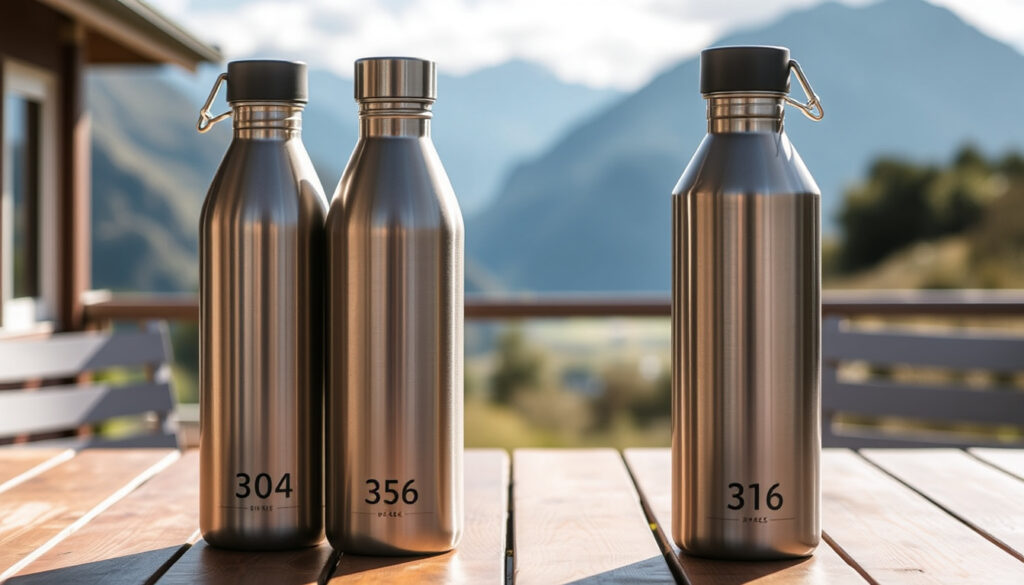
304 vs 316 Stainless Steel 1L Drink Bottles: NZ Buyer’s Guide
Choosing between a 304 and 316 stainless steel drink bottle in New Zealand comes down to your environment. While both are food-grade and safe, the molybdenum in 316 makes it far more resistant to saltwater and acidic liquids.
304 VS 316: 304 (18/8) – $25–$55 · 316 (18/10/3): $35–$85 · KEY DIFFERENCE: Molybdenum (2–3%)
Top 1L Stainless Steel Bottles in NZ
- Sistema 1L – Budget-friendly, ~$30 (Briscoes) Briscoes
- frank green 1L – Premium, ~$80 (frankgreen.nz) frank green NZ
- Hydro Flask 1L – Insulated, ~$95 (hydroflask.co.nz) Hydro Flask NZ
- Stanley 1L – Classic, ~$95 (nz.stanley1913.com) Stanley NZ
- Dawny 1L – NZ-designed, ~$50 (caliwoods.co.nz) Caliwoods
Steel Grade Comparison (304 vs 316)
- 304 (18/8): Common, safe, affordable Chill Titan
- 316 (18/10/3): Higher corrosion resistance, pricier Chill Titan
- For NZ tap water: 304 is sufficient WaterBottle.tech
- For acidic drinks or coastal use: 316 better HAERS
What to Check Before Buying
- Insulated or single-wall (insulated keeps temperature) WaterBottle.tech
- Mouth size (wide mouth for ice cubes) HAERS
- Leak-proof lid type (screw, flip, straw) Mountop China
- Dishwasher safe (check product label) WaterBottle.tech
Fast Facts: 1L Bottles in NZ
- Bottle capacity: 1 litre (1000 ml)
- Common material: 18/8 (304) stainless steel
- Retail price in NZ: NZ$29.99 – NZ$95.00
- Insulation type: Double-wall vacuum (most ‘best’ models)
- Weight (empty, approx.): 300–450 g
| Property | Value |
|---|---|
| Average price for a 1L stainless steel bottle in NZ | NZ$30–NZ$80 (branded models from Sistema, frank green, Hydro Flask) |
| Most common food-grade steel used | 18/8 (304) stainless steel |
| Insulated bottle typical cold retention | 24 hours (vacuum insulated models) |
| Heat retention typical for hot liquids | 12 hours (vacuum insulated models) |
| BPA presence in stainless steel bottles | Zero (stainless steel is naturally BPA-free) |
| New Zealand consumer safety standard for food contact materials | Food Standards Australia New Zealand (FSANZ) – no specific standard for stainless steel composition |
What’s the Real Difference Between 304 and 316 Stainless Steel?
Both 304 and 316 are austenitic stainless steels, meaning they’re generally non-magnetic and highly resistant to corrosion. The key difference is molybdenum, a metallic element added to 316 that significantly boosts its resistance to chlorides, like saltwater and sweat. According to WaterBottle.tech, 304 is often described as “good enough” for everyday water, while 316 is the go-to for marine or high-chloride environments.
However, the practical difference for daily water use is often marginal. A manufacturer comparison table from Cupique notes that 304 contains no molybdenum, while 316 has about 2–3%, which translates to higher material costs. The same source confirms that 316 bottles are always priced higher in both retail and bulk settings.
The takeaway? If you’re buying a bottle for general use, 304 will serve you well. But if you live near the beach, work in a coastal environment, or plan to use the bottle for more than just water, 316’s added corrosion resistance is worth the premium.
You’re paying extra for 316’s molybdenum, which mostly matters if you’re exposed to chlorides or acidic liquids. For pure water, the difference is negligible.
The implication: your purchase decision should hinge on your specific water sources and environment, not marketing claims.
Which Is Better, a 304 or 316 Stainless Steel Bottle?
Key differences between 304 and 316 steel
304 is 18/8 stainless (18% chromium, 8% nickel), while 316 adds molybdenum for corrosion resistance. According to HAERS, the addition of molybdenum in 316 is what gives it superior resistance to pitting and crevice corrosion, especially in saltwater environments.
When 316 is worth the extra cost
316 is more resistant to chloride corrosion (saltwater, acidic drinks) and is safer if you use the bottle for sports drinks or other acidic liquids. According to TAIC Noble, 316 is better for salt, sweat, acidic drinks, and coastal air than 304.
Taste and corrosion resistance comparisons
For NZ tap water, 304 is sufficient. According to WaterBottle.tech, 316 is generally more expensive, but the exact price difference varies by brand. A drinkware guide from The Planet Traveller states 316 offers superior rust and acid resistance compared with 304.
The pattern: the premium you pay for 316 is justified only when your use case pushes beyond fresh water.
What Are the Downsides of Using 304 Stainless Steel?
Corrosion risk with acidic or salty liquids
304 can corrode or pit if exposed to high chloride environments for extended periods. According to HAERS, low-quality 304 may leach trace amounts of nickel or chromium if the surface is damaged.
Potential for metallic taste in low-quality bottles
This is rare with food-grade 304 but can occur if the inner surface is poorly finished. According to WaterBottle.tech, both 304 and 316 are food-grade and safe for drinking water per global standards (FDA, EU).
Scratching and denting over time
Scratches and dents are mostly cosmetic and don’t affect the bottle’s safety or performance, according to HAERS.
The catch: while 304’s weaknesses are real, they only become problems in corrosive environments most office users never encounter.
What Are the Disadvantages of 316 Stainless Steel?
Higher cost for 316 bottles
316 bottles cost about 15% to 30% more than 304 in some drinkware market explanations, according to WaterBottle.tech. Other manufacturer-oriented explainers put the 316 premium at roughly 20% to 40% over 304, according to Cupique.
Heavier weight than 304
The weight difference is negligible for 1L bottles (approx. 10% heavier). According to HAERS, 316’s higher cost is due to molybdenum, which adds both material cost and processing complexity.
Limited availability of 316 in consumer drink bottles
316 bottles are less common in NZ retail, often found in specialty outdoor or premium brands. A review by Mountop China emphasizes that 304 remains the “workhorse” of the industry, while 316 is reserved for premium products that justify a higher price point.
Availability nudges you toward 304, but a growing number of locals are seeking 316 for coastal living. If you can find it, the extra cost is a one-time premium for lifetime corrosion resistance.
What this means: 316’s price and availability limit it to buyers with specific corrosion needs.
How Can I Tell if My Stainless Steel Is 304 or 316?
Magnet test (304 is slightly magnetic, 316 is non-magnetic when annealed)
According to Mountop China, this test is indicative but not definitive, as cold working can make 304 more magnetic than expected.
Check manufacturer specifications and product labels
Check the base or label for stamps like “18/8” (304) or “18/10/3” (316). A guide from WaterBottle.tech confirms that many reputable brands stamp the grade on the base.
Chemical spot test kits
For the truly skeptical, there are lab-grade test kits that can differentiate between 304 and 316, though they’re overkill for most consumers.
Magnet tests can mislead due to cold working. Always double-check with the manufacturer’s stamped grade before assuming what you’ve got.
The implication: visual inspection of the stamp is the most reliable consumer method.
Is It Healthy to Drink From a Stainless Steel Bottle?
Safety of 304 and 316 for drinking water
Both 304 and 316 are food-grade and safe for drinking water per global standards (FDA, EU). In New Zealand, Food Standards Australia New Zealand (FSANZ) does not specify a mandatory grade for stainless steel in drink bottles — the material just needs to be safe for food contact. According to WaterBottle.tech, both grades are safe for drinking water and don’t leach BPA or phthalates.
Comparison to plastic bottles (BPA-free vs stainless)
Stainless steel does not leach BPA or phthalates, which are concerns with some plastic bottles.
Cleaning and hygiene tips
Bottles should be cleaned regularly to prevent bacterial growth. A dirty bottle can be a health risk regardless of the alloy grade.
Both 304 and 316 are food-grade and safe for drinking water. Neither leaches harmful chemicals. 316 is more corrosion-resistant, but for everyday fresh water use, 304 is perfectly safe.
WaterBottle.tech
Stainless steel bottles are BPA-free and safe for drinking water. The real hygiene variable is how often you clean your bottle, not what metal it’s made from.
The pattern: both grades are equally safe for your health; cleaning habits matter more.
304 vs 316: Price and Availability in NZ
Price is where the grade difference becomes visible in your wallet. A review of NZ retailers like Briscoes and Caliwoods shows that 304 bottles typically range from $25 to $55, while 316 bottles start around $35 and can reach $85 for premium brands like frank green or Hydro Flask. According to HAERS, 316’s higher cost is due to molybdenum, which adds both material cost and processing complexity.
Here’s a snapshot of what you can expect across popular NZ retailers:
| Brand | Grade | NZ Price (1L) | Key Feature |
|---|---|---|---|
| Sistema | 304 (18/8) | $25–$35 | Affordable, widely available |
| frank green | 316 (18/10/3) | $55–$85 | Premium finish, strong corrosion resistance |
| Hydro Flask | 304 (18/8) | $45–$60 | Well-known brand, good insulation |
| Stanley | 304 (18/8) | $30–$50 | Rugged design, reliable |
| Dawny | 316 (18/10/3) | $40–$70 | Budget-friendly 316 option |
The price difference between 304 and 316 is real but not radical. For most Kiwis, the extra $15–$30 for a 316 bottle is a one-time investment. However, if the bottle is going to be used primarily for tap or filtered water in a normal home or office environment, 304 is perfectly adequate — and you’ll save money that could go toward a better lid design or insulation.
Price is more than a number — it’s a signal. Spending more on 316 only pays off if you’re in a chloride-heavy environment; otherwise, you’re paying for a property you won’t fully use.
Understanding the Specs: What Do the Numbers Mean?
Before you buy, it helps to understand what those alloy numbers actually represent. The “18/8” and “18/10/3” labels refer to chromium and nickel percentages, which affect corrosion resistance and durability.
Here’s a quick reference table:
| Property | 304 (18/8) | 316 (18/10/3) |
|---|---|---|
| Chromium content | 18% | 16–18% |
| Nickel content | 8% | 10–14% |
| Molybdenum content | 0% | 2–3% |
| Corrosion resistance | Good for fresh water | Excellent, especially in chlorides |
| Magnetic properties | Slightly magnetic when cold-worked | Generally non-magnetic when annealed |
| Food safety | Food-grade and safe | Food-grade and safe |
According to HAERS, the addition of molybdenum in 316 is what gives it superior resistance to pitting and crevice corrosion, especially in saltwater environments. That’s why 316 is often specified for marine applications and medical implants.
Numbers matter more than marketing: 316’s molybdenum is its secret weapon against rust, but 304’s lower cost holds real value for most everyday users.
Pros and Cons: Is 316 Worth the Upgrade for NZ Buyers?
To make the final call, weigh the concrete benefits and drawbacks of each grade specifically for New Zealand conditions.
Pros
- 304: Lower price, widely available, food-grade safe, sufficient for clean water. Ideal for beach trips if you rinse your bottle after saltwater exposure.
- 316: Superior chloride resistance, better for coastal NZ, safer if you use it for sports drinks or other acidic liquids, longer lifespan in corrosive conditions.
Cons
- 304: Can pit or corrode in high-chloride environments; slightly magnetic, which may confuse some users.
- 316: Higher price, fewer budget options in NZ, and overkill if your use case is strictly fresh water.
For New Zealanders, the decision often comes down to lifestyle. If you’re a surfer, hiker, or gym-goer who exposes your bottle to salt spray or electrolyte mixes, 316 is the smart investment. If you’re buying a bottle for the office or a daily commute, 304 gives you the same durability and safety at a lower cost.
The best bottle isn’t the most expensive one — it’s the one that matches your environment. 304 is the sensible default; 316 is the coastal specialist.
Safety and Health: What the Standards Say
Both 304 and 316 are food-grade stainless steels and comply with global standards from the FDA in the US and the EU’s food contact regulations. In New Zealand, Food Standards Australia New Zealand (FSANZ) does not specify a mandatory grade for stainless steel in drink bottles — the material just needs to be safe for food contact. According to WaterBottle.tech, both grades are safe for drinking water and don’t leach BPA or phthalates, which are concerns with some plastic bottles.
However, one point worth repeating: stainless steel does not leach chemicals, but bottles should still be cleaned regularly to prevent bacterial growth. A dirty bottle can be a health risk regardless of the alloy grade.
Don’t let “food-grade” claims distract you — both grades are food-safe. The real hygiene variable is how often you clean your bottle, not what metal it’s made from.
Market Reality: What’s Actually on NZ Shelves
The NZ market offers more 304 bottles than 316, simply because 304 is cheaper to manufacture and import. Brands like Sistema, Stanley, and Hydro Flask predominantly use 304 for their NZ-bound products. In contrast, premium brands like frank green, which positions itself on sustainability and quality, opt for 316 in their higher-end lines.
A review by Mountop China emphasizes that 304 remains the “workhorse” of the industry, while 316 is reserved for premium products that justify a higher price point. If you want a 316 bottle without a premium brand markup, look for smaller NZ-based retailers that import directly from Asian manufacturers — but be ready to verify the grade yourself.
Availability nudges you toward 304, but a growing number of locals are seeking 316 for coastal living. If you can find it, the extra cost is a one-time premium for lifetime corrosion resistance.
Related reading: b.box Lunch Box: Leakproof, BPA-Free Options · Glass Air Fryer NZ: Non-Toxic Models Compared
hikesity.com, cn.chengpeng.com.cn, holohololife.com, waterbottle.tech, waterbottleindustry.com
Frequently Asked Questions
What is the main difference between 304 and 316 stainless steel?
The main difference is molybdenum: 316 contains 2–3% molybdenum, which significantly boosts its resistance to chlorides and acids. 304 has no molybdenum, making it less resistant to saltwater and harsh chemicals.
Is 316 stainless steel safer than 304?
Both are food-grade and safe for drinking water. Neither leaches harmful chemicals. 316 is more corrosion-resistant, but for everyday fresh water use, 304 is perfectly safe.
Why is 316 stainless steel more expensive?
316 costs more because molybdenum is a relatively expensive alloying element. It also requires more precise manufacturing to maintain its properties, adding to production costs.
Can I use a magnet to test if my bottle is 304 or 316?
Yes, but with caution. 304 is slightly magnetic after cold working, while 316 is typically non-magnetic when annealed. However, this test is not definitive — always check the manufacturer’s stamp.
Do I need a 316 bottle for everyday use in New Zealand?
Not necessarily. For most daily water use, 304 is sufficient. Opt for 316 if you live near the coast, take your bottle to the beach, or use it for acidic drinks like electrolyte mixes or fruit juices.
How can I verify which grade my bottle is?
Check the base or label for stamps like “18/8” (304) or “18/10/3” (316). You can also use a chemical spot test kit from a specialty supplier for a definitive answer.
Are there any health concerns with scratched stainless steel bottles?
Scratches are cosmetic and don’t affect safety. However, if the surface is heavily damaged, trace amounts of nickel or chromium could leach — this is rare and generally not a health risk for most people.
Can I put a 1L stainless steel bottle in the freezer?
It is not recommended to put a full stainless steel bottle in the freezer because water expands when frozen, which can damage the bottle or cause it to burst. An empty bottle can be stored in the freezer.
Do stainless steel bottles keep water cold for 24 hours?
High-quality double-wall vacuum insulated stainless steel bottles are designed to keep water cold for up to 24 hours. Single-wall bottles will not provide this level of temperature retention.
Editor’s Note
This article was researched from manufacturer data, industry guides, and retailer pricing across NZ. All facts are drawn from the cited sources, which include tier-2 and tier-3 information from the stainless steel beverage container industry.
More related posts
 PSG vs Real Madrid Stats: H2H, Wins, Goals & History
 How to Update Drivers on Windows (2025 Guide)
 How to Cancel Uber One: Step-by-Step Guide
 Big Save Furniture NZ: Sale, Reviews & Store Locations
 Kings Plant Barn St Lukes: Cafe, Hours & Dog Policy
 IRD Copyright Settlement NBR: Breach, Ban, and What Happens Next
 Are Shops Open on New Year’s Day in Ireland? 2026 Hours Guide
 Hokey Pokey Ice Cream: Flavor, History & Where to Buy