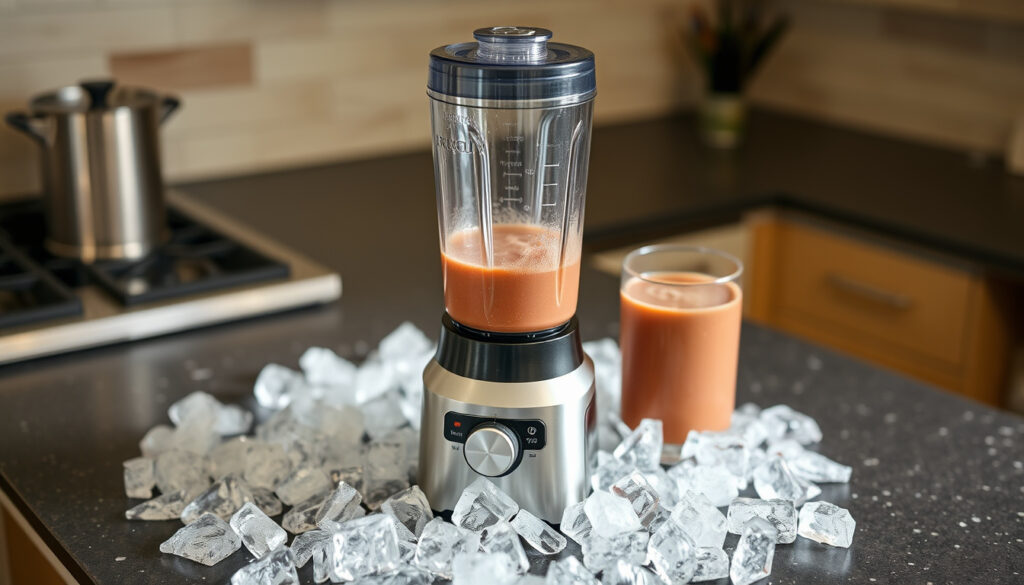
Ninja Blast Portable Blender: Ice Test & Verdict
Anyone who has squeezed a blender into an overnight bag knows the usual trade-off: make it portable or make it powerful. The Ninja Blast Portable Blender tries to end that compromise with a USB-C rechargeable cup that typically sells for €54.99 in Irish retail (Harvey Norman (Irish retailer)). Independent labs disagree on how well it handles ice, so this review sorts through the test data, the real battery life, and whether the pricier Blast Max is worth the upgrade.
Typical price: €54.99 · Cup capacity: 530 ml (0.53 litres) · Charging method: USB-C · Warranty: 2 years · Model numbers: BC151UKNV (Blast) / BC251UKGY (Blast Max)
Quick snapshot
- 18 oz (530 ml) cup with a 16 oz fill line (Ninja Kitchen Support (official product FAQ))
- Stainless steel blades and dishwasher-safe parts (Target (US retailer product page))
- Exact motor wattage is not fully disclosed by Ninja.
- Real-world battery cycle count after heavy daily use is not documented.
- Ice-crushing limits without added liquid vary sharply between labs.
- Two hours to a full charge; 10–15 blends per charge (TechRadar (tech review outlet))
- USB-C is the only cable needed to keep the charge cycle going. (TechRadar (tech review outlet))
- The step-up: Ninja Blast Max (BC251UKGY), the grey, more powerful cordless option, is already in Irish retail (Sean Hennessy (Irish appliance retailer))
- Prefer a corded countertop blender? The NutriBullet comparison is below. (Sean Hennessy (Irish appliance retailer))
Seven specs, one pattern: the Blast’s headline numbers are deliberately modest — small motor, small cup, single speed — which is exactly why reviewers keep calling it a smoothie cup rather than a countertop blender.
| Spec | Value | Source |
|---|---|---|
| Model numbers | BC151UKNV (Blast), BC251UKGY (Blast Max) | Harvey Norman (Irish retailer); Sean Hennessy (Irish appliance retailer) |
| Cup capacity | 18 oz (530 ml) max, 16 oz fill line | Ninja Kitchen Support (official product FAQ) |
| Motor, battery & blades | Single-speed 14.4 W, 7.4 V lithium-ion, stainless steel | Target (US retailer product page) |
| Charging | USB-C; about 2 hours to full | CHOICE (Australian consumer lab) |
| Blends per charge | Up to 15 cycles of 30 seconds | RTINGS (independent testing lab) |
| Warranty | 2 years | Harvey Norman (Irish retailer) |
Is a Ninja Blast Portable Blender good?
Short answer: yes, for its intended job, with one loud caveat about ice.
- RTINGS: poor ice crusher overall, though ahead of some other portables in the same test (RTINGS (independent testing lab))
- CHOICE: impressive in lab testing and excellent for crushing ice (CHOICE (Australian consumer lab))
- The split verdict is explained by one variable: whether liquid went in first.
The disagreement is not a fluke of testing. It comes down to loading order, a detail covered in the ice section below.
If your routine is soft fruit, greens, and protein powder in a cup you can carry, the Blast is a genuinely good purchase. If your routine starts with a tray of ice cubes, the Blast will ask you to change your routine first.
What users really think about the Ninja Blast
The complaints that show up in reviews cluster around the same moment: ice goes in dry, the blades spin, and hard chunks survive. Add liquid, and the same machine gets called a little workhorse.
The single-speed motor, listed in the key facts table above, is quick enough for a single smoothie and non-negotiable on texture. There is no pulse button and no speed dial.
What works consistently: the cup fits real portions, the sip lid turns the blender into a drinking vessel, and the whole thing disappears into a work bag.
Best use cases and top alternatives
- Office desks, hotel rooms, gym bags, small kitchens — any place a corded blender feels like a project.
- Single-serving smoothies and frozen-fruit blends with liquid added first.
- Alternative: a corded NutriBullet for countertop batches with more motor (Wikipedia (encyclopedic reference))
- Alternative: the Blast Max, covered in the next section, for ice-heavy portable use.
The Blast is best treated as a personal blender, not a family appliance. If a bigger countertop motor matters more than portability, the NutriBullet range is the classic corded answer; if portability is the whole point, the Blast Max is the step-up.
Still deciding? Our Best Ninja Blenders roundup keeps these comparisons in one place.
Is Ninja Blast better than NutriBullet?
The honest answer: it depends on where you plan to blend. The table below shows the trade-off in three lines.
Ninja Blast vs NutriBullet: specs at a glance
- Power, portability, retail: the three columns where these blenders actually differ.
Three comparisons, one pattern: the Blast wins the freedom-from-sockets argument; the NutriBullet wins the raw-motor argument.
| Spec | Ninja Blast (BC151UKNV) | NutriBullet (corded range) |
|---|---|---|
| Power source | USB-C rechargeable, single-speed 14.4 W (Target (US retailer product page)) | Corded mains, higher peak wattage (Wikipedia (encyclopedic reference)) |
| Portability | Cordless, battery-powered cup (Euronics (Irish electronics retailer)) | Needs a power socket (Wikipedia (encyclopedic reference)) |
| Retail in Ireland | Listed in Currys’ Ninja portable section (Currys (electronics retailer)) | Sold through major retailers (Wikipedia (encyclopedic reference)) |
The pattern: the NutriBullet gives you a stronger motor and a countertop anchor. The Blast gives you the same idea in a bag, with USB-C as the only cable. For the full side-by-side, see our Ninja Blast vs NutriBullet comparison.
What’s the difference between Ninja Blast and Ninja Blast Max?
- Same cup concept, different power pitch — six rows separate the two models.
Six differences, one pattern: the Max is the Blast with extra power and a grey suit.
| Spec | Ninja Blast (BC151UKNV) | Ninja Blast Max (BC251UKGY) |
|---|---|---|
| Positioning | Standard cordless portable | Ninja’s “most powerful cordless” portable (Ninja Kitchen Ireland (official brand page)) |
| Power & charging | USB-C rechargeable | USB-C rechargeable (Ninja Kitchen Ireland (official brand page)) |
| Ice focus | Mixed results in independent tests (see first section) | Positioned for frozen ingredients (brand positioning, quoted below) |
| Colour | Denim Blue (Euronics (Irish electronics retailer)) | Grey (Sean Hennessy (Irish appliance retailer)) |
| Model codes | BC151UKNV (Harvey Norman (Irish retailer)) | BC251UKGY (Sean Hennessy (Irish appliance retailer)) |
| UK retail | John Lewis (John Lewis (UK retailer)) | Argos (Argos (UK retailer)) |
The Max costs more, but the price buys headroom: Ninja sells it as the portable for frozen ingredients and heavier blends, which is exactly the use case where the standard Blast needs the most help.
Can the Ninja Blast crush ice?
Yes — with a method. The two independent labs that disagree on the Blast were not testing different machines; they were testing different loading orders.
Ice crushing performance results
- RTINGS: four ice cubes in the 18 oz jar still left unprocessed chunks behind (RTINGS (independent testing lab))
- Ninja’s instruction: blend frozen ingredients or ice with liquid added first (Ninja Kitchen Support (official product FAQ))
- The consistency of the result improves sharply once liquid sits between the blades and the cubes.
RTINGS’ four-cube test is the one to remember: the jar can physically hold the cubes, but the blades need liquid to pull them into the blade path. CHOICE’s verdict above says excellent for ice; RTINGS says poor. The difference is the test: a dry cube test versus a loaded smoothie. Ninja’s own FAQ removes the ambiguity: add liquid first (Ninja Kitchen Support (official product FAQ)).
Reviewers who load ice cubes first get chunks. Reviewers who pour liquid first get snow. The hardware didn’t change — the method did.
The pattern: the Blast can crush ice, but it asks you to follow its loading rules; skip the liquid and you will be chewing the failure.
Is Ninja Blast good for frozen fruit?
Frozen fruit is the Blast’s comfort zone — as long as berries are not packed dry into the cup. Frozen berries, banana, and greens blend into a genuinely smooth single serving when there is liquid to move them around.
- Best frozen picks: berries, mango, banana chunks — soft enough for a 14.4 W motor when liquid is present.
- Avoid blending citrus seeds; they add bitterness to the whole cup.
- Banana and avocado improve texture more than any setting changes could.
The practical rule: keep frozen fruit to roughly half the cup, add liquid to the fill line, and blend in short bursts. For more portable options, our Cordless Blender Reviews collection compares the Blast against other battery cups.
How long does the Ninja Blast battery last?
Long enough for a working week of single smoothies, with one real constraint: the two-hour recharge window.
Battery cycle count and charging time
- TechRadar measured 10 to 15 blends per charge and a USB-C recharge of about two hours (TechRadar (tech review outlet))
- CHOICE logged 10 to 12 rounds of 30-second blends in its lab run (CHOICE (Australian consumer lab))
- Real-world counts sit below the marketing ceiling, which is normal for rechargeable cups.
A full charge takes roughly two hours over USB-C; the battery chemistry is a 7.4 V lithium-ion cell listed in the key facts table above.
Two hours of charging for a minute of blending is fine when the cup charges overnight or at a desk. It is the real constraint when you travel and forget the cable — USB-C at least means a lost charger is a common problem, not a proprietary one.
The implication: one charge covers 10 to 15 single-serving blends, which for most owners is a week of mornings rather than a single day.
What are the common problems with Ninja blenders?
- Dry ice loads: cubes survive the blend when liquid is skipped (see the ice section above).
- Single-speed control: there is no pulse program to rescue a stuck blend (key facts table above).
- One-serving limit: the 16 oz fill line means batch smoothies are not an option.
- Citrus seeds: they turn a good smoothie bitter, so remove them first.
Most of these problems share a root cause: using a portable cup like a full-size blender. The fix is predictable — add liquid, load soft fruit, and accept the single-serving design.
The complaints that show up in reviews are rarely about the motor dying or the cup leaking. They are about method. The Blast punishes shortcuts — and rewards the 30 seconds it takes to read the loading order.
Can you refrigerate a Ninja portable blender?
Yes. The cup is built for fridge-to-desk life: it is dishwasher-safe, and the sip lid turns the blender jar into a storage vessel.
Cleaning and storage tips
- Parts are dishwasher-safe — cup, lid, and blades survive the cycle (confirmed in the snapshot above).
- The cup is fridge-safe for overnight storage; treat freezer storage as off-limits.
- Rinse right after blending to keep the seal clean and the lid smelling fresh.
Refrigerate the filled cup overnight, blend briefly in the morning, and the Blast behaves like a breakfast shortcut instead of a chore. The leak-proof lid is what makes that possible.
The storage rule is simple: cold is fine, frozen is not. If your plan is to freeze a smoothie for later, use a proper freezer container and transfer it back to the Blast when you want to blend — the cup itself is not a freezer vessel. For more on cup materials and care, see the Portable Blender Buying Guide.
The pattern: refrigerating the Blast is its best trick — it turns a blender into a lunchbox that blends.
Which fruits should not be mixed in a smoothie?
- Banana and avocado improve texture more than any ingredient trick.
- Citrus seeds cause bitterness — remove them before blending.
- Very hard frozen fruit needs liquid added first to move the blades.
The Blast is a blender, not a food processor: it loves soft, wet ingredients and struggles with dry, hard ones. Keep the cup to soft fruits, greens, and liquids, and the single-speed motor has nothing to prove.
Why this matters: ingredient choice is the cheapest upgrade you can make — it costs nothing and changes every blend.
Upsides
- USB-C charging, no proprietary dock (key facts table above).
- 530 ml cup that doubles as a drinking vessel with a leak-proof lid.
- Dishwasher-safe parts make clean-up a non-event.
- Up to 15 blends per charge in ideal conditions.
Downsides
- Ice results depend on loading order and liquid.
- Single speed, 14.4 W output, no texture control.
- One serving per batch because of the 16 oz fill line.
- Two-hour recharge window is the real battery constraint.
The split between confirmed and unclear matters here because the research base is still young: the Blast launched recently, and long-term data is thin.
Confirmed facts
- USB-C charging is standard on both Blast models (key facts table above).
- The cup is 530 ml with a 16 oz fill line and a leak-proof sip lid.
- UK and Irish retail coverage is broad: John Lewis, Argos, Currys, Euronics, and Harvey Norman all list Ninja portable blenders (John Lewis (UK retailer); Argos (UK retailer)).
- Typical Irish retail price is €54.99; the Blast Max costs more and is sold in grey (stats line above; Sean Hennessy listing).
What’s unclear
- Exact motor wattage is not fully disclosed by Ninja for the whole lineup.
- Real-world battery cycle count after months of daily use is not documented yet.
- Ice-crushing limits without added liquid produce conflicting lab results.
- Long-term battery degradation with daily charging is not yet measured in any public test.
- Whether the sip lid stays leak-proof after years of dishwasher cycles.
What this means: the Blast’s confirmed strengths are portability and easy cleaning; its open questions are about longevity, not day-one performance.
Two voices frame the decision better than any spec sheet.
TechRadar’s test count: 10 to 15 blends per full battery, with a USB-C recharge of around two hours.
— TechRadar (tech review outlet)
Ninja positions the Blast Max as its most powerful cordless portable blender, built for heavier blends and frozen ingredients.
The Ninja Blast is what it actually is: a genuinely portable single-serving smoothie cup with sensible USB-C charging, not a countertop replacement and not an ice-crushing machine unless you follow its liquid-first loading rule. On-the-go buyers in Ireland and the UK who live on soft-fruit blends will find it worth the €54.99; ice-heavy users should move up to the Blast Max or keep a corded NutriBullet for the hard jobs. See our full Ninja Blast vs NutriBullet comparison for the extended spec-by-spec look. For the Irish commuter who wants a smoothie without dragging a full appliance to the office, the decision is clear: buy the Blast and keep soft fruit in the office fridge — or pay the Blast Max premium and accept that two hours of charging is the price of portable ice.
provenpantry.com, target.com, goodhousekeeping.com, lowes.com, rtings.com, target.com, homesandgardens.com
Frequently asked questions
What comes in the box with a Ninja Blast?
The Blast ships as a complete cordless unit: the 530 ml cup with a leak-proof sip lid, ready to charge over USB-C. Retailers describe it as a complete system rather than a multi-accessory kit (John Lewis (UK retailer); Argos (UK retailer)).
Can I use the Ninja Blast while it is charging?
Ninja does not advertise charging-and-blending in the documentation reviewed for this article, so plan around the roughly two-hour charge window before you need the cup.
Is the Ninja Blast portable blender dishwasher safe?
Yes. The cup, lid, and blades are dishwasher-safe parts — the same parts that make the Blast one of the easiest blenders to clean.
How does the Ninja Blast compare to a regular full-size blender?
A full-size blender brings a much stronger motor, bigger jar, and textured controls; the Blast brings USB-C portability, dishwasher-safe parts, and a 530 ml single-serving cup. If you blend for more than one person, a countertop machine is the better base; if you blend for yourself in different places, the Blast wins.
What colors does the Ninja Blast portable blender come in?
The standard Blast is available in Denim Blue, sold through Irish retail (Euronics (Irish electronics retailer)); the Blast Max step-up comes in grey (see the snapshot above).
Where can I buy the Ninja Blast in Ireland?
Currys’ Ninja portable blender section lists the range (Currys (electronics retailer)), and Euronics stocks the Denim Blue version (Euronics (Irish electronics retailer)). Harvey Norman also lists the BC151UKNV model (see the key facts table above).
More related posts
 Atlas Suites and Apartments Mount Maunganui Reviews
 How to Lower Cholesterol in New Zealand
 Die My Love Movie: Plot, Baby & Horse Meaning
 Are Shops Open on New Year’s Day in Ireland? 2026 Hours Guide
 New Zealand Insurance Company List: Top 5 & Best in NZ
 2 Degrees Phones for Sale: Best Deals and Budget Options in NZ
 Maddox Jolie-Pitt: Legal Name Change and Family News
 How to Glaze a Ham: Timing, Recipes & Mistakes to Avoid